
DENR urges LGUs, public to strengthen waste management ahead of Habagat
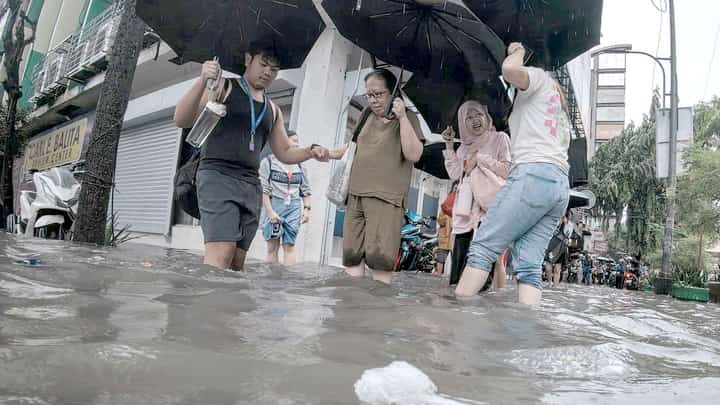
Monsoon meltdown Undeterred by the deluge, pedestrians wade through knee-deep floodwaters along a Manila street on 17 August, as relentless rains driven by the southwest monsoon (habagat) turned roads into rivers overnight, as the nation is again reminded of the flood control scandal that should have relieved Filipinos of the perennial scourge, but the funds for it went to line the pockets of crooked officials.
Photograph by TOTO LOZANO for DAILY TRIBUNE
DENR urges LGUs, public to strengthen waste management amid Habagat
The Department of Environment and Natural Resources (DENR) on Friday urged local government units (LGUs) and the public to strengthen solid waste management and undertake preventive measures to reduce risks associated with heavy rainfall as the Southwest Monsoon or Habagat is expected to continue affecting parts of the country through September.
The DENR stressed that while heavy rains and flooding can displace and carry waste, proper solid waste management before, during and after severe weather events is critical to preventing garbage from reaching canals, creeks, rivers, shorelines and Manila Bay.
DENR Secretary Juan Miguel “Mitch” Cuna said proper waste management is not only about keeping communities clean but also about keeping waterways clear, reducing flood risks and protecting marine ecosystems.
“Habagat is a natural phenomenon, but the waste that ends up in waterways is something that can be prevented,” Cuna said.
The department emphasized that improper waste management can obstruct waterways, impair drainage, worsen flooding and carry garbage downstream into rivers, coastal areas and marine ecosystems.
Under Republic Act No. 9003, or the Ecological Solid Waste Management Act of 2000, LGUs are primarily responsible for implementing solid waste management programs in their jurisdictions, including waste segregation, collection, recovery, recycling, composting and proper disposal of residual waste.
The law also prohibits littering and dumping in public places, including canals and esteros, as well as open dumping or burying of waste in flood-prone areas.
“The DENR, through the Environmental Management Bureau (EMB), continues to work with LGUs to strengthen compliance with RA 9003 by monitoring solid waste management plans and facilities, requiring corrective measures for identified deficiencies, and providing technical assistance and capacity-building support to improve waste avoidance, recovery, composting, recycling, and the proper treatment and disposal of residual waste,” Cuna said.
The DENR said it is also implementing programs to support waste management and disaster response, including the MV Nilad Marine Cleanup & Disaster Response Program, which uses a specialized vessel to collect debris in Manila Bay, and the Estero Rangers Health & Wellness Program, which supports community cleanup personnel.
The department also cited mobile services such as DENR Express, or “Permitting on Wheels,” which help streamline environmental clearances for local communities.
Cuna said 196 trash traps have been installed across various LGUs and key areas in Metro Manila to intercept floating debris and prevent waste from clogging waterways.
The DENR called on LGUs to keep their solid waste management systems functional and responsive by ensuring regular waste collection, enforcing segregation at source, keeping waterways and drainage channels free of illegally dumped waste, maximizing the use of Materials Recovery Facilities, properly disposing of residual waste, and undertaking preventive measures such as trimming trees and branches that may pose hazards during heavy rains and strong winds.
The department also reminded the public to segregate waste at source, follow collection schedules, avoid littering and dumping waste into canals, creeks and other waterways, and properly secure household waste.
“Every piece of waste kept out of our waterways is one less obstruction to drainage and one less piece of pollution that can reach our rivers, coasts and seas,” Cuna said.
The DENR stressed that protecting communities and waterways from waste-related flooding begins before the rains arrive through proper segregation, regular collection, responsible disposal and consistent enforcement of environmental laws.