
BBM urges ASEAN unity amid global uncertainty
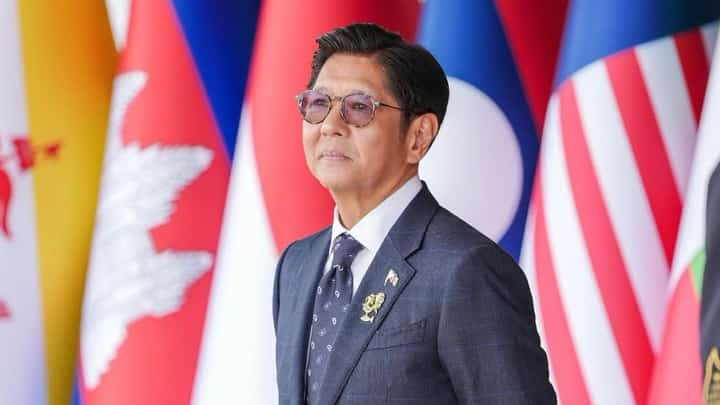
President Ferdinand Marcos Jr. on Sunday called on Southeast Asian nations to strengthen regional cooperation and uphold shared principles as geopolitical tensions, economic disruptions and emerging security threats test ASEAN’s unity.
Opening the 49th Association of Southeast Asian Nations (ASEAN) Summit at the Philippine International Convention Center (PICC), Marcos said the bloc’s influence rests not only on its collective economic and political strength but also on its commitment to peaceful relations and common principles.
ASEAN’s influence “rests not only on our collective weight, but on the enduring truths in the principles that we uphold,” Marcos told regional leaders and delegates.
Drawing on the Philippines’ maritime heritage, Marcos likened ASEAN’s journey to a balangay, the traditional wooden boat featured in the country’s ASEAN chairship logo.
“As the balangay reminds us, no journey is made by following one direction alone. It requires trust among those who travel together, the strength to adjust to changing conditions, and a shared sense of commitment towards our shared goals and common destinations,” he said.
Marcos cited the bloc’s response to the escalating Middle East conflict during the previous ASEAN Summit in Cebu, when threats to the safety of ASEAN nationals and disruptions to transportation, energy and food supplies forced leaders to recalibrate their agenda.
“Refusing to be distracted, we reconfigured the summit, focused on fundamentals, and began the work that faced us. ASEAN responded quickly, rethinking, recalibrating, and redesigning while keeping our longer-term work at center,” he said.
The opening ceremony also featured the unveiling of a new ASEAN emblem reflecting Timor-Leste’s admission as the bloc’s 11th member.
This year’s summit coincides with the 50th anniversary of the Treaty of Amity and Cooperation in Southeast Asia (TAC), which promotes mutual respect, renunciation of the threat or use of force, and peaceful settlement of disputes.
Cyprus, Slovakia and Slovenia formally acceded to the treaty during the summit, joining other countries committed to its principles.
The Manila gathering brings together Southeast Asian leaders and global partners to tackle pressing regional concerns, including trade, security, energy supply and geopolitical tensions.
US President Donald Trump is expected to arrive on Tuesday, near the summit’s conclusion, with a possible sideline meeting involving fellow Quad members India, Japan and Australia. The grouping seeks to strengthen cooperation in the Indo-Pacific amid China’s growing regional influence.
Brazilian President Luiz Inacio Lula da Silva is also scheduled to attend a plenary session, while Australian Prime Minister Anthony Albanese is expected to sign a new defense pact with the Philippines.
Security has been tightened across Metro Manila, with nearly 20,000 police personnel deployed for the summit. Progressive groups, meanwhile, are preparing to stage an anti-Trump march on Tuesday.
The US-backed Pax Silica initiative has emerged as another point of contention. The supply-chain program seeks to counter China’s dominance in semiconductors and rare earths, but its proposed 1,620-hectare artificial intelligence manufacturing hub north of Manila has drawn criticism over the potential displacement of Indigenous communities.
Two longstanding regional issues also remain unresolved: the South China Sea Code of Conduct and ASEAN’s engagement with Myanmar.
Negotiations on the proposed maritime code with China are reportedly about 80 percent complete, but Philippine officials have tempered expectations of an agreement during Manila’s chairship.
Myanmar, meanwhile, remains excluded from high-level ASEAN meetings following the 2021 military coup that ousted the elected government of Aung San Suu Kyi and triggered a prolonged civil war.
Thailand has pushed for closer engagement, including allowing Myanmar’s foreign minister to rejoin regional meetings. Philippine Foreign Secretary Theresa Lazaro, however, said there would be no easing of ASEAN’s current approach.
The South China Sea dispute also continues to strain regional relations, particularly between the Philippines and China, whose coast guards have repeatedly clashed in contested waters.
As ASEAN leaders gather in Manila, Marcos’ call for unity underscores the challenge facing the regional bloc: maintaining a common position and protecting its interests amid intensifying geopolitical rivalries and mounting economic pressures.