
QCinema Review: 'Teenage Sex and Death at Camp Miasma'
A dreamlike slasher drenched in '80s nostalgia.
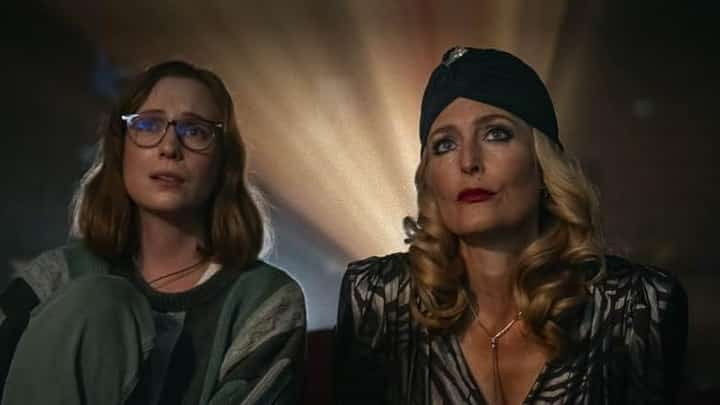
Gillian Anderson and her Southern drawl. Liminal dreamscapes, winter wonderlands, and hypnotic Kodak-film shots—intensely grainy and hazy—that bring back '80s nostalgia. This year’s Cannes Queer Palm winner, Teenage Sex and Death at Camp Miasma, is a smorgasbord of visual delight. Yet Jane Schoenbrun’s (I Saw the TV Glow) comedic homage to the slasher genre—with its abundance of visual textures, colors, compositions, and surreal imagery—is also an unpacking of her own closet trauma and identity suppression.
The genius of how she essays her personal experiences lies in her light touch. This is style that matches substance—or better yet, substance clearly communicated through style. It may be pretty on the surface (and oh-so-deliriously eye candy with its vintage melodrama and hand-painted backdrops), but underneath lies the horror of transitioning and coming out.

The story follows "Sundance wunderkind" Kris (Hannah Einbinder), who is tasked with rebooting (and politically correcting) a dead cult-slasher franchise, Camp Miasma—think Friday the 13th, Halloween, A Nightmare on Elm Street and the like.
So, Kris treks to a remote, snowed-in cabin to meet the original scream queen of Camp Miasma, now a reclusive former actress named Billy (Anderson), and the horror she faces is not that of the slasher kind. But internal.
This surrealist meta-horror film combines fun with deep psychological excavation. The killer is called "Little Death," bearing the ridiculous face of a ceiling vent.
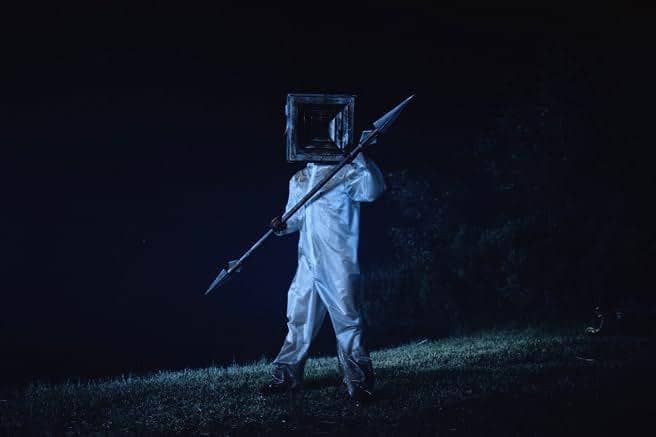
But Kris’s obsession with the franchise goes far beyond her cinephile-nerd disposition. In one pivotal scene in Camp Miasma that Kris is particularly obsessed with, Billy’s younger actress self is losing her virginity at the camp while Little Death slowly creeps closer to kill them.
This is where we glimpse a disturbing psychological subtext: the pressure on American teenagers to lose their virginity. As the girl goes through this painful rite of passage, what she stares up at is a ceiling vent, which becomes permanently associated with the killer—Little Death. This mirrors Kris’s own obsession with killing something inside herself so that she can be reborn, bloodied but free.
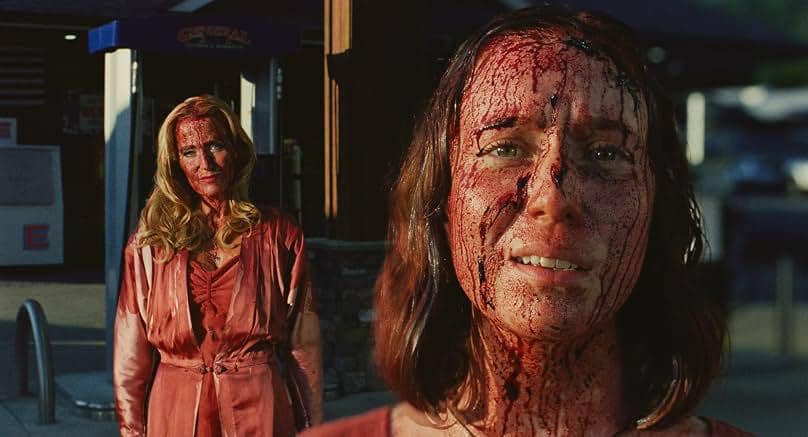
Yet Schoenbrun never delivers this with heavy-handedness. Instead, she crafts a delicate, breathtaking surrealist film, complete with hilarious fountains of blood. All of this is complemented by an achingly nostalgic soundtrack. Alex G pairs an intimate indie-folk score with yearning 1990s and 2000s pop-rock needle drops that evoke loneliness and tenderness.
The recurring motif of Little Death’s origins functions as a compelling psychological allegory: the hole beneath the lake serves as the closet, and surfacing from it represents coming out. You cannot help but sympathize with Kris.
Director Schoenbrun is trans, and every artist’s work carries their autobiographical footprint. Viewers who are otherwise indifferent to slasher or queer cinema—but who simply love film, regardless of gender identity or sexual orientation—will be entranced nonetheless. Because the psychological parallelism, set against Schoenbrun’s impressive visual language, reflects a lived reality for queer people—an achievement thoroughly deserving of that Cannes award.
4 out of 5 stars
Part of this year's QCinema lineup.