
Ok, Singapore, show us
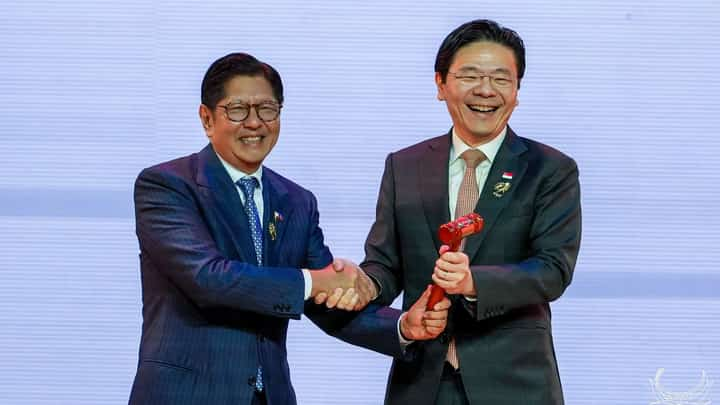
After Manila, the city-state takes ASEAN’s helm.
Did the ASEAN façade work?
For a few days, the Philippines looked exactly as it wanted the world to see it.
The roads were dressed, the walls painted, the billboards erected. Informal settlers were screened from view. Vendors were told to pack up. Poverty, apparently, was a security concern.
The Marcos administration had P22.9 billion allocated for its ASEAN chairship. Some of that money went toward making the country presentable. The question is whether the presentation was more successful than the country it was supposed to represent.
Did the foreign dignitaries notice the families behind the barriers? Did they see the vendors who lost a day’s income so the streets could look orderly? Or did they leave with photographs of a country that existed only along their motorcade routes?
Perhaps the façade worked. The handshakes happened, the declarations were signed, and Manila had its moment on the international stage.
But the agreements on digital trade, energy, and regional integration now face a less forgiving audience: Filipinos waiting for economic gains that can be felt beyond summit halls.
The walls will come down. The vendors will return. The poor will still be poor.
And when the photographs are archived and the flags are taken down, the country will be left with the same question it tried so hard to cover up: Did we host the world, or merely hide ourselves from it?
--- Jason Mago
The price we don’t need to pay
We support Pax Silica because the Philippines cannot afford to be left behind.
The initiative extends beyond data centers, envisioning a supply chain, technology and innovation ecosystem supporting semiconductor manufacturing, mineral processing, and other industries.
The Philippines joined the broader initiative in April 2026, but this project’s bilateral framework is separate.
Technological progress, however, must have boundaries, particularly when farmers and indigenous people face displacement from lands their families have cultivated for generations.
This is where we draw the line. If the project can’t proceed without uprooting farmers and indigenous people, then choose another site. Their peace and livelihoods are not obstacles to progress.
Semiconductor manufacturing and data centers also demand substantial electricity and water. The zone must be self-sufficient: it should generate its own power and secure its own water, not draw it from its neighbors.
Transparency is equally nonnegotiable. Government must disclose project agreements, protect ancestral land rights, require rigorous environmental assessments, and guarantee meaningful Filipino participation through jobs, domestic suppliers and technology transfer.
Philippine authorities must retain regulatory control while ensuring the country remains open to multiple international partners.
We should embrace tomorrow’s technologies without sacrificing the people already here today.
--- Carl Magadia
Thank you, next
Next year, ASEAN turns 60, with Singapore steering the bloc under the theme “Deeper Integration, Wider Partnerships.”
A theme that reflects Singapore’s foreign policy approach: upholding ASEAN centrality, maintaining strategic independence, and balancing relations with major powers without taking sides.
What better place to celebrate ASEAN’s 60th anniversary than in a country where diplomacy has long shaped its place in the world?
As Singaporean Foreign Minister Vivian Balakrishnan has emphasized, Singapore stands by principles, not sides.
It is, after all, home to diplomatic figures such as founding Prime Minister Lee Kuan Yew and veteran diplomat Tommy Koh, whose contributions helped shape Singapore’s foreign policy and its place in the international community.
The Philippines, for its part, has much to reflect on after its chairship.
From advancing regional economic integration to strengthening cooperation on energy security, disaster response, and migrant workers, the country helped move several ASEAN priorities forward.
And while the long-awaited South China Sea Code of Conduct remains unfinished, that should not overshadow the work accomplished throughout the year.
ASEAN diplomacy has never been about resolving every disagreement in a single chairship. It is about managing differences, keeping negotiations moving, maintaining dialogue, and finding common ground despite competing interests.
As Singapore takes the helm, the challenge shifts from navigating the region’s future together to building deeper integration, stronger internal resilience, and wider partnerships.
For the Philippines, there is much to observe and learn from Singapore’s approach, particularly how a small state can protect its interests, maintain strategic flexibility, and engage major powers without surrendering its principles.
After all, ASEAN’s strength lies not in choosing sides but in ensuring that its member states continue to have voices of their own.
Thank you, next.
--- Vivienne Angeles