
Defense chief pushes accelerated development of PMC on 76th anniversary
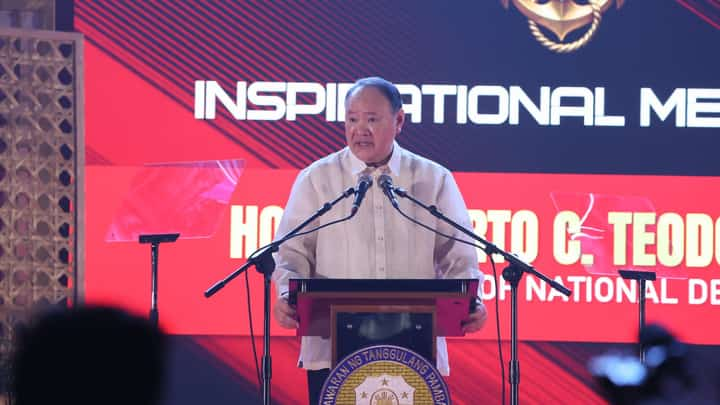
Defense Secretary Gilberto Teodoro calls for accelerated Philippine Marine Corps development, stronger military presence and improved archipelagic defense capabilities.
Department of National Defense (DND) Secretary Gilberto C. Teodoro Jr. called for the sustained and accelerated development of the Philippine Marine Corps (PMC), emphasizing the need to expand its capabilities, strengthen its strategic presence across the archipelago, and enhance its role in the country's Comprehensive Archipelagic Defense Concept (CADC).
Speaking as guest of honor and speaker during the PMC's 76th anniversary celebration on Saturday at Fort Bonifacio, Teodoro conveyed the best wishes of President Ferdinand R. Marcos Jr., who expressed confidence in the Corps' continued growth and commitment to maintaining its fighting capabilities, core values, morale, and presence throughout the archipelago.
“As Major General Apostol (Commandant of the Philippine Marine Corps, Major General Bob R. Apostol) had said, the footprint of the Philippine Marine Corps of four marine brigades and one service support brigade for 7,600 islands is way, way too small,” he said.
Teodoro emphasized the importance of maintaining a credible presence and deterrence in the Kalayaan Island Group, requiring closer coordination among the Philippine Marine Corps, Philippine Army, Philippine Navy, Philippine Air Force, and Philippine Coast Guard.
He also called for a sustainable yet urgent growth plan that includes developing strategic operating bases for the Marines, either alongside other military facilities or as independent installations.
The Defense chief stressed the importance of strengthening logistical readiness and maintaining adequate physical reserves amid tightening global supply chains and increasing competition for resources.
“[Being] prepared means also putting enough facilities to store the all-needed reserves. The notional reserves that we have are not sufficient. Physical custody and possession of reserves is the name of the game now, as we see throughout the world when supply chains are tightening and the scramble for resources becomes dearer and more expensive,” Teodoro said.
He acknowledged that addressing these capability gaps would require substantial effort, adding that the DND and the Armed Forces of the Philippines (AFP), under President Marcos' leadership, are working to accelerate the country's defense modernization and readiness initiatives.
Teodoro also cited the Philippines' participation in major multilateral military exercises and the need for the Marine Corps to strengthen professional ties with other marine forces to identify suitable tactics, technologies, and equipment for the country's operational environment.
Beyond capability development, Teodoro underscored the importance of investing in future military leadership through early exposure to leadership responsibilities, mentorship, cross-training, and international engagement.
He called for greater opportunities for young officers, enlisted personnel, and civilian human resource personnel to develop the technical competencies, adaptability, and foresight needed to address emerging defense and security challenges.