
VP Sara hits SC for dismissing petitions vs. father's ICC transfer
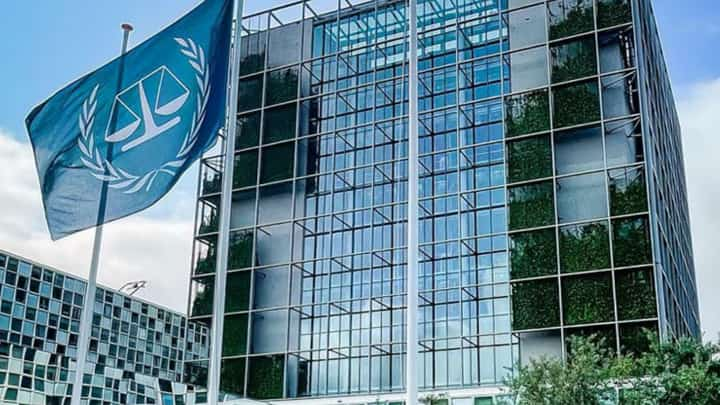
THE International Criminal Court in The Hague, where former President Rodrigo Duterte faces charges of crimes against humanity.
PHOTOGRAPH courtesy of icc/fb page
Vice President Sara Duterte criticized the Supreme Court (SC)'s dismissal of the habeas corpus petitions challenging her father Rodrigo Duterte's arrest and transfer to the International Criminal Court (ICC), saying the ruling left questions on national sovereignty and constitutional accountability unresolved.
She questioned the high court's decision to dismiss the petitions as moot, arguing that the issues involved went beyond the former president's present detention in The Hague, Netherlands.
“No foreign court or nation should ever stand above the sovereignty of our country,” Duterte said in a statement Wednesday.
“No Philippine court should lightly dismiss a petition as moot, when the underlying issues concern national sovereignty, constitutional accountability, and the government’s duty to protect the life and liberty of every Filipino from foreign interference,” she added.
The SC earlier dismissed the consolidated petitions filed by Duterte's children — Davao City Mayor Sebastian Duterte, Veronica Duterte and Davao City Rep. Paolo Duterte — challenging their father's arrest and transfer to the ICC.
Voting 9-4, the high court ruled that the petitions had become moot because the former president was already in the custody of the international tribunal, beyond the reach of Philippine courts' enforcement of a writ of habeas corpus.
Duterte camp to seek reconsideration
The writ is a legal remedy that allows a person to challenge the legality of detention and seek release from unlawful custody.
The high court explained that habeas corpus is a domestic remedy enforceable only within Philippine territory. Since Duterte was already under the ICC's custody, Philippine courts could no longer compel his production or release through the writ.
However, the court clarified that dismissing the petitions did not mean his arrest and transfer were necessarily lawful or that his constitutional rights had not been violated. It said the ruling addressed only whether habeas corpus remained an available and enforceable remedy under the circumstances.
Lawyer Salvador Paolo Panelo Jr., counsel for Veronica Duterte, said the former president's camp would seek reconsideration of the ruling.
“With due respect, the decision effectively reduces the great writ of habeas corpus to a race to remove the person detained outside Philippine territory before the courts can act,” Panelo said.
“We will file a Motion for Reconsideration,” he added.
Expert weighs in
Former law dean Mel Sta. Maria said the Supreme Court's decision to dismiss the petitions as moot indicated that the majority saw no sufficient basis to exercise its discretion to resolve the underlying constitutional questions.
In his analysis of the ruling, Sta. Maria noted that the SC may still decide cases that have become moot and academic when recognized exceptions apply.
These include cases involving grave constitutional violations, exceptional circumstances of paramount public interest, the need to establish controlling principles on constitutional issues, and controversies capable of repetition yet evading review.
“Had the majority viewed the surrender as a grave violation of the Constitution — the primary doctrinal trigger for overriding mootness — it would have been duty-bound to say so and delineate clear constitutional limits,” Sta. Maria said.
“By disposing of the habeas corpus petitions purely on mootness without indulging in sweeping and substantial declarations, the Supreme Court stripped the controversy of its political theater and refused to let the judiciary be conscripted into an ideological battle over sovereignty and accountability,” he added.
Rodrigo Duterte, 81, was arrested on 11 March 2025, upon his arrival in the Philippines from Hong Kong and flown to The Hague, where he is being held over charges of crimes against humanity linked to his administration's anti-drug campaign.
His ICC trial is scheduled to begin on 30 November.