
Zalameda backs Shari’ah courts, pledges open-door policy for Muslim judges
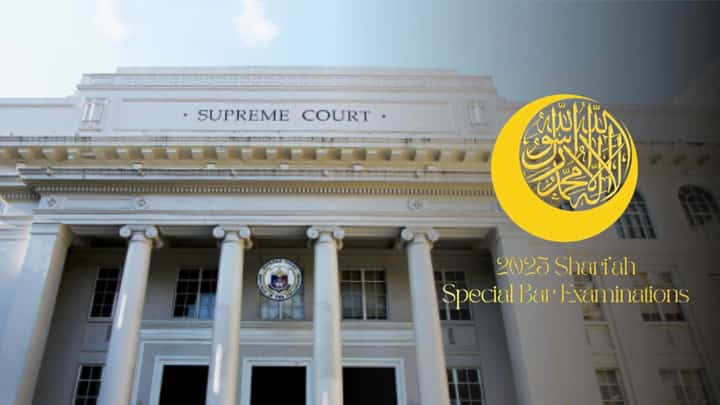
Chief Justice Rodil V. Zalameda has pledged the Supreme Court’s (SC) unwavering support for the growth of the Philippine Shari’ah justice system, promising Muslim judges direct access to his office to address institutional bottlenecks and advance long-overdue reforms.
This as CJ Zalameda speak before members of the Philippine Muslim Judges Association (PMJA) during a high-level dialogue at the SC En Banc Session Hall on 20 November, emphasizing that Shari’ah courts are essential pillars of the Philippine Judiciary—not mere footnotes to regular courts.
“My door remains open,” Zalameda told the assembly, adding, “I may not be able to promise the immediate resolution of every concern, but I can promise you that each will receive attention.”
Zalameda underscored that Shari’ah courts possess their own distinct jurisdiction, specialized expertise, and institutional identity, making them vital to delivering accessible and culturally responsive justice to Muslim Filipinos.
“I have always believed that a justice system can only be truly inclusive if it recognizes and respects the different legal traditions within our society,” the Chief Justice stated.
To ensure momentum is not lost, Zalameda confirmed that the Court will build directly upon the foundational Shari’ah reforms launched by his predecessor, retired Chief Justice Alexander Gesmundo.
During the dialogue, the PMJA pressed the High Court to take decisive action on two critical fronts to elevate the administration of Islamic law in the country:
Operationalizing the Shari’ah High Court by fast-tracking the full establishment and functioning of the appellate body, and appointing an Islamic law expert to bring specialized legal expertise into the fold to guide and strengthen Shari’ah judicial administration.
With both the Judiciary’s leadership and Muslim magistrates aligned on driving institutional reform, the Supreme Court is poised to turn these proposals into concrete action for the nation's Muslim communities.
Zalameda cited his ruling in Spouses Maliga v. Spouses Tingao and Spouses Maliga v. Unte, where the SC reaffirmed the autonomy of Shari’ah district courts and their authority to independently resolve disputes within their jurisdiction.
He said strengthening the system requires more than court decisions and pronouncements.
It also involves addressing practical concerns such as filling vacancies, updating procedural rules, and providing adequate training, resources, and security for judges and court personnel.
Associate Justice Japar B. Dimaampao, who joined the dialogue, said the Shari’ah justice system is an integral part of the Philippine judicial framework under Republic Act No. 11054, or the Organic Law for the Bangsamoro Autonomous Region in Muslim Mindanao.
He said its continued development reflects the country’s commitment to religious freedom, cultural diversity, and equal justice under the law.
Zalameda was thanked by PMJA President and Court of Appeals Associate Justice Edilwasif T. Baddiri for giving attention to the association’s concerns.