
La Union strengthens El Niño preparations
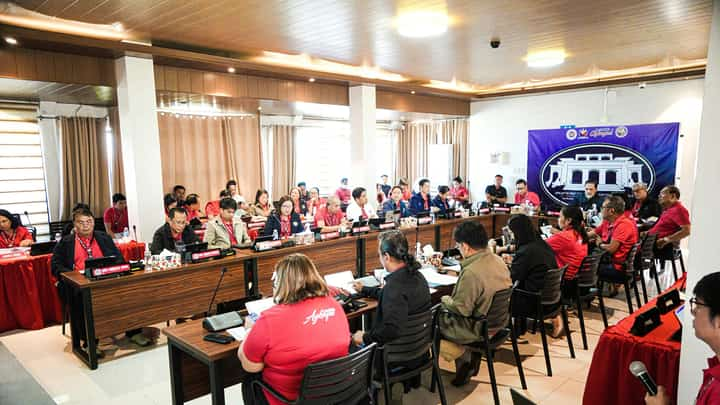
The Provincial Government of La Union is preparing for the anticipated effects of El Niño from November 2026 to March 2027, rolling out measures to support farmers, protect public health, and help communities cope with potential water shortages.
Governor Mario Eduardo C. Ortega is leading the province's coordinated response, which aims to sustain agricultural production and essential services, address health and environmental risks, and provide assistance to affected residents.
The Office of the Provincial Agriculturist is preparing to distribute hybrid and certified rice seeds, hybrid corn, mungbean and peanut seeds, fertilizers, and farm equipment.
It is also strengthening irrigation support through solar-powered systems and mobile solar pumps, alongside the rehabilitation of irrigation facilities and water impounding structures.
Farmers and fisherfolk may also receive financial and technical assistance, as well as training in food safety, crop production, and pest and disease management.
The provincial government is also promoting alternative livelihood opportunities, including alternatives to tobacco farming, tilapia and bangus production, and food processing.
Meanwhile, the Provincial Health Office is coordinating with district hospitals and local health facilities to ensure adequate supplies of medicines and medical equipment for possible heat-related illnesses, including heat exhaustion and heatstroke.
Residents are also advised to stay hydrated, avoid prolonged exposure to direct sunlight, and boil or properly treat drinking water.
The Provincial Social Welfare and Development Office is preparing financial assistance for residents affected by heat-related illnesses and has simplified documentary requirements for medical assistance applications.
On the environmental front, the Provincial Government Environment and Natural Resources Office is continuing watershed management initiatives, including forest and water-quality monitoring in coordination with partner agencies and local government units.
The office has also installed rainwater-harvesting facilities in schools and barangays to provide water for non-potable uses such as cleaning, sanitation, and gardening.
It is also exploring alternative water technologies, including the Department of Science and Technology's SAFEWATR Technology.
Additional water-supply infrastructure is being considered, including bulk water facilities under the Philippine Forestry Development Project in La Union.
A second desalination facility in the province's Second District is also being explored through the Philippine Rural Development Project, although it remains in the planning stage. A pilot desalination facility is already operational in the City of San Fernando.
Ortega urged farmers and other residents who may be affected by El Niño to coordinate with their respective local governments to report concerns and seek assistance.