
DA distributes 75,000 coffee, cacao seedlings to coconut farmers
CALABARZON initiative also supports rehabilitation of 400,000 coffee and cacao trees
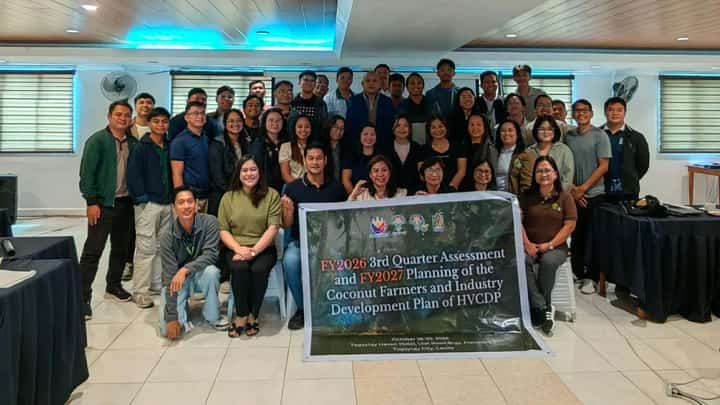
COFFEE, CACAO DEVELOPMENT. Participants in the Department of Agriculture’s FY 2026 Third Quarter Assessment and FY 2027 Planning Workshop gather in Tagaytay City, Cavite, on 26–30 October 2026, as the agency strengthens coffee and cacao enterprise development initiatives benefiting coconut farmers across CALABARZON
DA CALABARZON
TAGAYTAY CITY, Cavite — The Department of Agriculture (DA) in CALABARZON has distributed 75,000 coffee and cacao planting materials to coconut farmers as part of efforts to diversify agricultural production and strengthen livelihood opportunities across the region.
Through the Coconut-Based Coffee and/or Cacao Enterprise Development Project under the High-Value Crops Development Program–Coconut Farmers and Industry Development Program (HVCDP-CFIDP), the agency distributed 50,000 cacao and 25,000 coffee planting materials to beneficiaries.
The initiative also supports the rehabilitation of 50,000 coffee trees and 350,000 cacao trees through the distribution of inorganic and foliar fertilizers, fungicides and UV plastic materials.
Farmers also received 10 grass cutters and 10 mechanical soil augers to improve plantation management and agricultural productivity.
Meanwhile, preparations are underway for community-based nurseries in Indang, Cavite; Luisiana, Laguna; Padre Burgos, Quezon; and Santo Tomas City, Batangas.
The developments were presented during the HVCDP-CFIDP Third Quarter Assessment for fiscal year 2026 and Planning Workshop for 2027, held from 26 to 30 October in Tagaytay City, Cavite.
The gathering brought together representatives from different regions to assess program accomplishments, review industry roadmaps and identify priorities for the coming year.
DA-CALABARZON Officer-in-Charge Regional Executive Director Engr. Redelliza Gruezo reaffirmed the regional office’s commitment to initiatives aimed at improving the livelihoods of coconut farmers and other agricultural producers.
HVCDP-CFIDP Director Joseph Manicad, meanwhile, encouraged participating regions to surpass their previous accomplishments through stronger interagency collaboration and improved implementation strategies.
The workshop also included a benchmarking visit to Gourmet Farms in Silang, Cavite, attended by Agriculture Undersecretary Cheryl Marie Caballero.
The visit focused on coffee processing and nursery management practices that could be replicated in other agricultural communities.
Participants also explored the potential of Gourmet Farms as a market partner for coffee products produced in CALABARZON and other regions.
The DA said the continuing interventions are intended to develop more productive and sustainable coffee and cacao enterprises among coconut-farming communities.