
DoE sees fuel rollback, rules out return to P150/L level
International diesel prices have fallen by nearly $17 per barrel over the past trading days, reversing part of the surge that had pushed domestic pump prices sharply higher.

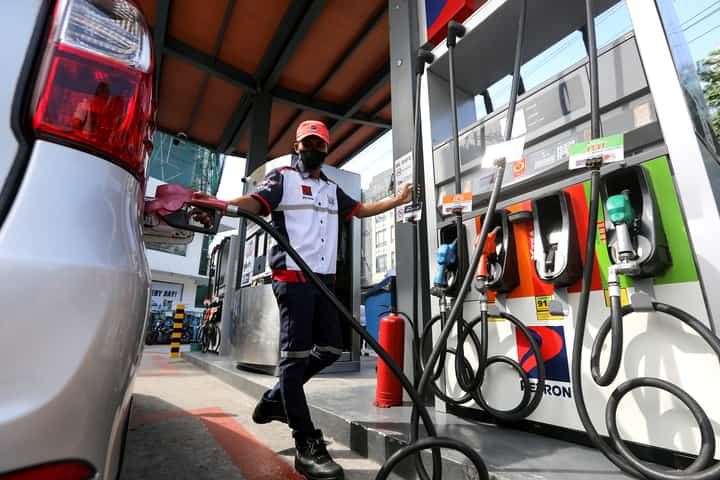
THE decline in fuel prices expected next week comes as global petroleum prices drop, with Saudi Arabia moving to keep crude exports flowing despite risks along major shipping routes, easing fears of a stretched squeeze in supplies.
Philippine News Agency
Motorists could see a sizable fuel price rollback next week as global petroleum prices retreat, with the Department of Energy (DoE) also ruling out a return to the P150-per-liter level reached during the April oil shock.
DoE Oil Industry Management Bureau director Rino Abad said Tuesday that international diesel prices have fallen by nearly $17 per barrel over the past trading days, reversing part of the surge that pushed domestic pump prices sharply higher.
Based on current trading, Abad said diesel prices could roll back by around P8 per liter next week if the decline holds through Friday.
“As early as Monday, our estimate is already around a P8-per-liter rollback if this continues up to Friday,” Abad said. “We really will not reach P150 per liter again.”
Drop in international diesel prices
International diesel prices, which climbed as high as $256 per barrel during the April oil shock, have since dropped to around $176 per barrel, according to Abad.
The retreat comes as Saudi Arabia moves to keep crude exports flowing despite disruptions along major shipping routes, easing fears of a prolonged supply squeeze.
Abad said Saudi Arabia’s loading of 14 million barrels of crude oil signaled to the market that supplies would continue reaching buyers, helping reverse the recent spike in petroleum prices.
Exports continuing despite risks
Saudi Arabia is also loading seven very large crude carriers in the Strait of Hormuz, providing another indication that exports are continuing despite risks in the region.
Prices could stabilize further if disruptions in the Red Sea are resolved within the estimated three-to-five-week period, Abad said.
“If Saudi Arabia’s supply through the Strait of Hormuz is normalized, and the situation in the Red Sea is resolved within three to five weeks, we really will not reach P150 again,” Abad said.
The government, however, is keeping possible interventions ready should oil prices climb again.
Energy Secretary Sharon S. Garin said President Ferdinand Marcos Jr. called another meeting last week to discuss measures that could be deployed, with agencies including the Department of Social Welfare and Development and the Department of Transportation preparing possible interventions.
Assistance would particularly focus on public transportation, which is more directly exposed to elevated fuel costs.
This week, regular diesel and diesel plus prices increased by a maximum of P8.82 per liter while gasoline prices will rise by as much as P4.88 per liter. Kerosene will increase by up to P6.47 per liter.
Enough fuel inventory
As of 18 September, the DoE said the country holds enough fuel inventory to cover 53.36 days of demand.
Diesel stocks were sufficient for 57.07 days and gasoline for 56.02 days, while kerosene inventories could cover 129.52 days. Fuel oil and LPG stocks were equivalent to 40.86 days and 36.59 days of demand, respectively.