
Baguio residents oppose proposed redesign of city seal
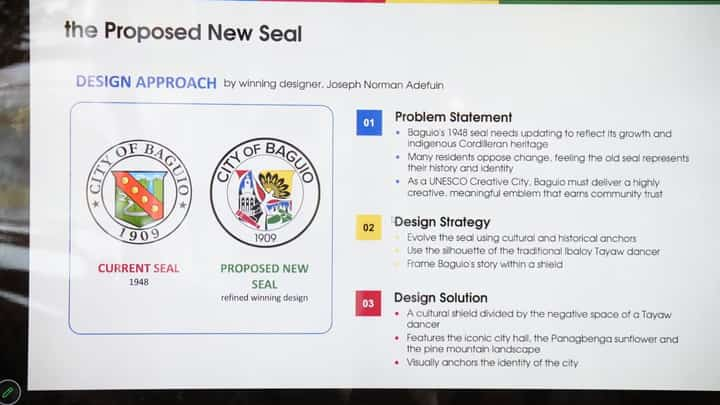
BAGUIO CITY — A proposed redesign of Baguio City's official seal has drawn criticism from residents who believe the existing emblem should be preserved as a symbol of the city's history, identity and cultural heritage.
During a public consultation, the city government presented a preliminary design alongside a discussion of the history and significance of the existing seal.
Officials emphasized that the proposed design is not final and that public feedback will be considered before any decision is made.
Many residents expressed support for retaining the current seal, arguing that it represents Baguio's identity and its past recognition as one of the country's cleanest and greenest cities.
Longtime residents said the emblem reflects the city's natural beauty, historical milestones and collective memories, making it more than an official government symbol.
Some suggested that the city develop a separate promotional logo to highlight its designation as a UNESCO Creative City rather than replace the existing seal.
The proposal also raised questions about government spending and priorities.
Several residents questioned whether funds for the redesign could instead be allocated to more pressing concerns, including infrastructure improvements and social welfare programs.
Others criticized what they perceived as a rushed initiative, arguing that the city government should prioritize public services over changes to its official emblem.
One resident who has lived in Baguio for 33 years said the seal represents decades of shared experiences, challenges and achievements, as well as the legacy of previous city leaders.
Critics also stressed that an official seal serves as a symbol of government authority and legitimacy, distinguishing it from logos used for tourism promotion and commercial branding.
They warned that incorporating tourism-oriented elements into the seal could diminish its historical significance.
The debate has also raised questions about balancing modernization with heritage preservation.
While simplified designs may improve visibility on digital platforms and official documents, opponents argued that removing traditional symbols could weaken the seal's historical meaning.
Adopted in 1948, the existing Baguio City seal incorporates elements representing the city's mountainous landscape, pine forests and economic history.
Its design features pine trees symbolizing Baguio's mountain environment, a zigzag road and waterfall representing Kennon Road and Bridal Veil Falls, and four gold circles associated with the area's mining heritage.
The city government said it would review the comments and recommendations gathered during the consultation before proceeding with any changes.
Officials reiterated that no final decision has been made and that public sentiment will help guide the next steps.