
Marcos sees more trade, investment opportunities from ASEAN-China ties
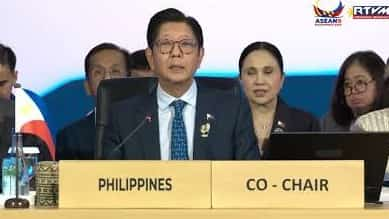
President Ferdinand Marcos Jr. said Filipino businesses could gain greater access to regional markets and investment opportunities as ASEAN and China strengthen economic cooperation amid global uncertainties.
Speaking at the 29th ASEAN-China Summit at the Philippine International Convention Center in Pasay City on Monday, 16 November 2026, Marcos highlighted efforts to expand trade, investment and cooperation in emerging industries.
The meeting focused on advancing the China-ASEAN Free Trade Area 3.0 Upgrade Protocol and implementing the ASEAN-China Plan of Action for 2026 to 2030.
These initiatives are expected to create opportunities for Filipino exporters, investors and small businesses seeking to expand into regional markets.
Cooperation in digital technology, artificial intelligence and environmentally friendly industries could also support the growth of Philippine enterprises.
“Even amid regional and global uncertainties, ASEAN and China continue to find common ground and pursue tangible cooperation,” Marcos said.
The President cited the participation of ASEAN and Chinese companies in major trade and investment activities, including the China-ASEAN Expo held in September.
Chinese Premier Li Qiang, meanwhile, called for stronger economic cooperation and open trade amid growing restrictions in the global economy.
“Although economic and trade restrictions have substantially increased around the world, we remain firmly committed to safeguarding multilateralism and promoting free trade and endeavor to make the pie of cooperation bigger,” Li said.
“We signed the China ASEAN Free Trade Area 3.0 upgrade protocol, creating the institutional foundation for building a mega-sized regional market,” he added.
Marcos welcomed Li and other regional leaders as ASEAN and China commemorated 35 years of relations and five years of their Comprehensive Strategic Partnership.
“As we mark these milestones, let us build on the achievements of our partners to advance peace, stability, and prosperity in our region,” Marcos said.
Energy security
Energy security also figured prominently in the discussions as ASEAN and China sought stronger coordination to address potential disruptions to regional energy supplies.
Marcos highlighted the Joint Statement on Addressing the Regional Impacts of Developments in the Middle East and Strengthening Regional Energy Cooperation, adopted in July.
“The adoption of the Joint Statement on Addressing the Regional Impacts of Development in the Middle East and Strengthening Regional Energy Cooperation last July reflects our shared commitment to regional coordination and energy security,” Marcos said.
The initiative seeks to strengthen cooperation in responding to global developments that could disrupt energy markets and affect regional economies.
For the Philippines, closer coordination could help address vulnerabilities associated with fluctuating global energy prices and supply disruptions.
Reliable energy supplies are critical to maintaining industrial operations, supporting businesses and protecting jobs while helping manage transportation and household expenses.
Marcos stressed that practical cooperation among regional partners remained essential despite economic uncertainties.
As ASEAN chair for 2026, the Philippines continues to pursue partnerships intended to promote economic growth, investment, job creation and energy security across Southeast Asia.