
ASEAN dividend
Hosting ASEAN should be an investment in the country’s future, not simply an exercise in international hospitality.
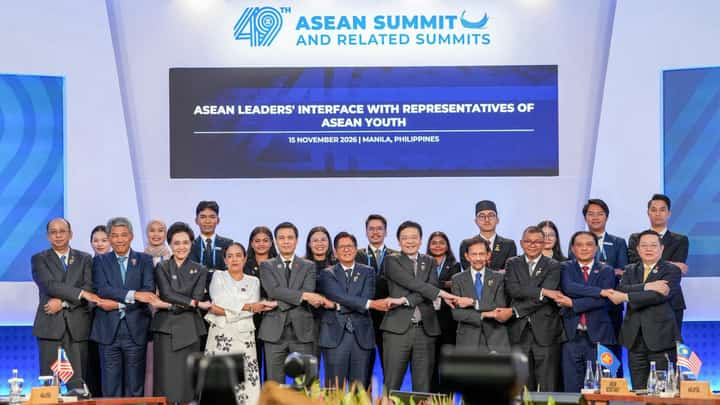
Hosting an ASEAN Summit is a privilege. It gives the Philippines an opportunity to shape the regional agenda, strengthen diplomatic relationships and advance its national interest. But prestige alone may not justify an expenditure of P22 billion in public funds. The more important question is: What will the Filipino people receive in return?
The 49th ASEAN Summit in Manila brings together regional leaders at a time when Southeast Asia faces mounting geopolitical tensions, economic uncertainties, maritime disputes and rapid technological transformation.
These are important challenges, and the Philippines has legitimate reasons to invest in regional diplomacy. But the success of the summit must ultimately be measured by tangible outcomes, not ceremonies, declarations or the number of dignitaries who attended.
Perhaps the most consequential issue for the Philippines is the South China Sea and the long-awaited ASEAN-China Code of Conduct (CoC).
Negotiations have reportedly made substantial progress, but the agreement remains unfinished.
For the Philippines, this is not merely a diplomatic document. It concerns our sovereign rights, maritime entitlements, security and ability to exercise lawful activities within our exclusive economic zone.
A meaningful CoC must be firmly anchored on the United Nations Convention on the Law of the Sea (UNCLOS). It must complement, not undermine, the 2016 arbitral ruling that favored the Philippines.
It should establish clear rules against intimidation, dangerous maritime encounters and unilateral coercion, supported by credible mechanisms for implementation and dispute resolution.
An agreement that merely expresses good intentions, without accountability for violations, would offer little protection. The Philippines should not sacrifice the substance of its maritime rights simply to claim the political accomplishment of concluding a CoC during its chairmanship. A weak agreement may not necessarily be better than no agreement.
Equally important is the ASEAN Digital Economy Framework Agreement (DEFA), signed during the summit. This could prove to be one of the more consequential economic achievements of the Philippine chairmanship.
The DEFA seeks to facilitate cross-border digital trade, electronic commerce, digital payments, data flows, cybersecurity and cooperation in emerging technologies, including artificial intelligence.
Its potential benefits to the Philippines are considerable. Our business process outsourcing industry, technology companies, digital entrepreneurs and small and medium enterprises could gain access to a much larger regional market. Filipino professionals could find new opportunities, while more integrated digital payment systems could make regional commerce easier.
But signing an agreement is only the beginning. Its value will depend on implementation, domestic regulatory reforms, digital infrastructure, cybersecurity safeguards and the ability of Filipino businesses to compete. A regional digital economy worth trillions of dollars means little if Philippine enterprises are unable to participate meaningfully.
Beyond these two major concerns, ASEAN cooperation offers opportunities in trade, investment, energy security, food security, migrant-worker protection and transnational crime prevention.
Existing arrangements such as the RCEP and ATIGA could help expand trade and strengthen regional supply chains. Cooperation on energy could reduce our vulnerability to external fuel disruptions. Regional mechanisms against cybercrime, trafficking and online scams could provide greater protection to Filipino citizens.
These are not insignificant benefits. However, we must distinguish between binding agreements, political declarations and aspirations. Not every document signed at a summit creates an enforceable obligation or produces immediate economic gains.
Which brings us back to the P22 billion.
The government’s proposed 2026 expenditure for hosting ASEAN was reported at approximately P17.5 billion. The higher P22-billion figure requires reconciliation with final appropriations, releases and actual expenditures. Whatever the final amount, the public deserves a complete accounting.
Where did the money go? How much was spent on security, transportation, accommodations, facilities, infrastructure, procurement and other administrative requirements? Who got the contracts? Were competitive procurement procedures observed? Which facilities will remain useful to the public after the summit?
These are legitimate questions, not criticism of the diplomacy itself.
The expenditure should be evaluated against measurable national benefits: investment commitments translated into actual projects, increased exports, improved market access, stronger maritime cooperation, better protection for overseas workers and concrete advances in energy and food security.
The government should publish a comprehensive post-summit report, followed by progress assessments at six months, one year and two years. The Commission on Audit should independently examine the expenditures, while implementing agencies should disclose the commitments made, their status and the results achieved.
Hosting ASEAN should be an investment in the country’s future, not simply an exercise in international hospitality.
The Philippines has an opportunity to strengthen its regional leadership, defend its maritime interests and position its economy for a more integrated Southeast Asia. But leadership is not measured by the grandeur of an event or the amount spent to stage it. It is measured by the agreements secured, the rights protected, the opportunities created and the lives improved.
Ultimately, the question is not whether the Philippines could afford to host ASEAN. It is whether the Filipino people received sufficient and lasting value for the money they entrusted to their government.
Diplomatic prestige may last for a few days. Public expenditure, however, must produce benefits that will endure for generations.