
Wake-up call: When banks go dark
Our banks must ask themselves a simple question: If their systems were attacked tomorrow, could they detect the intrusion, contain it, protect deposits and restore essential services quickly?
The next banking crisis may not begin with a run on the bank. It may begin with a computer system that suddenly stops working.
Recent events in Paraguay, France and Taiwan should serve as a warning to Philippine banks about how vulnerable digital finance has become — not only to financial mismanagement but also to increasingly sophisticated cyberattacks.
For depositors, either failure can mean suddenly losing access to their own money.
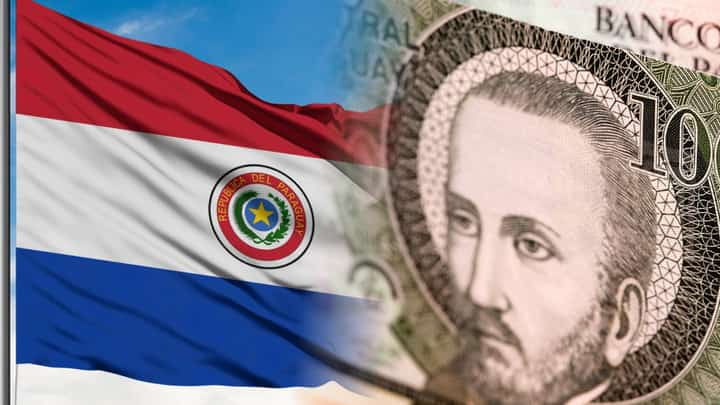
On 3 November, Paraguay’s Central Bank intervened in Ueno Bank, one of the country’s major digital lenders, after discovering that its solvency ratio had fallen below half the legally required minimum.
Ueno had approximately 2.9 million customers, equivalent to about 60 percent of Paraguay’s adult population. The intervention suspended normal banking operations, leaving millions unable to access their accounts and conduct ordinary transactions.
Protests followed as depositors demanded access to their savings and accountability from those responsible. The crisis exposed alleged questionable lending practices, substantial public sector deposits and possible conflicts of interest involving political and banking personalities. It eventually escalated into a national political crisis.
To be clear, Paraguay’s crisis was not caused by hackers. It was a failure of financial soundness and governance. Yet it demonstrates how one institution’s failure can disrupt the financial lives of millions and shake public confidence in an entire banking system.
The recent incidents in France and Taiwan revealed a different but equally disturbing danger.
In France, Crédit Mutuel Arkéa reported in November that hackers had carried out fraudulent transfers amounting to approximately p100 million, or US$112 million. The stolen funds were reportedly moved through other financial institutions and converted into cryptocurrency. The bank said customer accounts were not directly compromised.
Separately, in December 2025, La Poste, France’s postal services group, suffered a massive distributed denial-of-service attack involving billions of connection attempts. Its online services, including those of its banking arm, La Banque Postale, experienced disruptions.
In Taiwan, Bank SinoPac disclosed that hackers exploited weaknesses in a supplier’s systems connected to its mobile banking platform. The incident involved 427 unauthorized transactions affecting 419 customer accounts, involving approximately NT$41.76 million, or US$1.3 million. The bank reimbursed the affected customers.
The International Monetary Fund’s 2026 study on cyber events recorded 1,246 cyber incidents in the financial sector across 162 jurisdictions between 2014 and 2023, representing 9 percent of all recorded cyber events. Banking and securities were among the principal targets.
These incidents expose a critical weakness: A bank does not necessarily have to be penetrated through its own systems. A technology supplier, contractor or external service provider can become its weakest link.
Why the Philippines should be concerned
The Philippines is moving rapidly toward digital banking. Millions of Filipinos depend on mobile applications, electronic wallets, online transfers and cashless payments for their salaries, remittances, purchases and business transactions.
But convenience concentrates risk. A disabled banking system or compromised payment gateway could leave customers unable to withdraw, transfer or pay for necessities.
These are not remote possibilities. In 2016, approximately US$81 million stolen from Bangladesh Bank was routed through accounts at RCBC in the Philippines. The incident exposed weaknesses in international financial messaging and transaction controls, warning us that our banking channels can become part of international cybercrime operations.
Our banks must ask themselves a simple question: If their systems were attacked tomorrow, could they detect the intrusion, contain it, protect deposits and restore essential services quickly?
Assurances to the public are not enough. Banks must regularly subject their systems to independent security audits and simulated attacks. They must examine not only their own networks but also every software provider and contractor with access to their operations. The Taiwan experience demonstrates why.
They should strengthen transaction safeguards through multiple authentication measures, encryption, real-time monitoring and fraud detection. Unusual transfers and suspicious movements of funds should trigger immediate verification before money disappears beyond recovery.
But prevention alone is not enough. We must assume that even well-protected systems can be attacked. Banks should maintain secure backup facilities separate from their main networks, regularly test their recovery arrangements and establish alternative ways for customers to access essential funds during prolonged outages.
The Bangko Sentral ng Pilipinas must make cybersecurity a continuing supervisory priority. Regular stress tests should simulate major attacks, compromised suppliers and disruptions affecting several financial institutions simultaneously. Banks should also share threat intelligence while protecting customer information.
Equally important is communication. During an incident, customers must be told promptly what happened, which services remain available and when normal operations may resume. Silence and uncertainty can turn a technical problem into a crisis of public confidence.
Banks hold family savings, workers’ salaries, retirement funds and business capital. Their responsibility therefore extends beyond profitability and shareholder returns.
Paraguay shows how a banking failure can become a social and political crisis. France and Taiwan demonstrate how cybercriminals can exploit vulnerabilities even in established financial institutions. The Philippines must learn from these experiences before it suffers its own.
Digital banking is the future, but convenience without security is an invitation to disaster. The strength of a bank should not be measured only by its profits or the speed of its transactions. It should also be measured by whether depositors can trust that their money will remain safe and accessible when its systems are under attack.
We should not wait for millions of Filipinos to stand outside closed bank branches, demanding access to their own money, before we recognize that cybersecurity is a matter of national economic security.