
Not all that glitters is gold
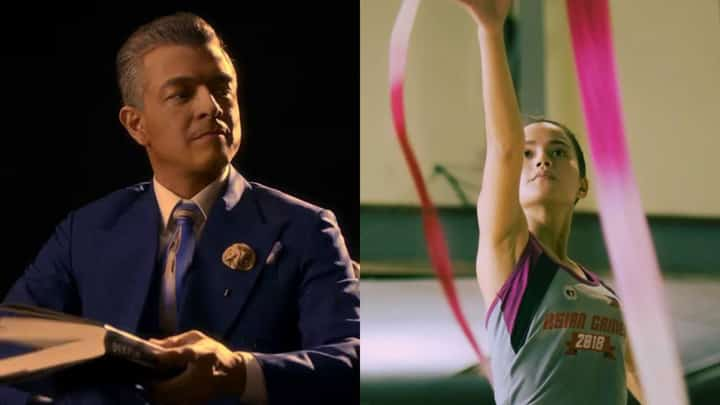
The awards season for movies in 2026 seemed to have been crammed into one month — just this past October. The Gawad Urian was staged on 8 October. The FAMAS night was held at the Manila Hotel on 27 October. In between were the Star Awards and some lesser-known awards organizations recognizing achievements in cinema last year.
Jericho Rosales was expected to score a grand slam for Quezon, except that his winning streak ended when the FAMAS gave the best actor award instead to McCoy de Leon for In Thy Name. But Jericho felt so triumphant after winning his second Urian (the first was for Alagwa in 2012) that he posted pictures of himself on Facebook clutching his trophy while riding at the back of a jeepney — supposedly on his way home. (Was that really how he got home?) Those series of photos were shared on Daily Tribune’s online site by this paper’s Alex Brosas.
With about half a dozen award-giving bodies honoring achievements in films last October, some 100 trophies were distributed in one month alone. One wonders where Maris Racal, who won a string of best actress honors for Sunshine, keeps her trophies.
Until 50 years ago, all that an actor, director or anyone who worked in cinema needed was a small table to display his or her film awards. From 1952 until 1975, there were only two awards bodies for movies: the FAMAS and the Manila Film Festival, which later became the Metro Manila Film Festival. More award-giving bodies were established starting in 1976, and today, perennial winners in these annual competitions need shelves to store their trophies.
With all these trophies seeming to flow out of a cornucopia lately, this column decided to compile bits of stories about these knick-knacks. Okay — trophies! There have been interesting tales about what happened to some of these trophies after they were turned over to their recipients. Nora Aunor, for instance, felt so jubilant after winning her first Urian in 1976 that she spent two days in her room just staring at her trophy.
The trophy stories below actually took place in public, with witnesses, some of them still alive, to attest to the veracity of each incident. It is important to document these little tales, no matter how trivial, before they are totally forgotten by movie practitioners and observers of local entertainment.
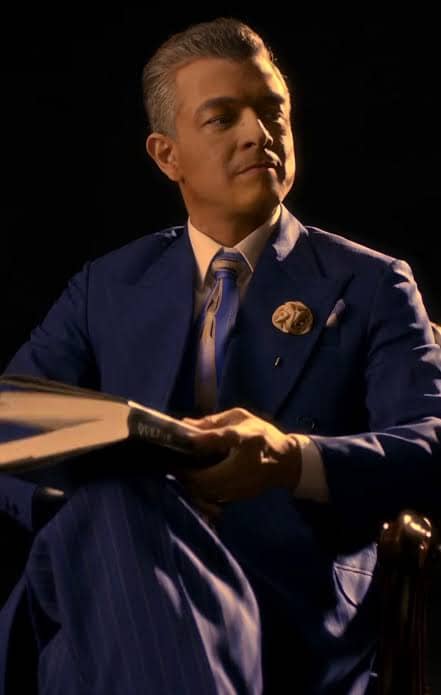
JERICHO Rosales as President Quezon.
Flowering awards
In 1959, Sampaguita Pictures brought home a truckload of trophies at the 7th FAMAS awards night. Tongues started to wag, presumably from sore losers. There were talks about how the film outfit supposedly “paid” to win those awards. Those were blatant lies.
Sampaguita Pictures’ big boss, Dr. Jose R. Perez, was a man of integrity. In his anger, he ordered all the studio talents to return their FAMAS trophies — not only those won in the year in question, but also those from the very start of the FAMAS. That meant Gloria Romero giving back her 1954 FAMAS best actress trophy for Dalagang Ilocana, even if there was no controversy over her win.
A table was set up at the studio where the previous FAMAS winners from Sampaguita Pictures surrendered — although reluctantly — their respective trophies. All those trophies were then forwarded to the FAMAS headquarters. Sampaguita Pictures did not take part in the FAMAS in the succeeding years. Dr. Perez waited until a new set of FAMAS officers had been sworn in before submitting entries again to the awards body.
But during all those years that Sampaguita Pictures was boycotting the FAMAS, its stars were tiptoeing to the FAMAS office to retrieve their respective trophies. Dr. Perez eventually found out what his stars had done but did not reprimand any of them. He had already proven his point: that Sampaguita Pictures was not one to lobby for awards.
Thanks to the efforts of Gloria Sevilla and her first husband, Mat Ranillo Jr., Cebu and neighboring provinces had their own Visayan film industry from the 1950s until the 1960s. In 1975, there was an attempt to revive Visayan movies by well-meaning Cebuano producers. A Cebu Film Festival was held, and one of the festivities was an awards night.
Chanda Romero was voted best actress for Rosaryuhan sa Kasakit. But when she was handed the trophy onstage, she dropped it on the floor, and it broke. Organizers insisted that she did it on purpose — to protest the defeat of Emmanuel Borlaza, who directed Rosaryuhan. In her defense, Chanda said that the trophy had simply slipped from her hands.
The people behind the organization did not buy her alibi. They sued her for P1 million — an amount that could have bought three houses in Forbes Park in 1975. The case did not even reach the court. The organizers of the event decided to scrap the festival altogether after that ugly incident.
Burlesk Queen was the big winner during the 1977 Metro Manila Film Festival. It was deserving of all its awards. But a speech delivered by the chairman of the board of judges, future National Artist for Theater and Literature Rolando Tinio, during the awards night elicited anger from industry practitioners. Tinio supposedly belittled the quality of the entries in that year’s filmfest. Everyone started howling at the same time — to the point that the organizers ordered the recall of the awards. Each winner was asked to give back his or her trophy, but no one complied. Best Actress Vilma Santos was even quoted as saying: “Why should I return it? They gave it to me, and I am not giving it back!” After that year, a Metro Filmfest event was not complete without controversy.
National Artist for Film Lino Brocka won the Urian Best Director award for Jaguar in 1979. During his acceptance speech, however, he said that he was refusing the award “because of the biases of the Manunuri members.” The message was vague. After his rant, he simply left his trophy on the podium. To this day, no one knows the exact reason why he refused his Urian award. As for the trophy that was left behind, it could have been recycled the following year since the Manunuri members had always been short on funds.
Johnny Delgado won the Best Supporting Actor award for the 1980 satire Kakabakaba Ka Ba?. While he beamed with joy at winning such a prestigious honor, he played it cute by putting his trophy in the pocket of his trousers after his acceptance speech. Some Manunuri members were not amused. But no real harm was done. Johnny remained one of the favorites of the critics’ group despite the little stunt he pulled with his trophy.

MARIS Racal in ‘Sunshine.’
After dark
During the 5th Gawad Urian, future National Artist for Film Ishmael Bernal was nominated in two categories for his work in Manila by Night/City After Dark: best screenplay and best director. He won Best Screenplay and was happy about it. But when he lost to Mike de Leon for Kakabakaba Ka Ba?, there were eyewitnesses who reportedly saw him kick his Best Screenplay trophy, which was on the floor. Fortunately, he recovered from his disappointment quickly enough when his film, Manila by Night, also won Best Picture.
The Cecil Awards for music had the most elegant-looking trophy ever given in Philippine entertainment. The award was named after Cecil Lloyd, who was known as the Father of the Philippine Recording Industry. As for the trophy, it was made of glass, shaped like a spire, and seemed illuminated from the inside. It also stood on a beautifully crafted base made of brass.
The trophy must have been so difficult to manufacture that when the first Cecil Awards ceremony was held at the Cultural Center of the Philippines main theater on 24 April 1982, only three trophies were finished. The organizers found a solution to the problem. After a winner had given his or her acceptance speech, the trophy was taken back and handed out to another awardee. Only three trophies made the rounds that evening, and no one noticed. But as soon as the manufacturer finished all the trophies, these were distributed to all the winners pronto. For them, it was worth the wait. It was a beautiful trophy, after all — actually a work of art — that symbolized their achievements in the field of Philippine music.
The ultimate trophy story, of course, was the time Jiro Mano sold his Urian trophy to Boss Toyo. When Jiro was 11 years old, he was voted Best Actor in the Urian for Magnifico. But his was a troubled childhood. As an adult, he got into a lot of trouble. By the time he was 32, he was jobless and without money. In 2024, he sold his Urian trophy to collector Boss Toyo for P75,000. Two years later, he was at it again — selling his very first award, which he had won as Metro Filmfest Best Child Actor for Bagong Buwan.
The last item doesn’t have anything to do with cinema. But it nevertheless involves one of the finest actresses in Philippine movies: Gloria Diaz. After winning the Miss Universe crown in Miami Beach, Florida, she was scheduled to fly back to Manila for her victory parade. Her connecting flight was via San Francisco, California. Gloria probably purchased more items during her layover than she had room for in her luggage, leaving her with excess baggage. She could have paid for the extra weight but decided to leave her Miss Universe trophy behind instead. It is said that her trophy is still kept at the Philippine Airlines office in San Francisco to this day.