
Rody camp assails ICC evidence ahead of trial
The defense also maintained that the alleged unlawful killings, even if established, did not by themselves satisfy the legal requirements for crimes against humanity.
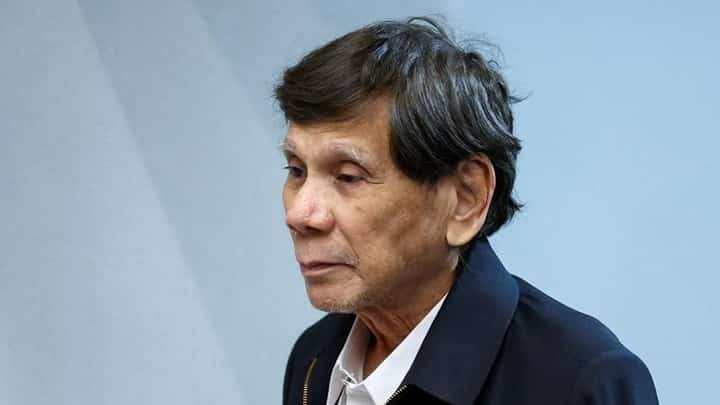
Former President Rodrigo Duterte’s camp has conceded that “unlawful killings” occurred during police operations under his war on drugs but maintained that these did not constitute crimes against humanity under the jurisdiction of the International Criminal Court (ICC). Rather, the killings are offenses for Philippine courts to address, it stressed.
In a 77-page submission, defense lead counsel British barrister Peter Haynes laid out the strategy to refute the prosecution’s allegation that Duterte’s anti-drug campaign resulted in the widespread and systematic killings of civilians, a key element of a crime against humanity.
The filing was submitted on 20 November, a little over a week before Duterte’s trial is scheduled to begin on 30 November. The filing’s redacted version was released on 25 November, a day after the Philippine Supreme Court dismissed as “moot” petitions challenging his arrest and transfer to The Hague.
Haynes argued that the prosecution’s claim of an attack against the civilian population was misplaced, saying Duterte was democratically elected as Davao mayor and Philippine president and therefore “could not wage an attack on the very people who repeatedly elected him.”
“If the evidence does not support a finding of an attack against the civilian population beyond a reasonable doubt, or a state or organizational policy to commit such an attack, the case against Mr. Duterte must fail,” the filing read.
The defense also maintained that the alleged unlawful killings, even if established, did not by themselves satisfy the legal requirements for crimes against humanity. It argued that Duterte was not the only individual criminally responsible for the deaths.
99.9 percent unharmed
“Killings undoubtedly occurred, but they were not crimes against humanity,” Haynes said. He argued that even if 10,000 of the estimated three million drug users and criminals during the charged period were attacked, this represented only 0.33 percent of that population.
“It is difficult to infer that a policy was in place to attack a civilian population when over 99.9 percent of that population was not attacked, despite the alleged perpetrators having had ample opportunity to do so,” the filing said.
“On the numbers alone, the proposition that the Davao Death Squad with Mr. Duterte as its ‘head’ or the so-called ‘national network’ over which he allegedly had control carried out a widespread or systematic attack against the population of the Philippines cannot be proven,” it added.
Duterte faces three counts of murder, including attempted murder, involving 85 alleged victims, including children, suspected of dealing drugs from 2013 to 2018. The period covered his tenures as Davao mayor and president.
A built case
The defense also accused Duterte’s political opponents — including former senator Antonio Trillanes IV, former justice secretary and current representative Leila de Lima, and the Marcos administration — of helping build the case against him.
“This case was built…this is not an allegation being made by the defense. It is a fact which appears from within the [prosecution’s own disclosure]. The killers who claim to have been the ones pulling the triggers, who were shooting victims during the charged period, are now free and protected, precisely so they can act as the building blocks of this case,” Haynes asserted.
The defense called for the killings to be prosecuted in Philippine courts, with ICC prosecutors cooperating, using an evidentiary record stripped of what it described as tainted and corrupted evidence linking Duterte to the deaths.
“While some people died in police operations, and some of those killings may have been unlawful, those are crimes under domestic law and do not demonstrate that the State of the Philippines had a policy to murder its own civilian population,” the filing said.
As the trial approaches, Haynes also cited Duterte’s cognitive impairment as a challenge to the defense, despite the ICC twice finding him fit to stand trial.
He claimed Duterte could no longer recall recent events, much less those dating back more than a decade that were covered by the case.