
Puno backs CSO push to remove ‘free pass’ in budget scrutiny
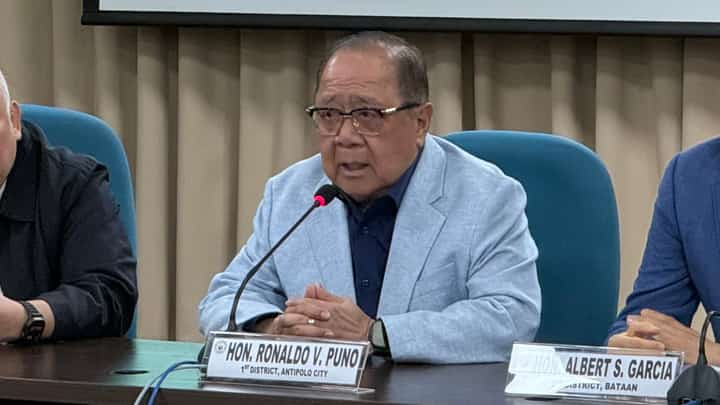
House Deputy Speaker and Antipolo City 1st District Rep. Ronaldo Puno on Thursday, November 5, expressed support for civil society organizations calling for the scrapping of the long-standing tradition of "parliamentary courtesy" during annual budget deliberations to ensure equal transparency across all branches of government.
Agencies that are granted the “free pass” see their budgets get approved automatically without any pushback or questions from lawmakers in both chambers of Congress.
Lawmakers often grant the unwritten rule whenever it comes to discussing budgets for the Office of the President (OP), Office of the Vice President (OVP), the Senate, and the House of Representatives.
Puno, for his part, said that it was likely high time for the practice to be set aside given the continued calls for transparency and accountability when it comes to fiscal spending.
“We think that if we are going to require departments to be very transparent and explain in detail their expenditures, maybe it’s not good to have exceptions to the rule,” he expressed during a press conference on Thursday.
“We’ll just do it for all; let’s not put an exemption to the transparency rule. If we’re going to be transparent, let’s be transparent from top to bottom,” he added.
The lawmaker’s sentiments came after a thorough discussion with the People’s Budget Coalition (PBC), which included the removal of “parliamentary courtesy” in its requests for changes to the budgetary process.
Issues regarding the Congress-granted privilege were again raised during the recent deliberations for the proposed 2027 budget, as the House of Representatives granted the OP a free pass while denying the same for the OVP.
Minority lawmakers, particularly ACT Teachers' Partylist Rep. Antonio Tinio, challenged the decision, echoing similar calls for a fair application of the “principle of transparency.”
While acknowledging the need for the change, Puno said there was not necessarily a way for them to apply the principle at this point in the budget process, given that the House’s version of the fiscal blueprint had already been transmitted to the Senate.
Puno maintained, however, that they would look to adopt equal scrutiny when deliberations for the 2028 budget begin.
“Just for this year, what we will do is we will support the efforts of the civic society groups to get all of these things, and our role as a party will be to—I guess—air this, to mention this in the bicam when we can... so that at least it will be considered before the approval of the General Appropriations Act,” he said.
“Parliamentary courtesy is an informal, unspoken, unwritten rule, so there’s nothing preventing us from actually delving into those agencies in the future, probably by the 2028 budget at the earliest,” he pointed out.
The lawmaker likewise vowed to continue coordination between civil society groups like the PBC and the National Unity Party, where he serves as chairperson, regarding the budget in coming years.