
Why wealthy Filipinos turn to Singapore for cancer care
For Filipinos who can afford it, Parkway Cancer Centre offers faster cancer evaluation and treatment. But access to private cancer care abroad comes at a price.

“Patients come to us when they’re not yet ready to die,” said Dr. Ang Peng Tiam, medical director of Parkway Cancer Centre (PCC) in Singapore, a popular choice among Filipino patients seeking a quick diagnosis or treatment. He shared this during PCC’s anniversary luncheon with members of the media on 4 September.
The operative word here is “quick.” And because the word “cancer” can disrupt anyone’s psychological state, a quick and accurate diagnosis becomes all the more important.
At PCC, according to Ang, patients can undergo diagnosis and evaluation and begin treatment within 48 hours. That’s even shorter than the time it took me to finish Netflix’s limited series adaptation of East of Eden.
When faced with a possible cancer diagnosis at a clinic or hospital in Manila, one needs answers ASAP. It is human, after all, to experience fear of death and uncertainty. But in our country, getting a diagnosis can sometimes take months.
So, what if you’re not ready to die?
True enough, the Philippines is lucky to have Singapore as a neighbor. PCC, established in 2006, offers cancer evaluation and treatment within a remarkably short period.
Sure, there is the Memorial Sloan Kettering Cancer Center in New York, where actress Cherie Gil received treatment before her death in 2022, which was ranked the world's No. 1 oncology hospital in Newsweek’s 2026 World’s Best Specialized Hospitals list. But imagine the time and money saved if you are only traveling a mere 3.5-hour flight from NAIA to Changi Airport.
The price of a second chance
But one reality we cannot avoid in this discussion of cancer treatment is wealth.
Only the wealthy realistically can afford to seek private cancer care overseas. On top of airfare and accommodation, there are consultation fees. According to Parkway Cancer Centre's consultation fee as of 2024, first-consultation charges range from S$272.50 to S$545, or approximately PHP13,516 to PHP27,032 at an illustrative exchange rate of PHP49.60 to S$1.
The amount also depends on the specialist and consultation. These fees do not include medication, procedures, laboratory tests, imaging, or other investigations. For a Manulife policyholder in the Philippines, you are also eligible for discounted rates.
But cancer is not a death sentence, even in the Philippines, and even for those who are not wealthy. We have numerous cancer survivors who, through God’s help, receive support from relatives, foundations, charities, and government assistance.
The thing about PCC is its expertise and ability to provide quick diagnoses. For patients with substantial disposable wealth or comprehensive international medical insurance, this kind of care is within reach. PCC offers it guided by its principles of trust, care, and hope.
The doctor Filipinos seek
Ang candidly admitted that he is “quite popular” among Filipino patients. He is, in his own words, “the poster boy” for cancer treatment in the Philippines. Dr. Willie Ong, for example, is his patient.
“Even as I talk about Filipino patients, it is not one homogenous group. There are some good hospitals, good doctors (in the Philippines), you know. But there are also many areas where there is a lot of shortcoming—”
Then he stopped himself. “Okay. So it's very hard for me to generalize. But all I can say is at this time in the Philippines, what I find lacking is this ability to move fast enough, to move accurately enough consistently.”
He did not mince words about the Philippine healthcare system. While he acknowledged that the country has good hospitals and doctors, Ang questioned whether the system could consistently deliver the same standard of care to all patients.
He said that care for VIP patients in the Philippines “can move very, very smoothly, everything goes well.” But he argued that this is not the experience of many patients.
“Because of the volume of patients and because of the lack of resources, the care is often not the case. So in other words, there are good doctors, there are good hospitals. But I do not think that you can deliver consistent good care.”
“And that is where a country like Singapore excels because we have got great resources. You know there's been heavy investment. So a doctor like myself or a doctor like one of those we have in our team, a lot has been invested in them,” he said.
He added that setting up a PCC satellite clinic in the Philippines would not be feasible because the center would not be able to provide the same standard of care.
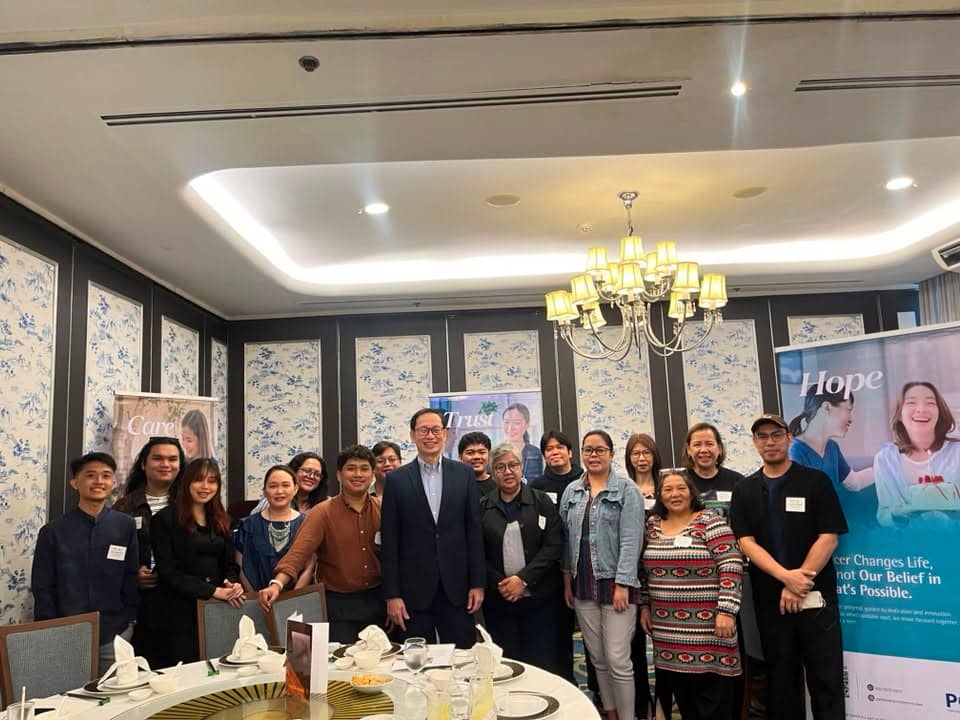
Dr. Ang Peng Tiam meets with members of the Filipino media during a gathering on 4 September at a restaurant in Makati City.
Handout.
A family's fight
So here is another PCC success story shared with the media—the Yuvallos family of Cebu.
One day, during the COVID-19 pandemic, their daughter Janna underwent a routine scan for an unrelated issue. Doctors found a small lump on her thyroid. It came as a surprise because Janna had not experienced any unusual symptoms.
But suddenly there it was: stage 1 papillary thyroid carcinoma.
Encouraged by the positive experiences shared by friends and relatives who had received treatment there, the family turned to PCC. And they were impressed.
“Everything is so convenient and efficient,” the family shared. “The test interpretations are more detailed, and every procedure is carried out with great care.”
This is the kind of peace of mind that patients and their families can only dream of when faced with a diagnosis as frightening as cancer. But that kind of peace of mind comes with, well, money.
For Janna’s dad, Gerald, however, the expense was worth it if you could afford it.
“What most people see is the cost,” said Gerald. “While it is more expensive, the positive effects very well outweigh the cost. The experience is stress-free, our confidence in the tests is very high, and it has been life-altering. We have less stress, greater confidence, and a more positive outlook.”
Because of PCC’s holistic care, Gerald came to a realization: “We used to think only the patient needed attention and everyone else simply had to cope. With proper education, the burden on caregivers can be greatly reduced, allowing everyone's well-being to be properly addressed.”
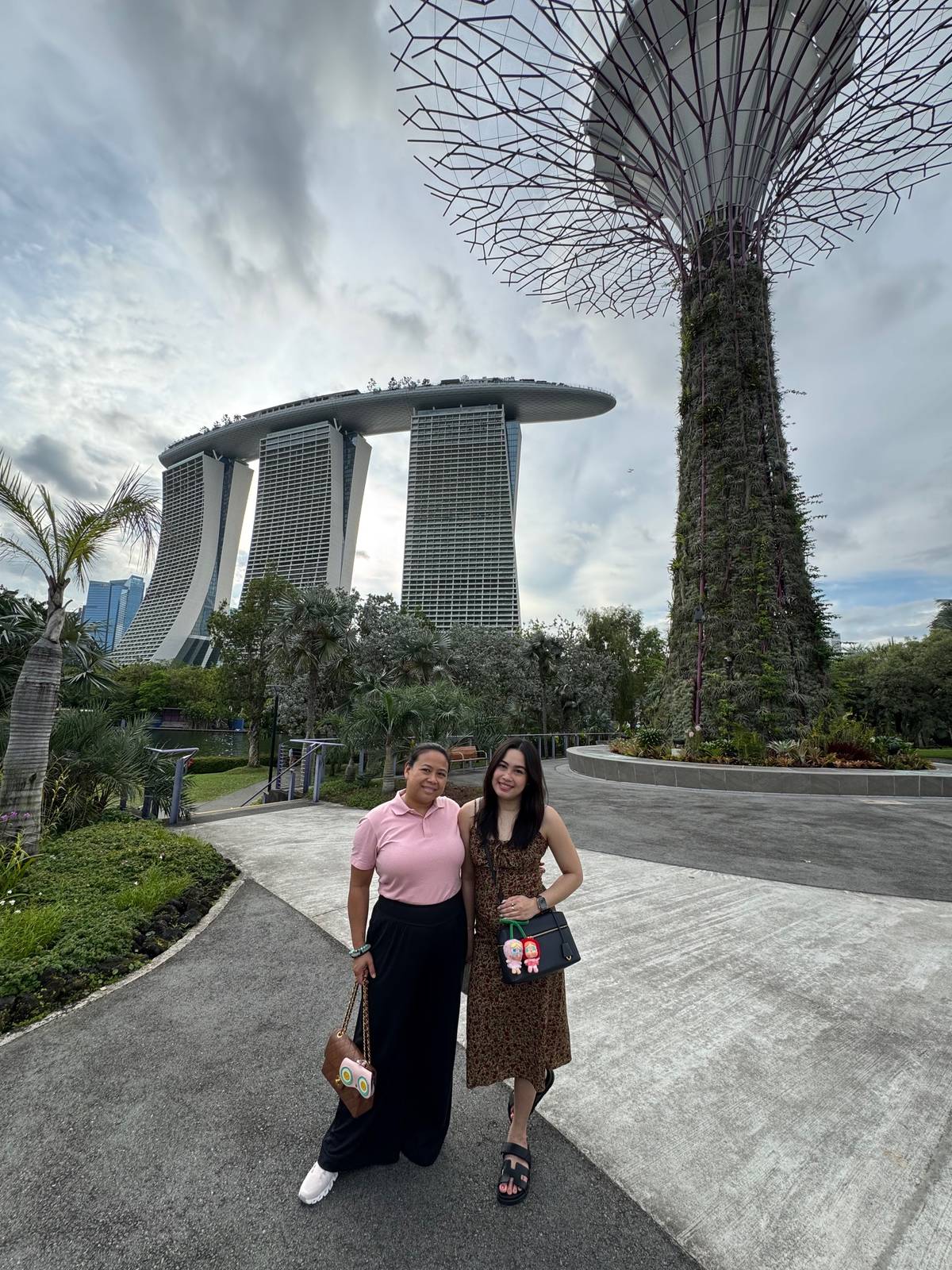
Janna Yuvallos and her mother, Janice, pose for a photo at Marina Bay Sands in Singapore.
Handout
According to PCC’s account, Janna recovered after treatment.
“Many patients from the Philippines and the region come to Singapore because they seek greater clarity on their condition like the accuracy of their diagnosis, the treatment plan, the specific medications or treatments recommended, and a better understanding of the long-term outcome of their disease,” said Dr. Khoo Kei Siong, senior consultant and medical oncologist, who helped guide Janna’s care.
According to PCC, they coordinate with patients before they travel, including identifying the medical records and biopsy specimens they need to bring.eal
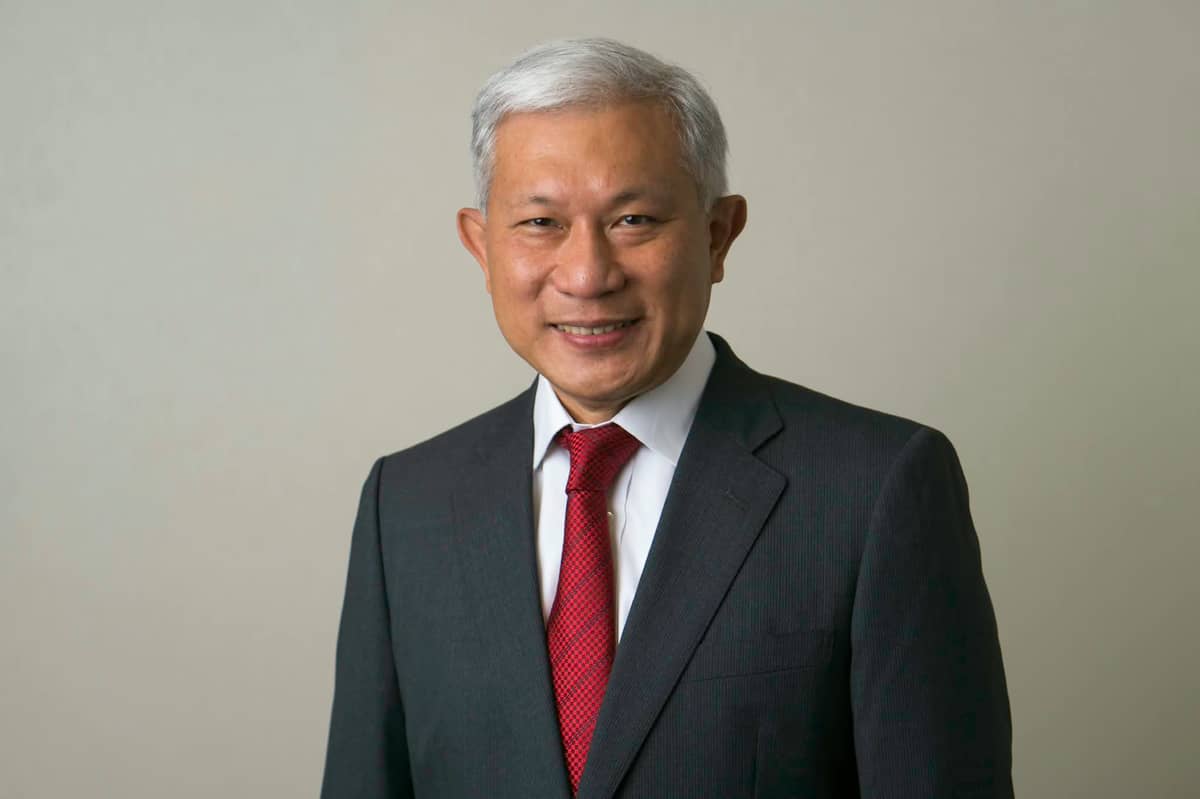
Dr. Khoo Kei Siong, PCC deputy medical director & senior consultant, who helped guide Janna Yuvallos’s care.
Handout
The care we all want
This kind of efficiency is what we seek in any type of illness, including common conditions such as pneumonia, urinary tract infections (UTIs), appendicitis, or kidney stones. We want to be cared for, paid attention to, and spared red tape, bureaucracy, perfunctory doctors with no empathy, and days, months, or even longer of waiting for clear answers.
Doctors took almost a month to discover that I had a pulmonary embolism in 2016. The gaslighting I experienced, when my shortness of breath was dismissed as something in my head and my rapid heart rate was attributed to anxiety, was traumatizing. No sick patient deserves that. But that is a reality countless patients experience, especially those who are no VIP.
And, again, cancer nowadays is not an automatic death sentence. PCC, in fact, offers treatments for advanced cancer, including targeted therapy and immunotherapy.
Patient testimonials shared by the center describe people who have returned to their passions and daily routines after treatment for late-stage cancer. It's as if their cancer journey were all but a dream, and they are now back to golfing, playing music, spending time with their grandkids, running, and hiking. Living.
Forty-eight hours
“Only last night,” Dr. Ang said that afternoon in September, “we were told about a patient whose friend had suspected breast cancer. She was told that she would need a PET-CT scan, which was scheduled in two weeks' time, and that she might need a biopsy. And after they do the biopsy, it would take at least another five to seven days for the result to come out."
"So in other words, you're talking about three weeks," he explained. "So, when she came to Singapore, I saw her in the morning, and we did the PET scan the same morning! Then we did the biopsy in the afternoon. We finished all the staging and started treatment the next day."
The thing is, we do not own our lives. We have no control over what happens to us. A person can die from the flu, just as breast cancer can cut our dreams for the future short.
A poor patient can survive cancer, while a rich patient can die.
And what PCC offers is an option for the wealthy. An option unavailable to someone earning a journalist’s salary, an indie actor’s income, or an office clerk’s pay. For those blessed with money, a beacon of hope shines about 1,500 miles away from Manila.
“So one of the big reasons why people come to Singapore is within 48 hours of arrival, we should be able to complete our evaluation and come up with a proposed treatment program," Dr. Ang said. "It is this fast turnaround, this efficiency that makes people say, 'Look, I don't mind flying over, even if it's just for the diagnosis. To know what to do.' It is worth it.”