
Remolona calls economic woes ‘slowflation,’ not stagflation
“[Growth] will recover in the fourth quarter, but it's still lacking,” he said.
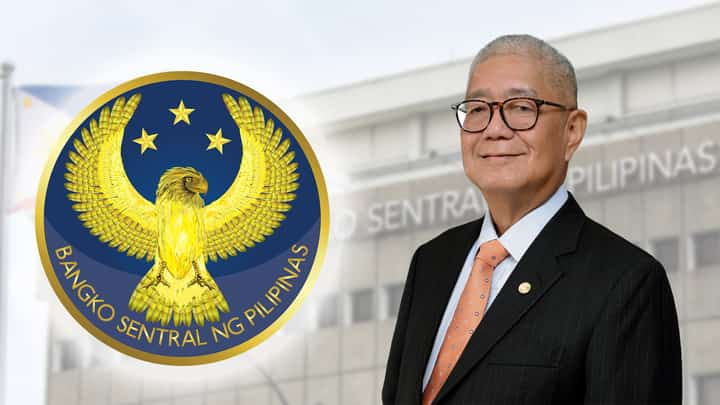
Bangko Sentral ng Pilipinas (BSP) Governor Eli M. Remolona Jr. said the Philippines’ economic woes may be better described as “slowflation” than stagflation, acknowledging the difficult trade-offs posed by sluggish growth and accelerating inflation as the central bank continues efforts to bring prices back down.
Speaking to reporters at a press dinner in Makati on Monday evening, Remolona said stagflation has no universally accepted definition, and that the country’s current economic conditions may be more accurately described as “slowflation.”
“There's no clear definition of stagflation,” he said.
“One definition is negative growth and high inflation. It looks like high inflation because the band is above 4 percent. But growth isn’t negative,” he added.
Remolona acknowledged that the latest slowdown in economic growth could fit other interpretations of stagflation, but nonetheless preferred to describe the current situation as “slowflation.”
“If it means slow growth, we are,” he said.
The debate over whether the Philippines is experiencing stagflation intensified after the release of third-quarter gross domestic product (GDP) figures, which showed growth slowing for a fifth consecutive quarter amid the fallout from last year’s flood control scandal.
Johanna Chua, Citigroup global head of emerging market economics, said October inflation of 7.8 percent was well above the government’s two to four percent target, while third-quarter economic growth fell well below the country’s historical pace of five to six percent.
“Obviously, by that definition, you can call it stagflation or slowflation,” Chua said.
Other economists, however, have questioned whether the Philippines has met the technical definition of stagflation. Bank of the Philippine Islands lead economist Emilio Neri Jr. described the current combination of economic conditions as “toxic,” but said true stagflation would require an “entrenched, long-term structural breakdown” marked by high inflation and unemployment alongside weak growth.
Former Finance Secretary Gary Teves also acknowledged the varying interpretations of stagflation, agreeing with Remolona’s “slowflation.” assessment.
“Many economists vary under interpretation on what stagflation is. Some would suggest that a combination of continuous slowdown in economic growth, high unemployment and under employment, and high interest rates would be manifestations of stagflation,” he told DAILY TRIBUNE last month.
“However, we are not yet in the zero or contraction territory yet. And I think we need to find out how things will work out,” added Teves, noting that the country should be “concerned” with the economic outlook.
Remolona also acknowledged the policy trade-offs posed by sluggish growth as the BSP continues to bring inflation back toward its three percent target.
“Weak growth means we're less aggressive on monetary policy,” he said, noting that the central bank has limited room to raise interest rates, with tighter monetary policy often coming at the expense of economic growth.
The BSP has raised interest rates four consecutive times since the Gulf energy crisis began in March. Over the same period, economic growth continued to slow, which Remolona attributed in part to the impact of the flood control scandal on public investment.
“Growth is so weak because public construction, public capital formation is down 15%. In the second quarter it was down 30%. Now it's only down 15%,” he said.
“They're trying very hard to resume public construction. And the unintended consequence of the flood control scandal – the effort to discipline the spending related to the flood control scandal – has led to a sharp decline in government spending in construction,” he added.
Remolona said inflation could rise further from October’s three-year high, but remained optimistic that economic growth would recover in the fourth quarter, although the rebound would be subdued.
“It will recover in the fourth quarter, but it's still lacking,” he said.