
Stagflation is here — Citi
GDP growth slumps, hits 2.1%
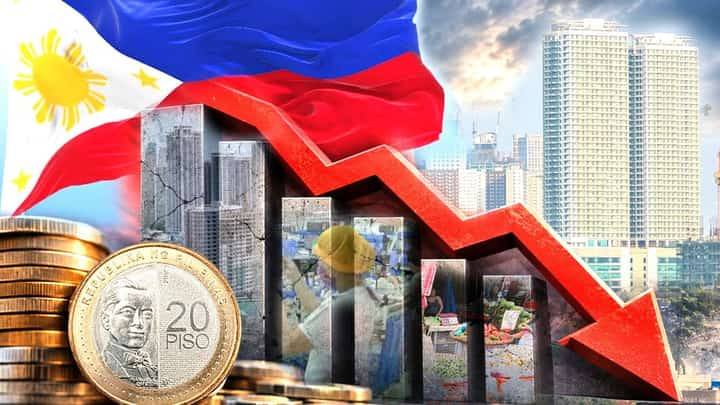
ECONOMIC growth slowed further to 2.1 percent in the third quarter, extending the country’s losing streak amid persistent economic and governance challenges.
DAILY TRIBUNE GRAPHICS
Philippine economic growth slowed to 2.1 percent in the third quarter of 2026, its weakest expansion since the fourth quarter of 2009 outside the pandemic years, raising concerns that the country may be slipping into stagflation as high inflation, rising unemployment and weak economic activity converge.
Citigroup said the Philippines was already experiencing stagflation, or what it called “slowflation,” as October inflation surged to 7.8 percent, economic growth fell well below historical levels and unemployment continued to climb.
The latest gross domestic product (GDP) figure marked the fifth consecutive quarter of slowing growth under the Marcos administration, as declining public investment, higher prices and weakening household spending dragged down economic activity.
The slowdown also comes amid lingering uncertainty over the multibillion-peso flood control scandal, which has undermined confidence in government infrastructure spending.
The Philippine Statistics Authority and the Department of Economy, Planning and Development (DEPDev) announced the figures Monday, which fell short of economists’ expectations.
DEPDev Secretary Arsenio Balisacan attributed the slowdown to higher prices driven by the Middle East conflict, weather disturbances during the rainy season and the continued decline in public investment following last year’s flood control controversy.
“The Middle East conflict raised fuel costs affecting transport, electricity, and production. Inflation of 7.8 percent in October underscores the continuing pressure on purchasing power,” Balisacan said.
Public construction contracted for the sixth consecutive quarter, although the decline eased to 15.1 percent from 33.4 percent. Private construction barely expanded, while investment in durable equipment fell 7.8 percent.
Household consumption, a major growth driver, also weakened, expanding by 2.4 percent from 2.9 percent in the previous quarter as rising prices eroded purchasing power.
Inflation accelerated to 7.8 percent in October, its fastest pace in three years and eight months, driven by higher transport, electricity and housing costs. Balisacan said price pressures could persist in November because of the delayed effects of earlier fuel increases.
He said the economy would need to expand by 6.3 percent in the fourth quarter to meet the government’s full-year growth target of 3.5 to 4.5 percent, describing such a recovery as challenging.
Growth of around four to 4.5 percent would be needed to achieve at least three percent for the year, he said, adding that such a result would be remarkable under current conditions.
Balisacan acknowledged that governance concerns surrounding the flood control scandal continued to weigh on market confidence and infrastructure spending. Infrastructure and other capital outlays declined 34.6 percent year-on-year from January to August.
He called for greater transparency, predictable policies and fiscal discipline to restore confidence and revive public investment.
The scandal has led to the detention of several high-profile figures, including former House Speaker Martin Romualdez and Senators Jinggoy Estrada and Rodante Marcoleta, but no convictions had been recorded as of press time. Former lawmaker Zaldy Co, who accused President Ferdinand Marcos Jr. of being the alleged mastermind of the kickback scheme, remains at large.
Asked whether the economy had entered stagflation, Balisacan said it was too early to make that assessment.
“I think I would wait for the end of the year to think of stagflation,” he said, stressing the need to consider the economy’s broader performance rather than a few indicators.
Citi, however, said the Philippines was already experiencing stagflation or “slowflation,” citing persistently high inflation, weak economic growth and rising unemployment.
Johanna Chua, Citigroup’s global head of emerging market economics, said Monday that October’s 7.8-percent inflation was far above the two- to four-percent target, while third-quarter growth was well below the country’s historical five- to six-percent pace.
“Obviously, by that definition, you can call it stagflation or slowflation,” Chua said.
Citi had expected the economy to grow by 3.8 percent in the third quarter, above the 3.1-percent market consensus. Chua described the actual result as a substantial miss that required a reassessment of the bank’s outlook.
Citi chief executive officer and banking head Paul Favila said the economic environment remained unfavorable, with external developments, particularly geopolitical tensions and movements in oil prices, limiting the government’s room to respond.
Meanwhile, unemployment rose to 2.86 million in September from 2.77 million in August and 1.96 million a year earlier. The unemployment rate climbed to 5.4 percent from 5.3 percent a month earlier and 3.8 percent in September 2025.
The latest inflation figures have also prompted banks to revise their interest rate outlooks. Citi expects two more quarter-point increases in the benchmark rate, bringing it to six percent, before the Bangko Sentral ng Pilipinas resumes monetary easing in 2028.
Despite the near-term challenges, Citi sees growth recovering to as much as 5.8 percent in 2027, provided Middle East tensions ease, public investment picks up and inflation pressures subside.