
Marcos orders ‘big push’ for affordable rooftop solar power
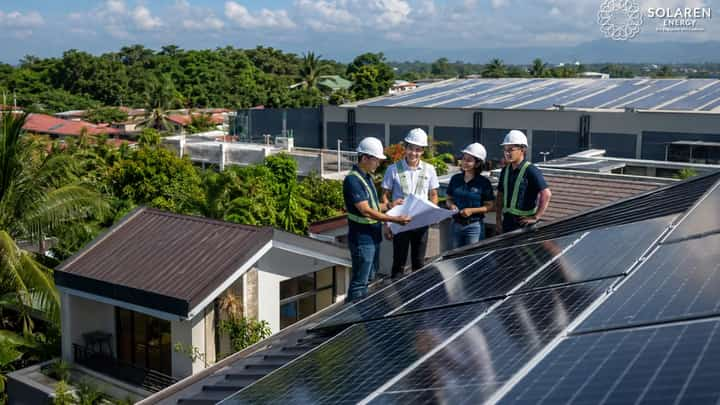
Malacañang is pushing for more affordable financing and streamlined permitting requirements for residential solar power installations to help Filipino households cope with rising electricity costs and living expenses.
The initiative comes amid public criticism of local government units (LGUs) over excessive documentary requirements and lengthy approval processes for rooftop solar installations.
Executive Secretary Ralph Recto said President Ferdinand Marcos Jr. has ordered a “big push” to make rooftop solar power a “cheaper and cleaner” energy source for Filipino households.
To make financing more accessible, Recto said government financial institutions have been mobilized to expand affordable loan options for residential solar installations.
“Focus will be on families who cannot afford the high upfront cost of shifting to solar energy. These are low-risk loans that will yield a high ROI (return on investment), and the savings can pay for the installation cost,” he said.
Recto urged the Government Service Insurance System (GSIS), Social Security System (SSS), Pag-IBIG Fund, Land Bank of the Philippines (LandBank) and Development Bank of the Philippines (DBP) to work independently or collectively to make solar financing more accessible nationwide.
The presidential initiative seeks to address one of the biggest barriers to household solar adoption: the high cost of purchasing and installing solar power systems.
Recto said Marcos also wants the government to eliminate unnecessary requirements that make it difficult for Filipino families to install solar panels on their own roofs.
Cutting red tape
Last week, the Pasay City government drew criticism on social media over a lengthy checklist of purported requirements for rooftop solar installations.
The checklist, reportedly issued by the city government, contained 29 items covering proof of property ownership, structural and electrical plans, zoning clearances, fire safety certificates, professional documentation and insurance, among others.
“This is obviously an OVERKILL. Maski ako, tatamarin ako to comply with all of these just to get solar panels installed. Gusto lang namin maka-tipid sa kuryente!!! These requirements are meant to discourage those interested in solar/renewable energy from pursuing it. What happened to the ERC circular mandating ease of getting solar panels installed?” a netizen said.
The Anti-Red Tape Authority (ARTA) subsequently acknowledged public and industry concerns over prolonged permitting delays, excessive documentary requirements, regulatory fees and lengthy approval processes affecting rooftop solar net metering applications.
“ARTA shares the sentiment of consumers and renewable energy advocates that the Philippines must urgently gear toward harnessing clean, renewable energy to achieve energy resiliency, sustainability, and lower electricity bills for Filipino households and businesses,” the agency said.
According to solar firm SOLAREN Renewable Energy Solutions Corp., solar panel installations in the Philippines cost approximately P45,000 to P70,000 per kilowatt, with a typical residential system costing between P300,000 and P350,000. Large commercial installations can cost millions of pesos.
Affordable solar financing
The GSIS currently offers eligible borrowers up to P500,000 under its Ginhawa Solar Energy Loan at an annual interest rate of 5 percent, payable over five years.
The Pag-IBIG Fund, meanwhile, offers up to P300,000 through its home improvement loan, with repayment terms of up to 10 years and a promotional annual interest rate of 3 percent.
Solar installations may also be covered under Pag-IBIG’s Housing Loan Program, which provides financing of up to P10 million.
The SSS is finalizing its proposed Energy Sustainability Loan, while LandBank is targeting the first quarter of 2027 for the rollout of its SunPower Loan, specifically designed to finance residential solar power systems.
LandBank also provides financing for rooftop solar projects undertaken by businesses, cooperatives, LGUs and other eligible institutions, covering up to 80 percent of project costs for private borrowers and up to 100 percent for eligible government borrowers.
The DBP, through its Energy Efficiency Savings (E2SAVE) Financing Program, finances up to 100 percent of project costs for eligible public institutions and up to 80 percent for private institutions.
Infrastructure projects may qualify for repayment terms of up to 10 years.