




Review: ‘Brown Madonna’ — when the self becomes art
Ea Torrado confronts faith, colonial mentality and womanhood with wit, grit and radical honesty.


Text size
Ea Torrado confronts faith, colonial mentality and womanhood with wit, grit and radical honesty.
Definitely one of the best shows I have seen this year.
Dance theater piece Brown Madonna demonstrates Ea Torrado’s intellect, intelligence, talent, and, above all, bravery. There is nothing gratuitous here, nothing gimmicky for the sake of being gimmicky. What we see instead is a brave expression of the self — which, ultimately, is what art is supposed to be.
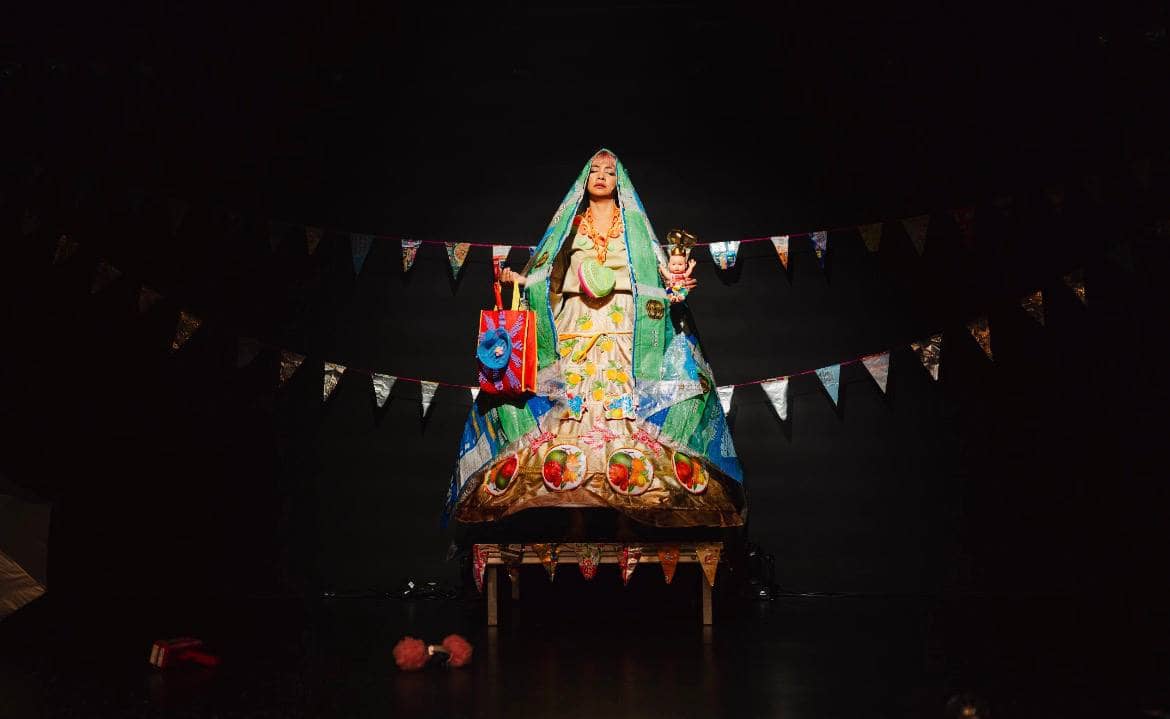
The title itself is already a key to the work: Brown Madonna invokes both the Virgin Mary and pop star Madonna, with whom Torrado shares a birthday. From that starting point, the work becomes so many things at once, yet remains remarkably cohesive. It speaks to what it means to be a woman in the Philippines through the deeply autobiographical experience of Torrado herself.
But Brown Madonna is never merely a confessional. More importantly, it is not a self-indulgent or self-important confession demanding sympathy from its audience. Torrado does something far more difficult: she excavates her own life in order to understand what shaped her, her values and her worldview, while allowing the audience to examine those forces alongside her.
The Philippines’ history of colonization inevitably enters the work, as do Catholicism, pop culture and colonial mentality. But Brown Madonna does not treat these as abstract academic subjects. Torrado brings them into the intimate territory of her own life: generational trauma, the expectations placed upon the Filipino woman, the realities of being a Filipino artist and her own complicated relationship with the theater and dance industries.
Religion, in particular, has had a profound impact on Torrado. So has pop culture. And so has the environment she has had to navigate as she built a career first as a classical ballet dancer and eventually as the founder and artistic director of Daloy Dance Company.
This is what makes Brown Madonna such a ravishing work of art: Torrado herself is an extraordinarily strong presence.
There is something significant about seeing a Filipina performer whose body does not conform to the narrow, traditional standards of classical beauty that have long dominated dance and popular culture. The insecurities surrounding dark skin among Filipino women remain painfully familiar. And Torrado does not simply discuss those insecurities; she puts her own body, history and presence at the center of the conversation.
And so she arrives already carrying an entire barangay on herself. She is a fiesta coming at you — chips wrappers, candy wrappers, sachets, religious imagery, pasyon. She is spectacle and devotion, commerce and Catholicism, kitsch and memory. The costume by Leeroy New is gorgeous and not a decorative excess. It is part of the dramaturgy, a body-sized accumulation of Filipino cultural references and expectations.
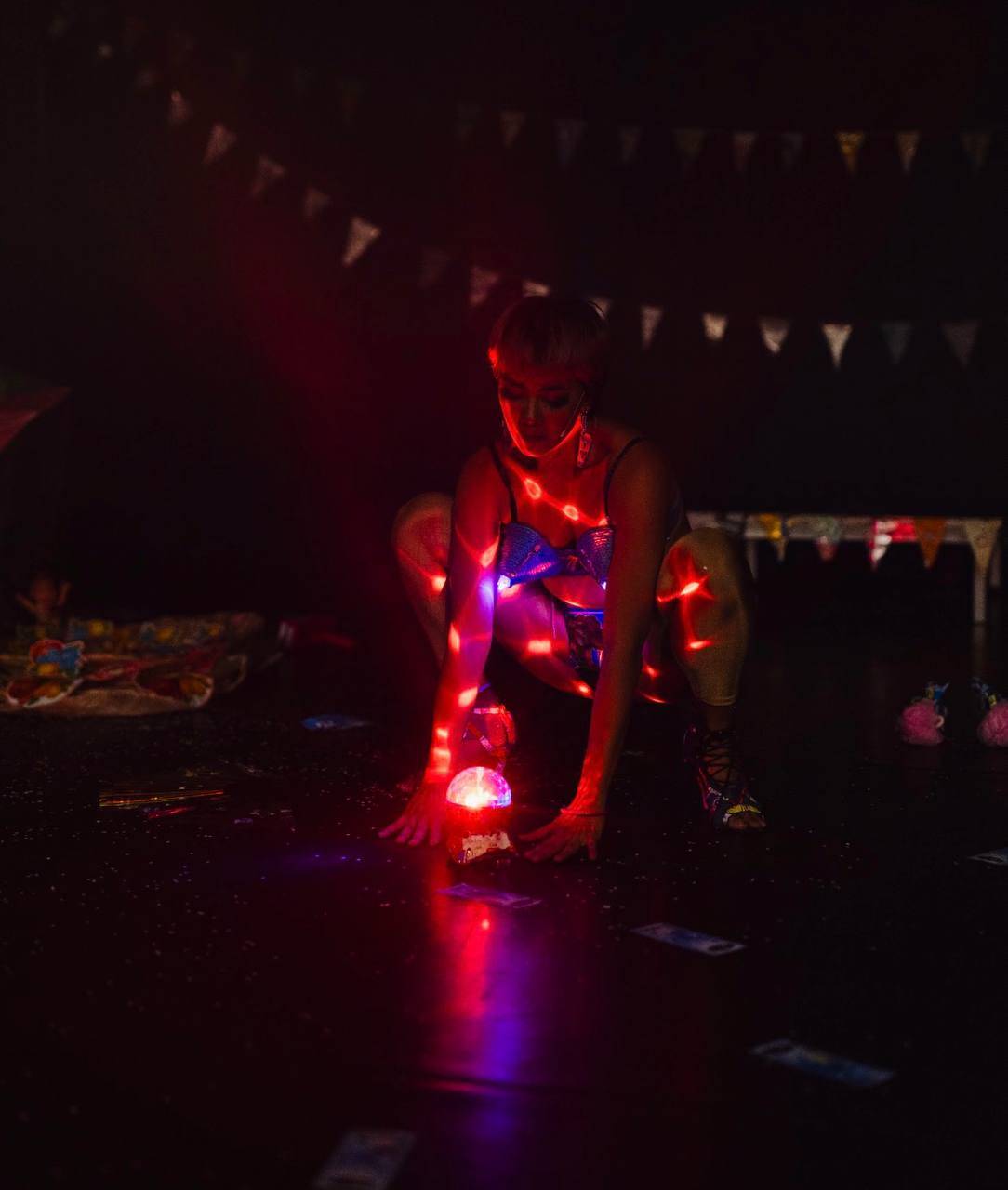
The result is a 70-minute performance that is intelligent, sharp and heartbreaking. It moves between silence, dance, song and grit. There is hilarity, but there is also a kind of trenchant devastation.
And Torrado is truly a performer. Her face is an instrument. Her expressions are extraordinarily readable. Even in lengthy silences, she fills the stage with emotion. When she is quiet, there is meaning. When she cries out, there is history. Even when she disappears underneath a sack, the performance does not stop. The feeling remains.
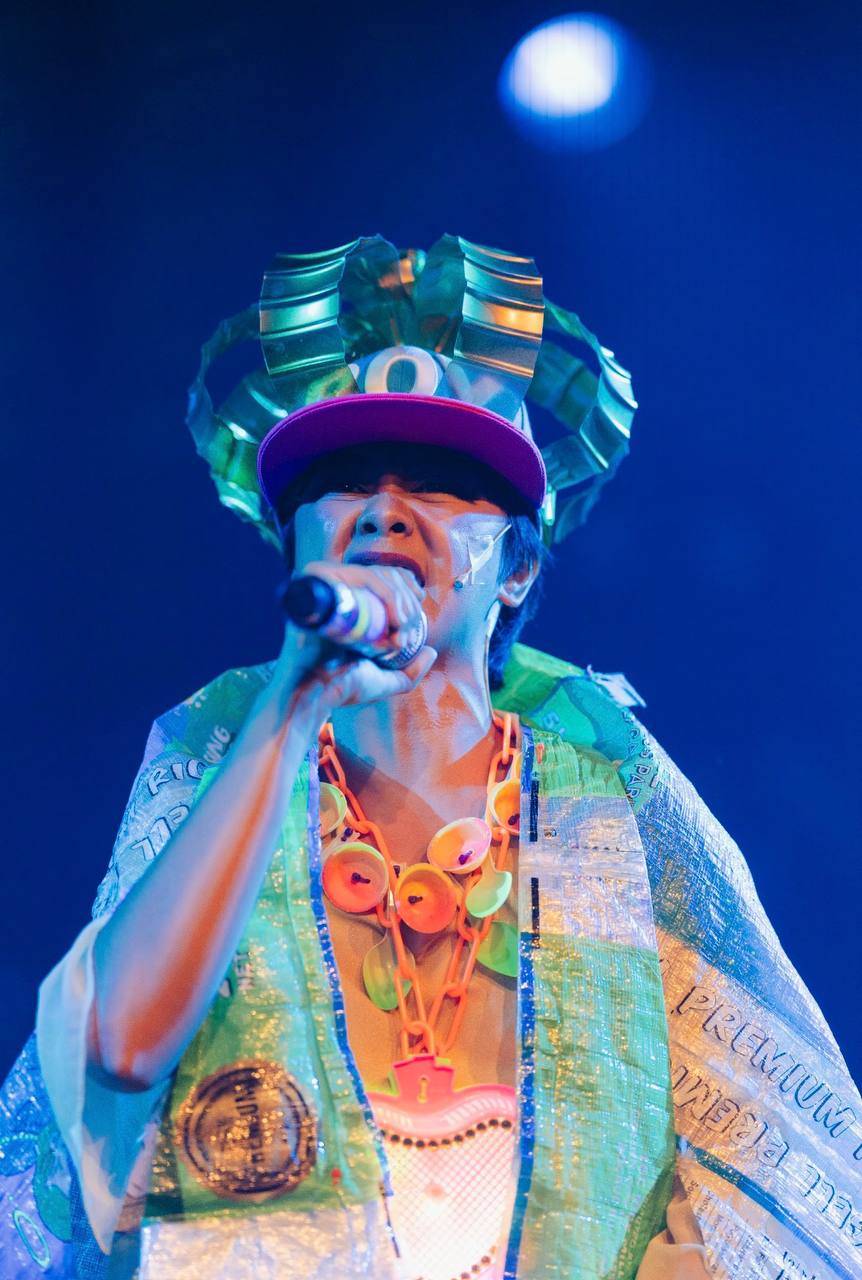
That is one of the great pleasures of Brown Madonna: its unpredictability. You cannot comfortably predict what happens next. And what happens next keeps surprising you — whether Torrado suddenly launches into a pop song, tells a story, offers a confession, changes costume or begins subtracting and adding layers to the extraordinary construction on her body.
The costume changes become transformations, but they are never merely visual tricks. They expose another dimension of the woman underneath. This is precisely why the work’s theatricality never feels empty.
On the surface, Brown Madonna could easily be mistaken for a collection of eccentric images, gestures, songs and utterances. It is not. There is real dramaturgical brilliance here.
The narrative is clear without being spoon-fed. The work is packed with subtext without becoming obscure. It is not preachy. It trusts the audience’s intelligence — and Torrado respects herself enough as an artist not to explain everything for us.
Brown Madonna does not exist to please its audience. It does not bend over backward to make itself palatable. It is an act of full expression, and that is precisely what makes it so exciting.
The emotions it elicits are equally varied. You laugh. You empathize. At moments, you sympathize. You agree with her. You begin to understand her. And eventually, you feel an extraordinary affection for the person standing before you.
That emotional journey is the consequence of a performer who understands that presence is truly about what happens to the audience when a performer allows herself to be fully seen.
Torrado’s Brown Madonna had its world premiere in Frankfurt in September 2025 as part of Sincerely Yours, the Philippines, before continuing its international life in Germany and returning home for its Philippine presentation at Myra Beltran Dance Forum in Quezon City on 15 and 16 August.
And this is exactly the kind of art that deserves to be supported: intimate, difficult, funny, uncomfortable, personal and formally fearless. Not because it is Filipino. Not because it has toured Europe. Not because it has an impressive creative team. But because it is good. Very, very good.
Brown Madonna is a brilliant piece of performance — unpredictable without being arbitrary, personal without being self-indulgent, political without being preachy, and theatrical without resorting to gimmickry.
Watch it.
Performances: 15 and 16 August 2026, Myra Beltran Dance Forum, Quezon City. Tickets are still available.
The author saw Brown Madonna in June 2026 at a special media preview in Manila, before the show toured in Berlin and Frankfurt. This review is based on that viewing.
Hindu immigrants abroad celebrate in either August or September Ganesh Chaturthi, a 10-day festival commemorating the…
President Ferdinand Marcos Jr. on Tuesday called for women’s greater representation in leadership across Southeast…
The Senate impeachment court on Tuesday denied the prosecution’s bid to compel Vice President Sara Duterte to confirm…
