
13 years after Yolanda: CCC urges proactive governance and science-backed action
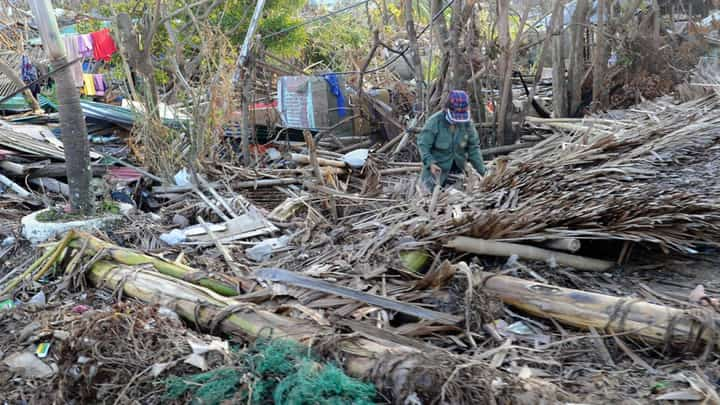
The Climate Change Commission (CCC) has called for a definitive shift toward predictive governance and science-based climate action, marking the 13th anniversary of Super Typhoon Yolanda (Haiyan).
In a statement commemorating the tragedy, the commission emphasized that national resilience must move past reactive disaster response and focus on preemptive measures to safeguard vulnerable communities.
“Resilience must no longer be measured by how quickly we rebuild, but by how effectively we prevent loss and protect lives,” said CCC Vice Chairperson and Executive Director Robert E.A. Borje.
Yolanda made landfall on 8 November 2013, with winds reaching 305 to 314 kilometers per hour (190 to 195 miles per hour) and a storm surge over 6 meters that inundated coastal communities in Eastern Visayas. The storm caused 6,300 reported deaths, 28,689 injuries, and left 1,061 missing. It displaced over 4 million people and destroyed or damaged more than 1.1 million homes. The total economic losses reached an estimated PHP 571 billion, equivalent to 4 percent of the nation’s annual gross domestic product.
The CCC reported that the government continues to institutionalize long-term structural reforms through the National Adaptation Plan (NAP 2023–2050), alongside a 91 percent compliance rate among local government units (LGUs) in formulating their Local Climate Change Action Plans (LCCAPs).
Additionally, the People’s Survival Fund (PSF) has committed over PHP 1.4 billion to localized adaptation initiatives across 24 LGUs, bolstered by the full commitment and replenishment of its initial PHP 1 billion allocation. The commission is also collaborating with the Department of Budget and Management (DBM) to refine Climate Change Expenditure Tagging (CCET) to track climate-related allocations in the national budget.
The CCC urged national agencies, local governments, the private sector, and the youth to integrate risk assessments into local development planning, focusing heavily on climate-sensitive sectors such as food production, water security, public health, and livelihoods.