
Review: 'Cirque Alice' is a masterpiece of theatrical wonder
An exquisite fusion of circus arts, ballet, opera and classical music transforms Lewis Carroll’s Wonderland into a sublime feast for the senses.

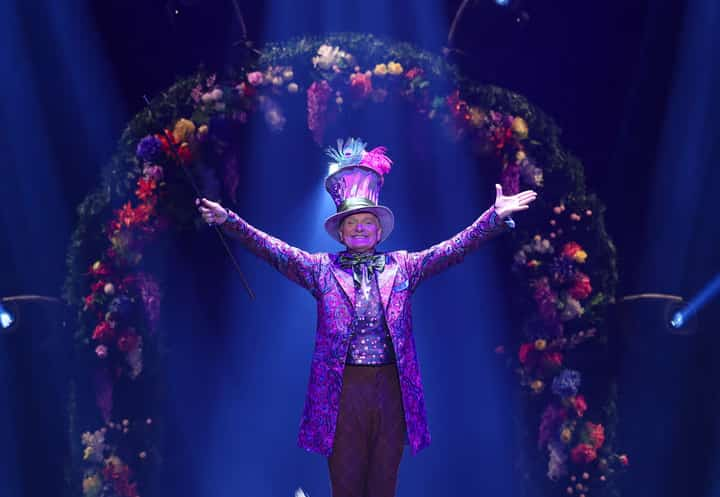
Cirque Alice feels like a dream.
As soon as you take your seat inside The Theatre at Solaire and the lights dim, you become Alice, tumbling into Lewis Carroll’s Wonderland. Rather than an unsettling nightmare, you enter an otherworldly, ethereal sensory treat: a world of circus arts, ballet, opera, contemporary dance and classical music. It is an exquisite display of elegance and artistry.
To be clear, this is not the Quebec-based Cirque du Soleil. The touring show Cirque Alice, created by Tim Lawson and Simon Painter and presented by GMG Productions in Manila, has its own distinct identity and does not attempt to imitate the famous circus company.
Cirque Alice is more drama, more theater, more performance art than conventional circus. Acrobats, aerialists and contortionists perform within a continuous narrative rather than execute isolated tricks. Every act is part of the fantastical world onstage.
Under choreographer Dane Bates, the performers’ movements complement the classical music, from Tchaikovsky’s Swan Lake to Delibes’ “Flower Duet” from Lakmé, Bizet’s “Habanera” from Carmen and Rimsky-Korsakov’s “Flight of the Bumblebee.” And these pieces accompany the soaring operatic singing of Australian soprano Layla Schillert as Alice.
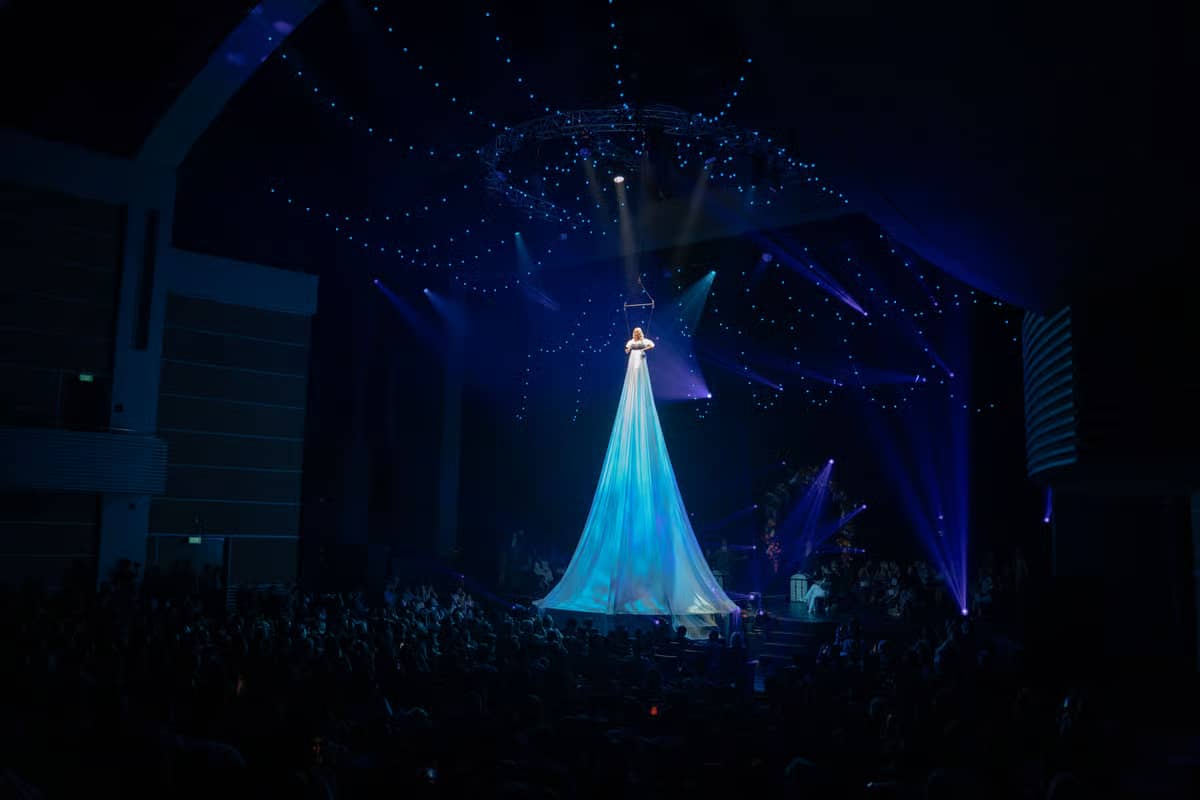
The production is a feast for the senses, from its detailed costumes and soul-stirring music to its precise choreography and staging. Performers move with astonishing fluidity, whether suspended high above the stage or twisting their bodies into seemingly impossible shapes.
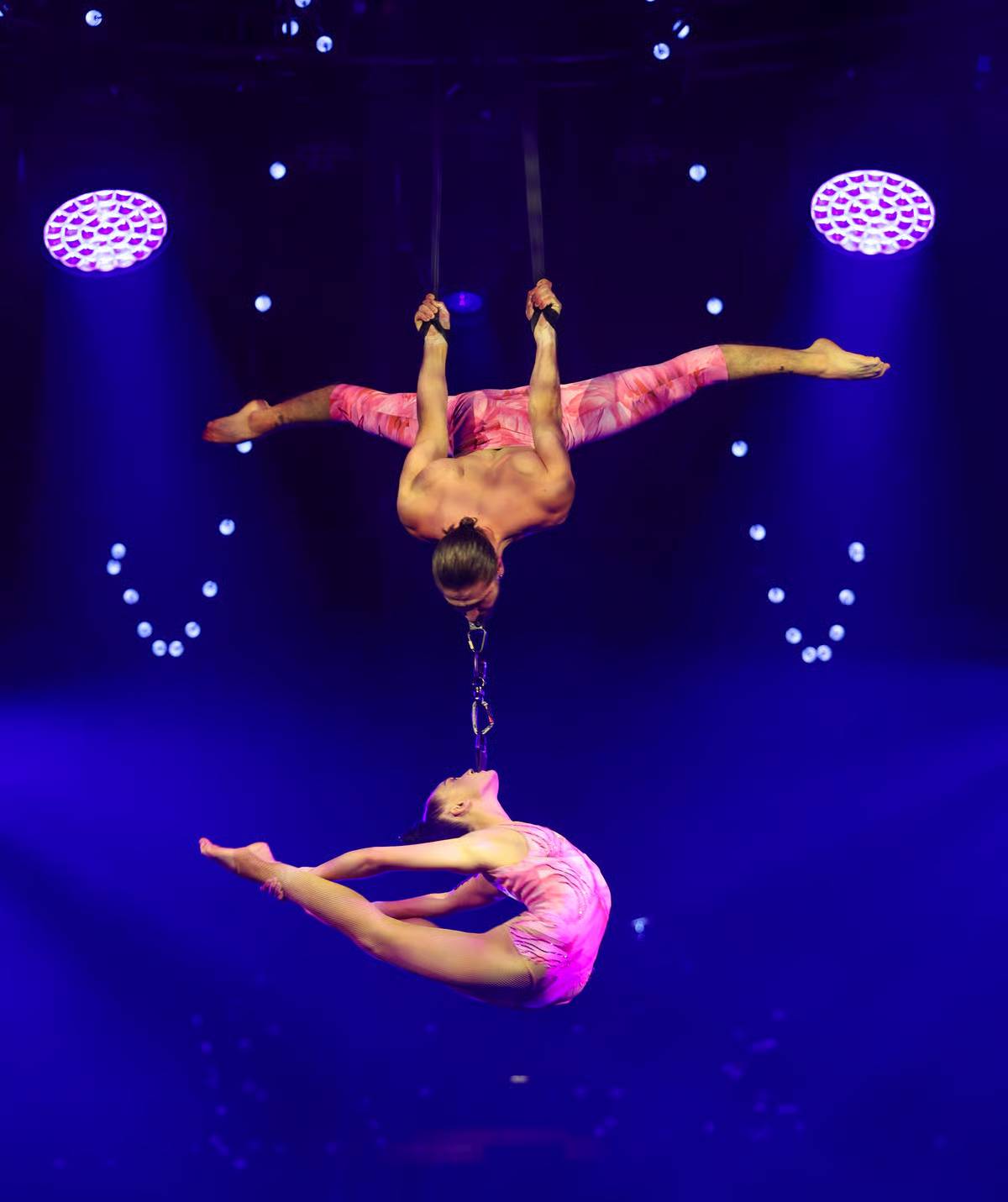
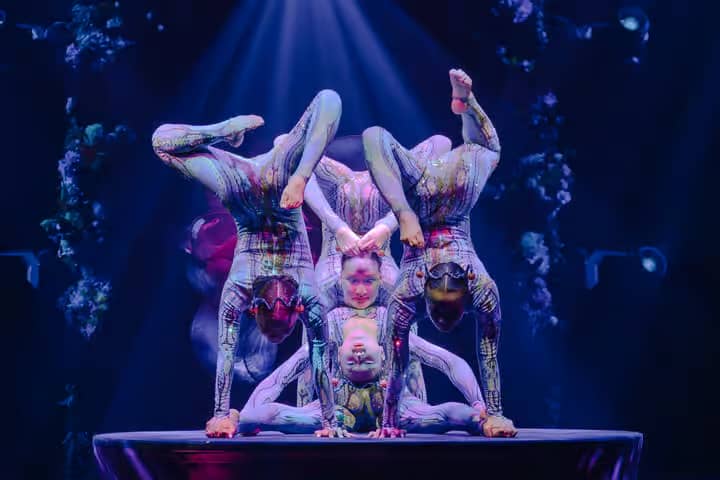
The contortionists appear almost boneless, folding themselves into extraordinary positions. These are no mere gimmicks; their bodies become living sculptures, every movement timed to the dramatic classical score.
Above them, a canopy of magenta and blue stars scatters across the theater ceiling. A raised circular platform hosts a succession of fantastical encounters as performers sweep across the stage, shifting from balletic grace to daring acrobatics. Changing lights and vivid costumes against the dark backdrop create the effect of a surreal painting in motion.
Oh, I kept gasping at the costumes. Costume designer Angela Aaron gives Wonderland’s inhabitants striking colors, silhouettes and textures.
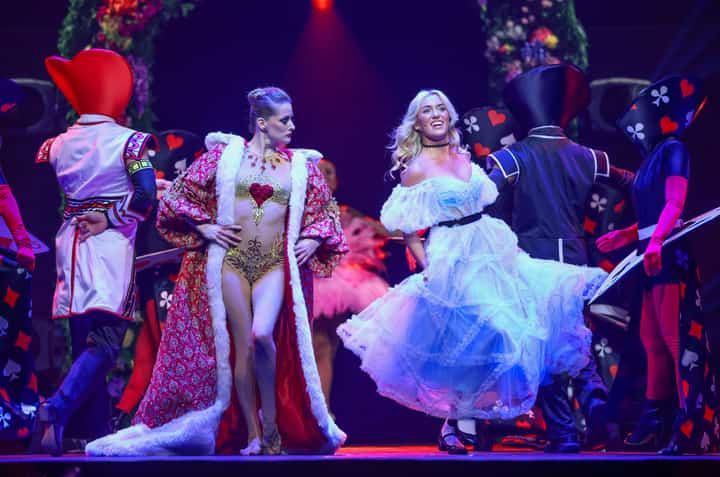
This is a true circus and theater haute couture, and not simply dressing up familiar storybook characters. White chess pieces with sculptural headpieces and structured costumes with architectural shapes. Playing-card dancers in graphic black, white and red outfits with oversized card collars. Alice in a light blue, tiered tulle dress, accented by a black waist belt and delicate choker.
Around her, performers wear vivid pink, deep blue, orange and purple, with sculpted rosebud dresses, enormous petal-shaped collars and sweeping tulle gowns. Some costumes seem to bloom as their wearers move. The flamingos and chess pieces elevate the visual richness, and the stage becomes a garden of living art.
But it is the music that truly heightens these painterly movements onstage. Arranged by Martin Raabe-Olsen and Marius Christiansen, it serves as the production’s backbone and elevates the drama, the mood, and the overall emotional experience of this abstract work of art.
The White Rabbit (Raphael Papo) opens with Monti’s “Csárdás,” his fiddle setting the tone for Alice’s entrance into Wonderland. Delibes’ “Flower Duet” from Lakmé, Bizet’s “Habanera” from Carmen, Tchaikovsky’s Swan Lake and Rimsky-Korsakov’s “Flight of the Bumblebee” reflect the show’s shifting moods, from lyrical beauty to playful energy and virtuosic intensity. Schillert’s rendition of “Ave Maria” stirs the soul.
The coordination between music and movement is astonishingly precise. The classical selections accompany the performers’ graceful movements and daring feats, all of which look remarkably effortless, while their facial expressions remain true to their characters and the drama of each scene.
The acts span a wide range of circus disciplines across two halves, from Icarian games and partner acrobatics to a Cyr wheel, an aerial routine beneath the starry ceiling and a rola-bola routine.
The Queen of Hearts delivers a solo performance art piece: a contortion act on a crescent-moon apparatus. Other acts feature adagio hand-balancing. The circus acts combine performance art with heart-stopping suspense.
Providing comic relief is the Mad Hatter (Darren “Dizzy” Partridge), who acts as ringmaster, punctuating the performance with sleight-of-hand magic, pickpocketing and audience interaction. His antics briefly pull us out of Wonderland, a laugh-out-loud break between before the dream resumes.
Cirque Alice, which treats circus disciplines as integral parts of a larger theatrical work, brings together different art forms without losing sight of the world they collectively create.
For the best perspective, I recommend seats around the middle of the theater. Row L gave me a clear view of the choreography, lighting and overall stage composition. Kids will surely enjoy the colorful characters, comedy and daring stunts, while art-loving adults will delight in the musical arrangements, choreography, costume design and technical precision.
Having dealt with a long illness before attending, this show is unexpectedly restorative. The live vocals, classical music and fluid movement offer a welcome escape from daily strain. For two hours, you will lose yourself in another world.
What a sublime show. A must-see.