
DA says pork prices down despite farmers' complaints
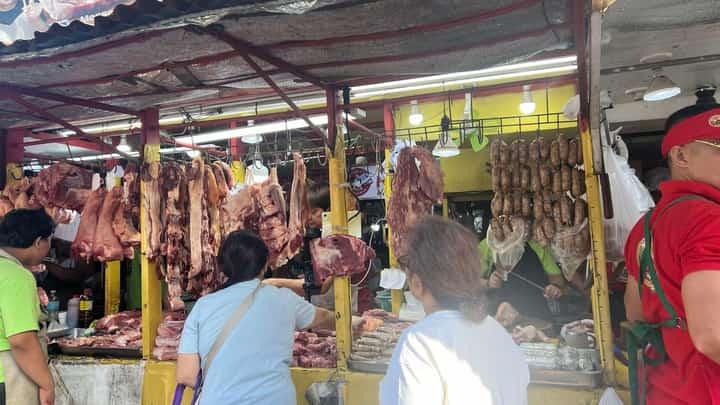
Malacañang on Thursday disputed claims that pork prices remain high, citing Department of Agriculture (DA) data showing lower retail prices for major pork cuts despite concerns from agricultural groups over declining farmgate prices.
Palace Press Officer Claire Castro said Agriculture Secretary Francisco Tiu Laurel Jr. maintained that prevailing pork prices were lower than earlier recorded levels.
“Noong nakaraang araw ay sinabing mataas ang presyo ng baboy, pero ayon kay DA Secretary Kiko Laurel, hindi siya mataas. Mas mataas noong nakaraang taon,” Castro said during a Palace briefing.
Her remarks came after the Samahang Industriya ng Agrikultura raised concerns that pork remained overpriced in wet markets despite farmgate prices ranging from P180 to P200 per kilogram.
Citing DA monitoring data, Castro said retail prices of major pork cuts had declined compared with levels recorded on 16 February 2026.
Local pork kasim, or shoulder, fell 8.57 percent from P350 to P320 per kilogram, while imported kasim declined 8 percent from P250 to P230 per kilogram.
Local pork belly prices dropped 3.9 percent from P385 to P370 per kilogram, while imported pork belly remained unchanged at P300 per kilogram.
“Meanwhile, imported pork belly remains unchanged at 300.00 per kilogram. So, kung mayroong pagtaas ng presyo sa palengke, ipagbigay alam po agad sa ahensiya para ito po ay matugunan. So, mas mababa po ang presyo ngayon kung ikukumpara sa nakaraang taon,” Castro said.
The Palace urged consumers to report unusually high market prices to the DA for appropriate action.
Farmers raise concerns
Meanwhile, the Federation of Free Farmers (FFF) welcomed the government's 60-day suspension of certain pork imports but criticized the DA for what it described as delayed intervention.
The group said earlier action could have prevented mounting losses among local hog raisers.
According to the FFF, continued pork imports and increasing inventories of frozen meat had pushed farmgate prices below production costs, threatening the livelihoods of domestic producers.
The contrasting assessments highlighted concerns over the difference between retail prices paid by consumers and farmgate prices received by hog raisers.
While the Palace cited declining retail prices, agricultural groups questioned why pork remained relatively expensive in markets despite lower prices at the farm level.