
Gov’t revives 59 deep wells amid El Niño threat
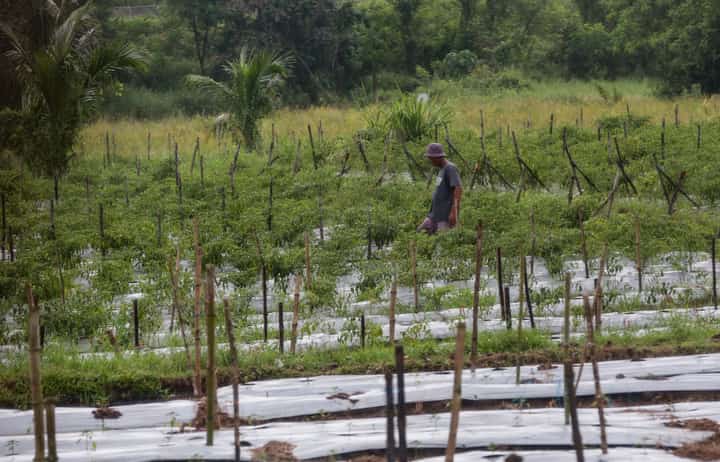
A farmer checks his long chili pepper plants in Barangay Sampaloc, San Rafael, Bulacan, amid warnings of a strengthening El Niño.
photograph by analy labor for daily tribune
CALAMBA CITY, Laguna — With El Niño threatening to reduce rainfall and strain water supplies across CALABARZON, the national government is preparing to reactivate 59 deep wells and upgrade water treatment facilities in a bid to avert shortages in the coming months.
The measures are part of a broader contingency plan discussed during an interagency meeting led by Executive Secretary Ralph Recto on 8 October.
The government is also preparing 135 stationary water tanks and 105 mobile water tankers for emergency deployment in communities that may experience supply disruptions.
Additional water supply facilities are expected to become operational before the end of 2026 and in the first quarter of 2027.
However, authorities have yet to disclose the distribution of the 59 deep wells across affected provinces, the cost of rehabilitation or the number of households expected to benefit.
The preparations come as the Philippine Atmospheric, Geophysical and Astronomical Services Administration (PAGASA) warns of significantly reduced rainfall in CALABARZON, raising concerns over water availability for households, businesses and farms.
PAGASA weather specialist Bernadeth Lucillo said rainfall across the region could decline by 20 to 60 percent in October.
By November, Cavite, Rizal, western Batangas and parts of Laguna could experience rainfall reductions of around 60 percent, potentially worsening dry conditions as the year draws to a close.
Drier weather is expected to persist into early 2027, increasing pressure on water sources and agricultural communities already vulnerable to prolonged periods of below-normal rainfall.
To cushion the impact, the Department of Environment and Natural Resources is preparing water allocation strategies and reservoir management measures, with priority given to domestic consumption and irrigation.
Authorities are also working to maximize existing water treatment facilities and develop alternative sources to reduce dependence on reservoirs that could be affected by prolonged dry spells.
Recto has directed government agencies to accelerate spending and procurement for programs aimed at strengthening the country’s preparedness for El Niño.
He also plans to coordinate with local government units to identify the communities most at risk and ensure that contingency measures address their specific needs.
Water authorities are expected to assess the readiness of alternative sources and emergency distribution facilities as conditions become drier.
The planned rehabilitation of deep wells is intended to provide additional water supply capacity, although no specific completion dates have been announced for individual facilities.
For communities across CALABARZON, the challenge will be ensuring that these preparations translate into reliable water access before shortages become more severe.