
Filipinos shining through in America
Filipinos are not merely assimilating into America. They are helping shape it — through food, music, cinema, journalism, sports, entrepreneurship and culture.
Filipinos and Filipino-Americans are increasingly making their mark in mainstream America — from Hollywood and Anaheim to concert halls, film festivals, and the tennis courts of New York.
During my continuing stay in California, I feel obliged to share the milestone achievements of our outstanding kababayans in the proverbial land of milk and honey.
Consider the humble lumpia.
On 28 August, the Philippine Consulate General in Los Angeles, led by my Dagupan citymate Consul General Adelio S. Cruz, joined Filipino food lovers and curious visitors for the opening of Big Boi Lumpia Co. at Downtown Disney District in Anaheim.
Founded by Filipino-American Chef Barb Batiste, Big Boi gives our familiar spring roll a contemporary twist with pork, chicken, plant-based, ube and peach-mango varieties.
Lumpia, a staple of Filipino fiestas and family gatherings, now has a place at Disneyland Resort, one of the world’s most recognizable entertainment destinations. More than a food kiosk, it represents Filipino entrepreneurship and culture entering mainstream America.
Filipino artistry is likewise shining through.
At a press conference at Noypitz in Long Beach last 5 September, Philippine Global Media Group president Dan Niño and PGMG members met internationally acclaimed Filipino tenor Arthur Espiritu.
Photo courtesy of Philippine Global Media Group: Joe Cobilla, Dan Nino and Donabelle Gatdula.
Photo courtesy of Philippine Global Media Group: Joe Cobilla, Dan Nino and Donabelle Gatdula.
Photo courtesy of Philippine Global Media Group: Joe Cobilla, Dan Nino and Donabelle Gatdula.
Photo courtesy of Philippine Global Media Group: Joe Cobilla, Dan Nino and Donabelle Gatdula.
Photo courtesy of Philippine Global Media Group: Joe Cobilla, Dan Nino and Donabelle Gatdula.
Photo courtesy of Philippine Global Media Group: Joe Cobilla, Dan Nino and Donabelle Gatdula.
Espiritu performed three songs, including Nahan, the deeply sentimental composition by National Artist Ernani Cuenco. Niño described the longing and yearning in every note and something unmistakably Filipino in Espiritu’s rendition.
Beyond performing internationally, Espiritu continues to teach and pass on his craft to another generation. He is set to perform at Mt. San Antonio College in Walnut, California, on 26 September, with proceeds earmarked for programs that help foster and out-of-school youth graduate from high school.
Filipino filmmakers, meanwhile, are shining a light on subjects many would rather leave in the shadows.
Kudos to the Manila International Film Festival and its core executive team headed by chairman Omen Ortiz, president Ebradu Udarbe, and executive producer Lisa Lew.
At MIFF’s Shining A Light Awards gala on 6 September, the 58th and KAPA-Tiran tackled two painful subjects — the 2009 Maguindanao massacre and the secretive, sometimes deadly culture of fraternity hazing.
The Maguindanao tragedy remains personal to me. Among those killed was my Manila Bulletin colleague Bong Reblando, who had joined the Philippine delegation when the National Press Club of the Philippines forged a sisterhood agreement with the National Press Club USA in Washington, D.C., in November 2001 during the incumbency of NPC president Alfredo Gabot.
PGMG, of which I am privileged to serve as a board member, partnered with MIFF in presenting the inaugural Shining A Light Award.
The recognition is timely. Amid fake news, manipulated content, and an increasingly AI-muddled information environment, fact-based filmmaking can complement journalism’s fundamental mission: telling real stories with integrity, veracity and objectivity.
PGMG PRO Ellen Rodriguez-Swing said the gala drew more than 1,000 people — a strong indication that audiences welcome Filipino films willing not only to entertain but also confront uncomfortable truths.
Then there are two Filipinas making waves from coast to coast.
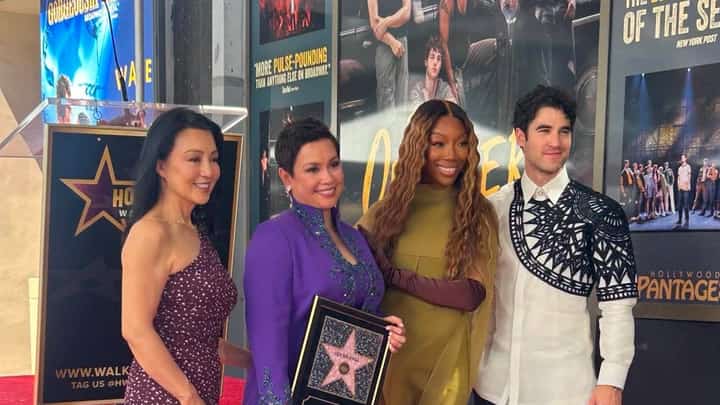
Tony and Olivier Award winner Lea Salonga made history on 4 September as the first Filipina to receive a star on the Hollywood Walk of Fame. Her journey from Manila to Broadway and the international stage remains an enduring example of Filipino talent achieving global stature.
Across the continent, tennis sensation Alex Eala captured new admirers at the US Open. She bowed to American Iva Jovic in a three-set thriller, 7-5, 3-6, 7-5, but her historic run brought even greater attention to Philippine tennis.
Days later, Eala appeared on CBS Mornings, speaking about the power of representation and inspiring Filipino youth to pursue their dreams.
Batiste, Espiritu, Salonga and Eala inhabit different worlds, as do our filmmakers and journalists. Yet together they tell the same story.
Filipinos are not merely assimilating into America. They are helping shape it — through food, music, cinema, journalism, sports, entrepreneurship and culture — without losing the Filipino identity they brought with them here.
This is the story we hope to capture in our forthcoming book, “Filipinos in California: Journeys, Dreams, Achievements and Legacies.”
Our history in America is no longer simply about migration. It is increasingly about achievement, influence and legacy.
But Civic Sense reminds us that recognition carries responsibility. Those who succeed can open doors for those who follow. Journalists must protect the truth. Artists can illuminate difficult realities. Entrepreneurs can bring Filipino culture into new spaces. Athletes can inspire young people to dream beyond perceived limitations.
That is how individual achievement becomes community progress, and pride in who we are as Filipinos wherever we may be.
The Filipino light has always been there. Today, more of America and the world are finally seeing it.
It is shining brighter and farther, showcasing that indomitable “Filipino Can Do” spirit.
As former President Fidel V. Ramos loved to say: “Kaya natin ito!” (We can do it!).