
The Man from Asingan Who Helped Build ASEAN
As Manila hosts the 49th ASEAN Summit, the Philippines should remember Narciso R. Ramos, the founding father who taught the region to talk before it fought.
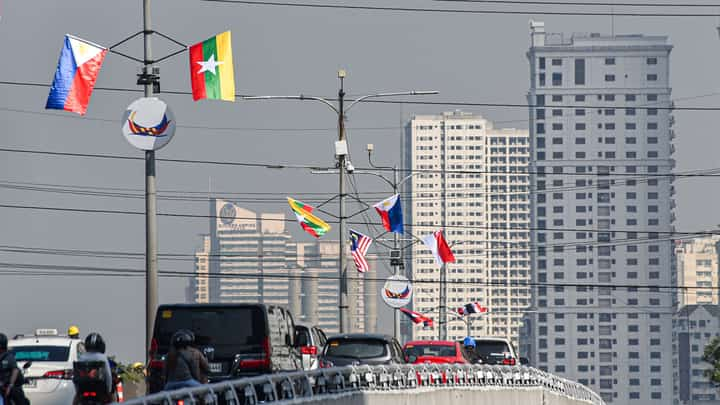
Next week, more than 20 heads of state and government will converge on Metro Manila for the 49th ASEAN Summit and Related Summits at the Philippine International Convention Center. It is the closing act of the Philippines' 2026 Chairship, which began with the 48th Summit in Cebu last May on the theme "Navigating Our Future, Together." At the end of the meetings, President Ferdinand R. Marcos Jr. will hand the chairmanship over to Singapore.
The calendar offers up a quiet coincidence. On 11 November, days before the leaders arrive, we mark the 126th birth anniversary of Ambassador Narciso Rueca Ramos, the Philippine signatory to the 1967 Bangkok Declaration that created the Association of Southeast Asian Nations.
As Manila takes its turn at the head of the table, it is worth remembering that the Philippines was there when the table was constructed. Much of what ASEAN is today—including its consensus style, its preference for dialogue over force, and its insistence that Southeast Asians should decide Southeast Asia's future—was conceived in Bangkok in August 1967. One of the five men who signed the agreement that day was a son of Pangasinan.
I have spent much of my writing life with Narciso Ramos. In 2000, the Ramos Peace and Development Foundation and Media Touchstone Ventures published my first biography of him, “Nachong, Ambassador Narciso R. Ramos: Patriarch, Journalist, Diplomat, Public Servant: An Enduring Legacy.”
In 2008, I revised and expanded that work into a second edition, “An Enduring Legacy: The Life and Times of Ambassador Narciso Rueca Ramos,” with a foreword by his son, former President Fidel V. Ramos. The ASEAN Secretariat keeps the first edition in its library. I return to both books now because Manila's moment on the regional stage is a good time to recall the Filipino who helped build that stage.
From Asingan to the Assembly
Narciso Ramos was born on 11 November 1900 in Asingan, Pangasinan, to Plácido Ramos and Ramona Rueca. He graduated from Manila High School in 1919, studied journalism at the University of the Philippines from 1920 to 1922, and obtained his law degree from National University in 1924, passing the bar the same year.
For him, journalism came first and the Asian Institute of Journalism and Communication lists him among the country's notable print journalists. But he also practiced law in Pangasinan and Manila for a decade and, as the FVR Legacy archive notes, was known in both professions for defending the poor.
In 1934, he was elected to represent Pangasinan's fifth district. He served five terms. When the Japanese occupation came, he refused to collaborate with the enemy and joined the resistance, his service later recognized with the French Legion of Honour, rank of Commander.
The detail I find most revealing comes from ASEAN's own account of its founding. It describes him as a former journalist and long-time legislator "who had given up the chance to be Speaker of the Philippine Congress to serve as one of his country's first diplomats."
Few Filipino politicians, then or now, walk away from the speakership. Ramos did, because the new Republic needed a foreign service and someone had to build it.
Building a Foreign Service
In 1946, the year of independence, President Manuel Roxas asked Ramos and Joaquin Elizalde to establish the Philippine foreign service and organize the first Philippine embassy in Washington, D.C. Ramos trained the first batch of Filipino consuls in America and helped draft the basic rules of the service.
Then he went where few Filipino diplomats had gone. From 1949 to 1952, he was the first Philippine minister to the legation in Buenos Aires. From 1952 to 1956, he opened the first Philippine mission in New Delhi during the early years of the Non-Aligned Movement. From 1956 to 1965, he headed the Philippine embassy in Taipei, which he had helped establish.
That record matters for understanding 1967. By the time he sat down in Bangkok, Ramos had spent two decades opening doors in Latin America, South Asia, and East Asia. As Manuel L. Quezon III observed this year, he came to the ASEAN negotiations as a pioneer diplomat with extensive experience, one of the main implementers of a foreign policy that had stayed largely constant since before independence.
Secretary of Foreign Affairs 1965–1968
President Ferdinand E. Marcos appointed Ramos Secretary of Foreign Affairs on 30 December 1965. He served until late 1968 and was succeeded by Carlos P. Romulo. Those three years were among the most consequential in Philippine diplomatic history.
Two achievements stand beside ASEAN. The first is the Ramos-Rusk Agreement of 16 September 1966, which cut the term of the 1947 Military Bases Agreement from 99 years to 25 more years. The base leases would now expire in 1991, not 2046. The Senate's historic decision in 1991 to reject a new bases treaty rested on ground Ramos had prepared a quarter century earlier.
The second is his role in reestablishing the Asian and Pacific Council (ASPAC), a broader grouping launched in 1966 that included Japan, South Korea, and Australia. It was one of several attempts at regional cooperation that came before ASEAN.
Those attempts had not gone well. The Association of Southeast Asia (ASA), formed in 1961 by Malaya, the Philippines, and Thailand, collapsed after the Philippines and Indonesia disputed Malaysia's jurisdiction over Sabah and Indonesia launched Konfrontasi. Maphilindo fared no better. Yet, as former Foreign Affairs Secretary Delia Albert recalls, the foreign ministers kept meeting bilaterally even after both groupings ended. Ramos's task was to keep the Philippines at the table with neighbors it was quarreling with.
Sports-Shirt Diplomacy at Bang Saen
Thai Foreign Minister Thanat Khoman proposed a new regional organization. He first approached Adam Malik of Indonesia, then won over the two former ASA ministers, Ramos and Tun Abdul Razak of Malaysia. Singapore sent S. Rajaratnam. After a first formal meeting in early August 1967, the five retreated to Bang Saen, a seaside resort about 105 kilometers southeast of Bangkok.
There, as President Fidel V. Ramos later wrote, the ministers practiced what they would fondly call "sports-shirt diplomacy." They played golf, joked about one another's game, and worked through differences that were real.
Each man, he wrote, "brought to the deliberations a historical and political perspective that had no resemblance to that of any of the others." Over four days, combining work with leisure, they forged the final text. That style of deliberation became the ASEAN tradition of musyawarah (consultation) and mufakat (consensus).
Consider who sat at that table. Indonesia was just emerging from Konfrontasi against Malaysia. The Philippines and Malaysia were at odds over Sabah. Singapore had separated from Malaysia only two years before. Thailand lived beside the war in Indochina. Yet they came together and agreed.
The First to Speak
On 8 August 1967, the five signed the ASEAN Declaration in the main hall of Thailand's Department of Foreign Affairs. The Philippines’ signature block on the original text carries a small typographical error, rendering his name as "Narsisco Ramos," a reminder of how human sometimes history is made.
Ramos was the first to speak after the signing. ASEAN's official history records that he was 66 years old and that his only son, the future President Fidel V. Ramos, was then serving with the Philippine Civic Action Group in Vietnam. Few founders of a peace project have had so personal a stake in its success.
He told the audience that the negotiations had "truly taxed the goodwill, the imagination, the patience and understanding of the five participating ministers." That ASEAN was founded despite those difficulties, he said, meant its foundation had been solidly laid.
Then he made the economic case, in words that still read as current:
"The fragmented economies of Southeast Asia, (with) each country pursuing its own limited objectives and dissipating its meager resources in the overlapping or even conflicting endeavors of sister states, carry the seeds of weakness in their incapacity for growth and their self-perpetuating dependence on the advanced, industrial nations.
‘ASEAN, therefore, could marshal the still untapped potential of this rich region through more substantial united action."
Fifty-nine years later, his warning about fragmentation and dependence describes the region's challenge as accurately as it did in 1967.
From Bangkok 1967 to Manila 2026
Ramos's ideas are not museum pieces. Look at what the current Philippine Chairship has put on the table.
In Cebu last May, leaders adopted the ASEAN Leaders' Declaration on Maritime Cooperation and supported the establishment of an ASEAN Maritime Center in the Philippines.
As a Malaya Business Insight essay argued, the thread connecting 1967 and 2026 is the same: protecting regional agency and keeping Southeast Asia from becoming territory shaped by outside powers. In 1967, the pressure came from the Cold War and Vietnam. Today it comes from the sea, energy markets, supply chains, and great-power rivalry.
In Manila, the Chairship hopes to conclude the ASEAN Digital Economy Framework Agreement (DEFA), which Foreign Affairs Undersecretary Leo Herrera-Lim describes as the world's first binding region-wide agreement on the digital economy. That is the "more substantial united action" Ramos called for, applied to an economy he could not have imagined.
The summit agenda also builds on the year's work on food and energy security, inclusive growth, digital transformation, and artificial intelligence governance.
The guest list says something too. Leaders of the United States, Canada, and Brazil, among others, are expected in Manila. The leaders of the Quad, namely, Australia, India, Japan, and the United States, will also meet on the sidelines. The region that five men in sports shirts tried to shield from outside powers in 1967 now draws those powers to its own table, on its own terms. That is ASEAN centrality, and it began at Bang Saen.
The Association has grown from five members to eleven, with Timor-Leste admitted on 26 October 2025. Ramos, who opened the country's first missions in places others overlooked, would have welcomed the newest member.
The founders also established the habit of settling quarrels by talking. Nine years after Bangkok, the 1976 Treaty of Amity and Cooperation turned that habit into a binding principle: the peaceful settlement of disputes and the renunciation of the threat or use of force.
For the Philippines, which continues to defend its sovereign rights in the West Philippine Sea through law and diplomacy, that principle is the foundation of our approach, and it gives Manila standing as the host.
A Father's Legacy; A Son's Testimony
Narciso Ramos left government on 31 December 1968. Retirement did not suit him. In 1982, at 82, he agreed to serve again, as director of the Asian Exchange Center in Taipei, and stayed three years. He served under eight Philippine presidents, from Manuel L. Quezon to Ferdinand E. Marcos. He received the Order of Sikatuna, rank of Datu, and Indonesia's Star of the Republic in 1979.
He died of a stroke on 3 February 1986, weeks before the People Power Revolution in which his son would play a central role.
That son, as President from 1992 to 1998, made ASEAN a pillar of Philippine foreign and economic policy. In his essay "From Sports-Shirt Diplomacy to a Model Rules-Based Organization," published by the Economic Research Institute for ASEAN and East Asia, President Ramos called ASEAN "a well-established and highly esteemed international bloc" built on a record of pursuing durable peace and sustainable development.
There was a son's pride in that judgment, and a statesman's assessment.
In both editions of my biography of Ambassador Ramos, I tried to capture him not only as a diplomat but as a patriarch, journalist, and public servant from a small Pangasinan town. As the abstract of the first edition puts it, the book "chronicles the story of a young man from Asingan, Pangasinan whose rise to prominence and his pioneering to the world map" earned him respect as one of the country's important figures of the 20th century.
A bust of Narciso Ramos stands in the ASEAN Garden, inscribed with words from his statement at ASEAN's founding. His name also lives on in the sports complex and civic center in Lingayen and in the elementary school in Asingan.
What We Owe Him
As the leaders arrive in Manila, I hope Filipinos remember that ASEAN is not a foreign institution the Philippines merely joined. We helped write it.
Narciso Ramos believed that nationalism and modernization, pursued together, were the path to real independence and self-reliance. He believed small and middle nations are stronger together than apart. And he believed patience, goodwill, and a round of golf could accomplish what armies could not.
Those beliefs helped build a region of nearly 700 million people that has kept the peace among its members for nearly six decades. The best tribute Manila can offer the man from Asingan is a summit worthy of what he started in Bangkok.
(Melandrew T. Velasco is a veteran journalist, author, and publisher who has written more than 45 books. He is the family biographer of former President Fidel V. Ramos and the author of two editions of the biography of Ambassador Narciso R. Ramos.)