
UNESCO adds 25 new World Heritage sites
The annual list is curated from places that are considered to be of greatest universal value, is exceptional testimony to a cultural tradition, and a work of creative human genius.
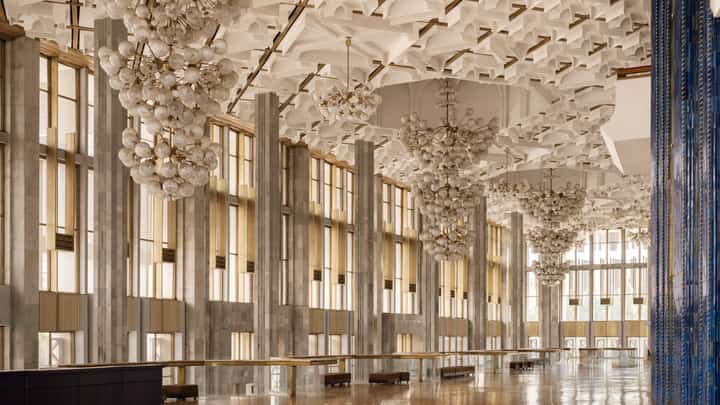
Tashkent modernist architecture, as seen in this photo, is a representation of the rebuilding of the city after the 1966 earthquake
Photos from UNESCO website
The world we live in is one very interesting place. With so many wonders - whether they be ancient, man-made, or by design - waiting to be explored. The UNESCO World Heritage List celebrates this diversity, and its greater impact not only on human existence, but also on the human experience.
Every year, the UNESCO World Heritage Committee meeting combs through the nominations, setting them against a 10-point criteria. These include 'a masterpiece of creative human genius,' and 'exhibit an important interchange of human values.' Most importantly, each name on the list must be of outstanding universal value.
In 2026, at the committee's 48th session, held recently in Busan, South Korea, added 25 new inscriptions to the World Heritage List. Of these are 19 cultural and five natural sites across various global locations.
1. Aalto Works (Finland)
The Aalto Works are the result of the collaborative partnership of Aalto, Aino Marsio‑Aalto, Elissa Aalto, and the Aalto studio. Built between 1928 to 1988, they are epitomes of 20th-century Modern Movement design.
2. Alamūt Castle and Related Fortifications (Iran)
The Alamūt Castle and its surrounding structures were central to the historical impact and cultural significance of the influential Islamic movement, Nezāri Ismaʿili.
3. Amazonia Theaters (Brazil)
Built between 1879 and 1912, the Theatro da Paz and the Praça da República in Belém, and Teatro Amazonas and the Largo de São Sebastião in Manaus are a symbol of the region's economic boom at the time.
4. Ancient Buddhist Site of Sarnath (India)
The archeological ruins of Sarnath is a revered pilgrimage site for Buddhists to this day, as it the the site where Buddha is believed have delivered his first sermon in 6th century BCE.
5. Ancient Capitals of Asuka and Fujiwara (Japan)
The ancient cities of Asuka and Fujiwara are among the first capitals in Japan to have established a centralized state system.
6. Beaches of the D-Day Landing in Normandy, 1944 (France)
The 80km stretch of Normandy coastline was at the center of the liberation of Western Europe from Nazi occupation when Allied forces landed on June 6, 1944. A marker to memorialize this day stands on Juno Beach.
7. Gydnia Modernist City Centre (Poland)
The Gdynia Modernist City Centre on the coast of the Baltic Sea is an example of how progress can transform a village into a major gateway in Poland post-war.
8. Boma-Badingio Migratory Landscape (South Sudan)
This ecosystem is witness to one of the world's largest mammal migrations in the world, with over six millions moving across the vast landscape.
9. Jingdezhen Handicraft Porcelain Industry Sites (China)
These sites show how the production of porcelain between the 10th and 19th centuries had far reaching influence on culture, trade, artistry, and industry not only in China but all over the world.
10. Mount Amel Castles (Lebanon)
Located in the Jabal Amel region in Southern Lebanon, the Mount Amel Castles formed a defensive network across the area in the medieval ages.
11. Okefenokee National Wildlife Refuge (U.S.A.)
The Okefenokee Swamp covers wetlands, savannas, and forests in southeastern Georgia and northeastern Florida.
12. Rock Mosques and Associated Sacred Sites of Mangystau (Kazakhstan)
The area features structures and spaces that include prayer halls, tombs, and complexes dating back to the 10th centuries.
13. Royal Capetian Fortresses of Languedoc (France)
Carved out of natural rock formations, the fortresses were part of the Capetian defensive system established in the 13th–14th centuries.
14. Sebastia (State of Palestine)
A historic town on the West Bank, the ruins of Sebastia is also known as the biblical capital Samaria.
15. Tashkent Modernist Architecture - Modernity and Tradition in Central Asia (Uzbekistan)
The ten modernist buildings built in Tashkent, Uzbekistan between the 1960s to the 1990s are noted for marrying architectural design with seismic-resilient engineering.
16. The Bony Fish Fossils of the Western Limfjord - Evolution and Climate Adaptation in the Earliest Eocene (Denmark)
The area features some of the best-preserved fossil fishes, allowing for studies into understanding the evolution of fish species.
17. The Cemetery Complexes of the Xiongnu Nobility (Mongolia)
The artifcats found at these cemetery complexes give insight into the life and culture of the nomadic Xiongnu nobility.
18. The Medinas of the Historic Sultanates of the Comoros (Comoros)
The Medinas in Comoros have been witness to societal change triggered by migration and interaction with other cultures in the region.
19. The Roças of Sao Tome and Principe: Colonial Agricultural System and Forced Migration (Sao Tome and Principe)
The property is a study into impact of forced migration and labor on coffee and cocoa production, and other agricultural practices.
20. The system of Italian-style condominio theatres of the 18th and 19th centuries in Central Italy (Italy)
The condominio system lay the groundwork for small to medium towns to build theaters through public-private funding. The result are beautiful theaters in a Neoclassic design.
21. The wider area of Mount Olympus (Greece)
Located in Northern Greece, the area is known for its microclimate resulting in greater environmental diversity.
22. Village of Sidi Bou Saïd (Tunisia)
Overlooking the Mediterranean, this village proves that architectural design and urban planning can coexist with its environment and topography.
23. Wadu Wurayah (United Arab Emirates)
Wadi Wurayah is known for being home to 883 species of fauna, and 216 species of flora, including terrestrial reptile species.
24. Wat Phra Mahathat Woramahawihan, Nakhon Si Thammarat (Thailand)
The Phra Mahathat monastery is known to be a major regional Buddhist center since the 8th century.
25. Aqaba Marine Reserve (Jordan)
The marine reserve boasts is considered an important site for biodiversity in the world, including coral and fish species endemic to the area.
With 1,273 places in total, including 991 cultural sites, 240 natural sites, and 42 mixed properties, on UNESCO's World Heritage List, it is a reminder of what a great big wonderful world it is out there.