
Stamped in heritage: Celebrating 75 years of Philippines-UNESCO partnership
Commemorative stamps mark the 75th anniversary of the UNESCO National Commission of the Philippines, celebrating the country’s enduring partnership with UNESCO and its wealth of cultural, natural, and documentary heritage.
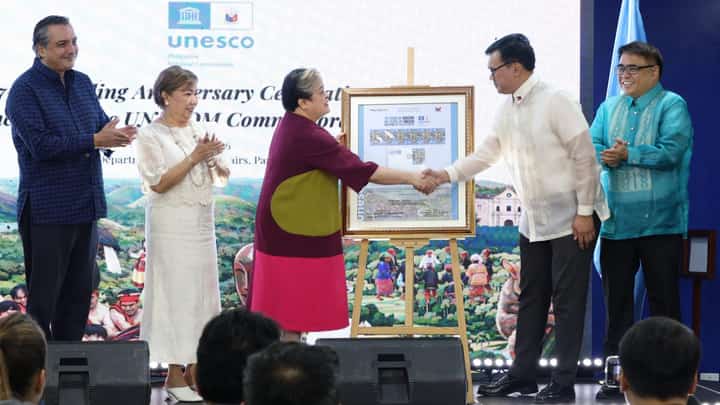
UNACOM commissioner and National Museum of the Philippines director-general Jeremy Barns; National Council of Women of the Philippines chairperson Cecilia La Madrid-Dy; Secretary of Foreign Affairs Maria Theresa P. Lazaro; PHLPost Postmaster and CEO Maximo Sta. Maria III and UNACOM Secretary-General Dr. Ivan Anthony S. Henares unveil the commemorative stamps.
PHOTOGRAPH courtesy of Tristan Mangampo/DFA-OPD
The Philippines’ role in and relationship with the United Nations Educational, Scientific and Cultural Organization (UNESCO) were highlighted during the celebration of the 75th founding anniversary of the UNESCO National Commission of the Philippines (UNACOM) on 26 May. The occasion also commemorated UNESCO’s 80th anniversary and eight decades of Philippine involvement in the international organization.
A highlight of the celebration was the issuance of commemorative postage stamps, formally launched on 21 May at the Department of Foreign Affairs (DFA) in Pasay City. Leading the ceremony were Secretary of Foreign Affairs and UNACOM chairperson Maria Theresa P. Lazaro; UNACOM secretary-general Ivan Anthony S. Henares; and Philippine Postal Corporation (PHLPost) postmaster general and chief executive officer Maximo Santa Maria III.
In her message, Lazaro described the occasion as more than a historical milestone.
“It is also a celebration of a 75-year journey dedicated to peace, education, science, culture, and communication. It recognizes also generations of Filipinos who turned global ideals into global action,” she said.
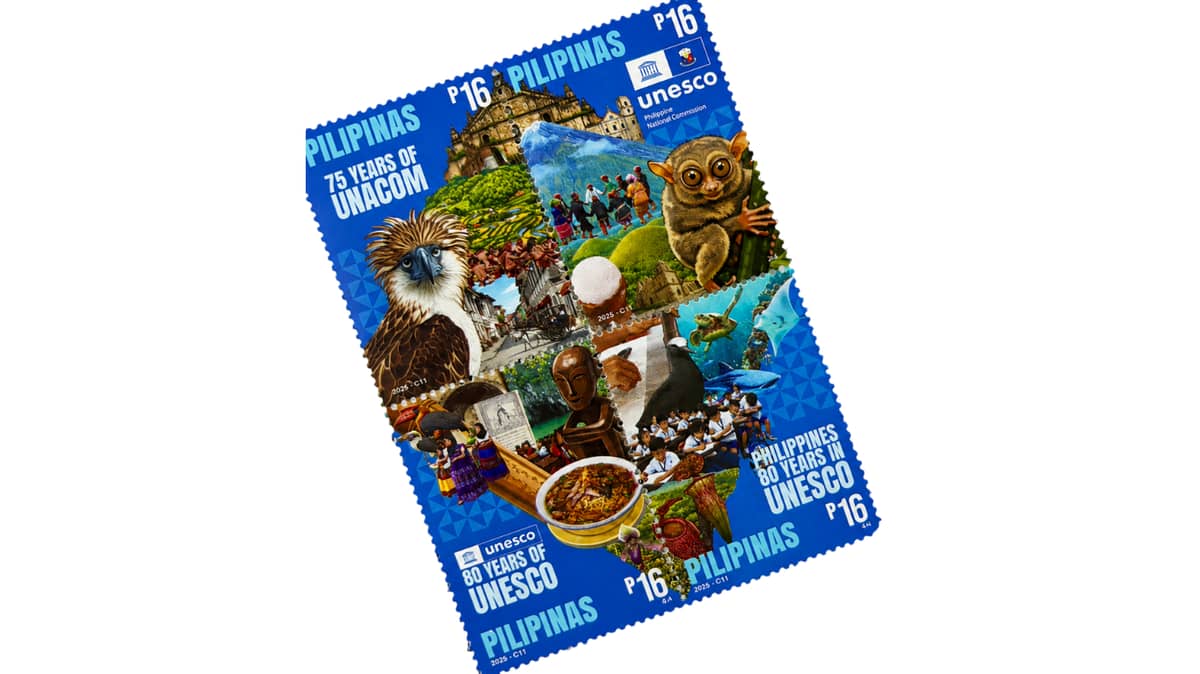
THE commemorative stamps celebrating the 75th founding anniversary of UNACOM.
PHOTOGRAPH courtesy of joyce ann rocamora
She added that UNACOM “has always been a bridge,” bringing together “lawmakers, scientists, artists, educators, and the youth to protect our heritage and foster deep community dialogue.”
Santa Maria, meanwhile, affirmed PHLPost’s support for UNACOM’s vision of “a world where no one gets left behind, where basic needs are met, where differences are embraced, and where all peoples feel valued and important.”
The Philippines participated in the conference that led to the establishment of UNESCO in the United Kingdom in November 1945. It was among the 41 nations that signed the UNESCO Constitution.
The Constitution entered into force on 4 November 1946, after 20 member states had deposited their instruments of ratification, formally establishing UNESCO. On 26 May 1951, UNACOM was created through Republic Act 621 to serve as the country’s principal coordinating body for UNESCO-related programs and initiatives.
The commemorative stamps, issued in a se-tenant block of four, were designed by Henares.
“It is not just a design; it is a tribute to our beautiful UNESCO designations and inscriptions in the Philippines,” he said. “Each element in the stamp is meant to feature a particular designation or inscription, and some of these elements represent more than one designation.”
Henares created vector images inspired by photographs from his own collection and images taken by Edgar Alan Yap, Jacob Maentz, Avito Dalan of the Philippine News Agency, Roel Hoang Manipon, and Renato Rastrollo of the National Commission for Culture and the Arts.
The stamps bring together a collage of Philippine sites, traditions, documentary treasures, cities, flora, and fauna recognized under UNESCO’s programs.
Representing the country’s World Heritage sites are the four Baroque Churches of the Philippines, Tubbataha Reefs Natural Park, the Rice Terraces of the Philippine Cordilleras, the Historic City of Vigan, Puerto Princesa Subterranean River National Park and Mount Hamiguitan Range Wildlife Sanctuary.
The design also includes elements inscribed on UNESCO’s Intangible Cultural Heritage lists: the Darangen epic of the Meranaw people of Lake Lanao; the punnuk of the Ifugao, included in the multinational inscription of Tugging Rituals and Games shared with Cambodia, South Korea, and Vietnam; the buklog ritual of the Subanen communities of the Zamboanga Peninsula; Aklan’s piña handloom weaving; and the traditional practice of making asin tibuok, Bohol’s artisanal sea salt.
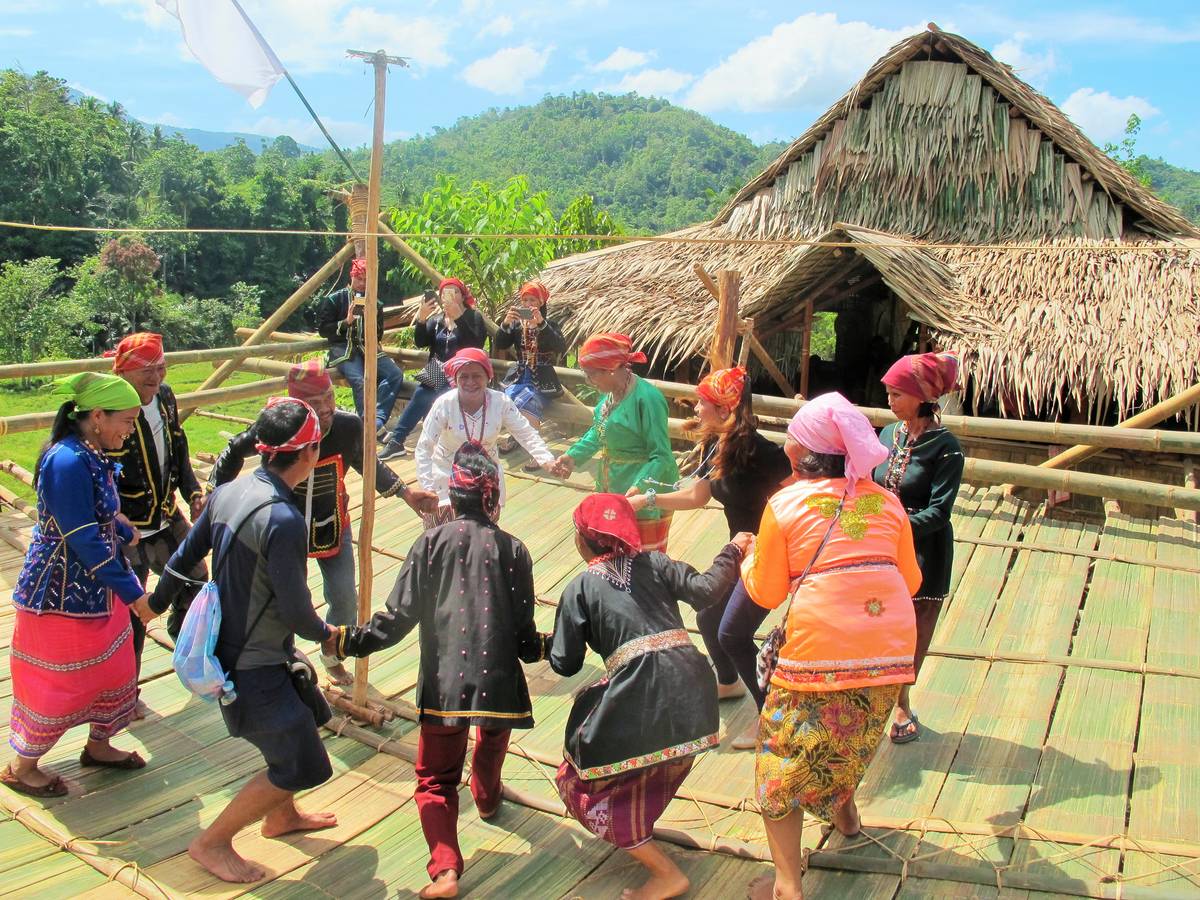
THE gbat or ritual dancing during the Subanen ritual of buklog.
PHOTOGRAPH by Roel Hoang Manipon for DAILY TRIBUNE
Bohol Island, designated as a UNESCO Global Geopark, is likewise represented. The stamps also feature sites included in UNESCO’s Man and the Biosphere Programme: the Puerto Galera, Palawan, Albay and Apayao biosphere reserves.
Philippine documentary heritage, included in the UNESCO Memory of the World Programme, also finds a place in the designs. Featured are the Philippine paleographs — the Hanunuo Mangyan, Buhid Mangyan, Tagbanua, and Pala’wan scripts — the Doctrina Christiana en Lengua Española y Tagala, and the Hinilawod Epic Chant Recordings.
For Henares, the bulul, the carved wooden figure of the Ifugao, represents Baguio City, while a bowl of La Paz batchoy represents Iloilo City. Both cities belong to the UNESCO Creative Cities Network. While Baguio is traditionally home to Kankanaey and Ibaloy peoples, it has drawn people of different ethnic backgrounds, including the Ifugao.
The stamps further celebrate the country’s biodiversity through images of animals and plants found in Philippine World Heritage sites. These include the Philippine eagle, Tubbataha black noddy, rufous hornbill, Luzon hornbill, pitcher plants, short-haired slipper orchid, reef manta ray, whale shark and green sea turtle.
Aside from the country’s cultural and natural heritage, the stamps also represent the broader work of UNACOM.
“Represented by two classroom scenes is the education sector of UNACOM,” Henares explained. “In the field of education, UNACOM advocates quality and inclusive educational development at all levels, from preschool to higher education and beyond, as well as gender equality, global citizenship, and lifelong learning.”
He also highlighted UNACOM’s social and human sciences sector, which promotes collaborative research and intellectual discourse toward building a more inclusive, just, and sustainable global society.
“The sector also aims to develop international standards in tackling social transformations, with values resting on justice, freedom, and human dignity,” Henares said.
Accompanying the stamps is an informative souvenir folder containing complete lists of the Philippines’ UNESCO designations and inscriptions, as well as a map, designed by TeamManila, showing their locations.
Following the ceremonial unveiling, officials signed the official first day cover.
“As these stamps travel from one place to another, may they serve as reminders of our interconnectedness — that when we protect our flora and fauna, we also protect the delicate balance of life itself,” Santa Maria said. “Protecting the environment means protecting our nation and the future of the next generations.”
He expressed hope that the stamps would carry the message that the Philippines is rich not only in natural resources, but also in people who deeply value culture, nature and human connection.
Lazaro, meanwhile, reflected on the enduring significance of the postage stamp in an increasingly digital age.
“In our fast-paced digital world, where messages can vanish with a single swipe, there is something profoundly beautiful about a postage stamp,” she said. “These stamps are small works of art, but they carry immense weight. They are tangible anchors of our identity, memory, and shared history. They link our past achievements to our present endeavors, reminding us of who we are and what we stand for.”