
DENR includes two new marine protected areas in Zambales

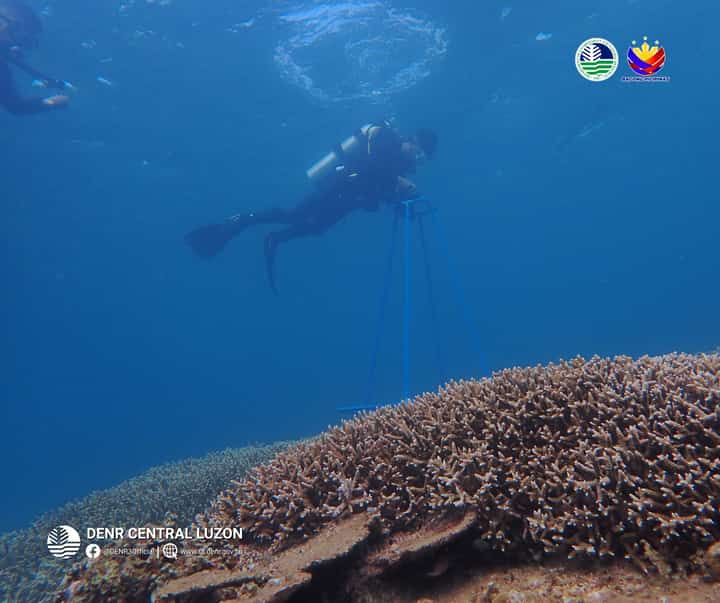
The Department of Environment and Natural Resources (DENR) Zambales has added two marine protected areas (MPAs) to the Zambales Marine Protected Area Network (ZAMPAN), further expanding the province's coordinated efforts to conserve marine biodiversity and promote sustainable fisheries.
According to Provincial Environment and Natural Resources Officer Marife Castillo, the Calanga Reef Marine Protected Area in the Municipality of Iba and the Rabaw-ti-Bato Marine Protected Area in the Municipality of San Narciso were included in the ZAMPAN.
She added that Governor Hermogenes E. Ebdane Jr. issued ZAMPAN Resolution No. 1, Series of 2026 for the inclusion of the two areas due to their ecological importance as coral reef ecosystems that serve as breeding, spawning, nursery, and feeding grounds for various marine species.
“Protecting these areas as part of a larger network strengthens habitat connectivity, improves ecosystem resilience, and supports coordinated management of coastal resources across municipalities,” Castillo said.
The expanded network is expected to help restore fish populations by protecting critical marine habitats where fish reproduce and mature. As fish stocks recover, nearby fishing grounds may also benefit through the natural movement of adult fish and the dispersal of larvae, helping improve food security and support the livelihoods of coastal communities.
DENR Regional Executive Director Ralph Pablo said expanding the province's network of marine protected areas is an important step in protecting coastal ecosystems while supporting communities that rely on marine resources.
“Healthy marine ecosystems are the foundation of productive fisheries and resilient coastal communities. By expanding ZAMPAN, we are strengthening ecosystem protection while supporting the long-term well-being of the people whose lives and livelihoods depend on our marine resources,” Pablo said.
ZAMPAN is a collaborative conservation network dedicated to protecting the coastal and marine ecosystems of the Zambales Province. The core objective of the network connects various locally managed Marine Protected Areas (MPAs) spanning from the northernmost town of Santa Cruz down to Subic Bay.