
CoA queries DMW distribution of OFW aid
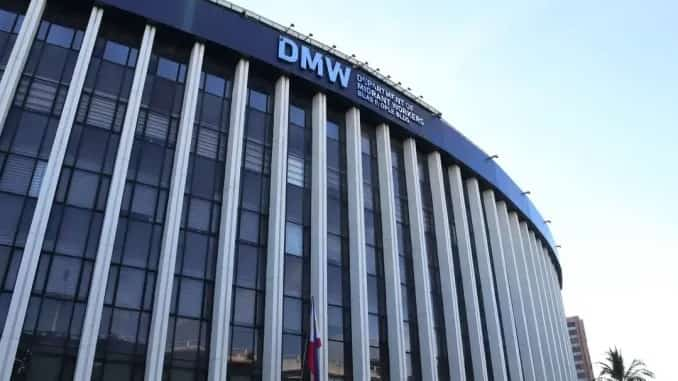
The Commission on Audit (CoA) raised various questions on the Department of Migrant Workers’ (DMW) distribution and implementation of financial, legal, and medical assistance to Overseas Filipino Workers (OFW) in 2025 with an allotment of P1.2 billion.
State auditors flagged the manner in which the Agarang Kalinga at Saklolo para sa mga OFWs na Nangangailangan (AKSYON) Fund was granted, particularly when it comes to its selection of beneficiaries which required supporting documents to justify the grants.
It was noted that the DMW had managed to utilize nearly all of its budget in 2025 as compared to 2024, a matter that CoA attributed to the ongoing tensions in Middle Eastern countries, leading to more public awareness for the said fund.
Among the more glaring findings of the agency was the lack of documents and recommendation reports for disbursements totaling P100.99 million.
CoA said that the regional offices of the DMW in Region VIII and the Cordillera Administrative Region (CAR), benefiting 444 individuals, had deficient acknowledgment receipts (ARs) on the part of the recipients of the funding.
The offices had reportedly only included a signed payroll for beneficiaries which received their assistance in batches, while there were some ARs that had incomplete information needed to validate the distribution.
“The absence of a properly accomplished AR secured from each AKSYON Fund beneficiary casts doubts as to whether the assistance was released to the intended recipient,” the report read.
It was also found that there were transactions that were not supported with recommendation reports from Welfare Officers in CAR, Region VIII, and Region IV-A.
Grants amounting to P74.42 million was distributed to 2,138 beneficiaries across all three regions with similar defects.
State auditors stressed the absence of such a document challenged whether the management was able to follow due process, internal control, timeliness, and accountability for the grants, highlighting the need for the inclusion of the report.
In a separate finding, CoA flagged the DMW for its failure to standardize the documentary requirements for beneficiaries which were subjected to maltreatment, abuse, contract violations, and illegal dismissals.
The report stated that there were a total of 21 individuals that received aid under such circumstances.
Seven of grants were reportedly only supported with a certification from the Migrant Workers Office that the OFW was distressed, citing a Request for Assistance (RFA) that OFWs personally fill out and was labeled by auditors as “self-serving” in nature.
Even with such circumstances, funds were still reportedly handed out to the individuals with no means to verify whether the claims indicated in the forms were factual.
“The inability to standardize the documentary requirements for each type of assistance may result in payment of doubtful claims and grants of assistance to ineligible beneficiaries,” CoA said.
Besides the implementation of the AKSYON Fund, the audit agency also raised issues with the manner in which the DMW monitored the program.
CoA said that the agency lacked a centralized database system which covered all its offices across the country to ensure that claims were granted while also tracking any pending claims.
State auditors stressed that the absence of such a system left the agency prone to individuals receiving duplicate benefits for the same purpose.
Another issue that arises from the issue was also highlighted in the inability of the DMW to properly reimburse funds used for the repatriation of workers, meant to be paid for by the licensed recruitment agency or the employer of the individual.
“As a result, verifying reimbursement claims has become challenging, making it difficult to impose any appropriate sanctions,” the report stated.