
Remulla takes on FB, mulls tough regulation
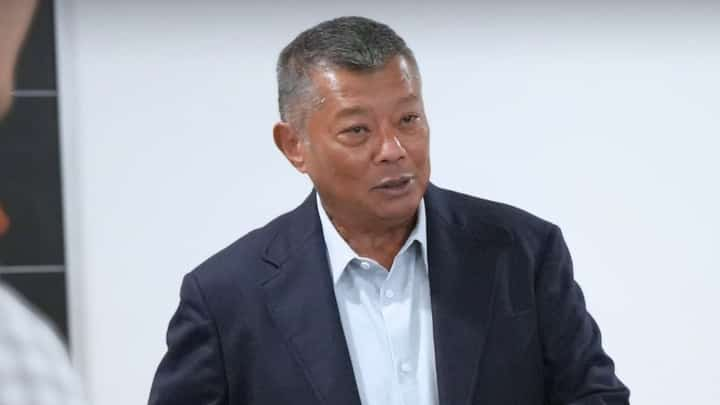
Ombudsman Jesus Crispin Remulla on Saturday called for stronger regulation of, and action against, social media platforms that serve as conduits for disinformation, as he also pushed for a Philippine counterpart to the United States’ anti-racketeering law.
Speaking on the Executive Session radio program yesterday, Remulla said platforms such as Meta, the parent company of Facebook, are “gatekeepers” that should filter false content.
“What are these social media companies doing?” he said.
Asked if complaints had been filed with Facebook over bots and fake accounts, he said the government was still studying the matter.
“It may begin with the DICT (Department of Information and Communications Technology), but eventually, it will also involve Facebook,” he said.
Asked if legislation was required, Remulla said existing laws such as on libel could be used but that something more specific was needed.
He likened the gap to the weakness of the Anti-Graft and Corrupt Practices Act and called for a law on organized crime, influence-peddling, and corrupt organizations, modeled on the Racketeer Influenced and Corrupt Organizations Act of the United States.
The US law was created because direct evidence against the heads of organized crime groups was hard to obtain, he said, and it lets authorities pursue them from different angles.
“We do not have anything like that here,” he noted.
Remulla said legislative proposals have been made but some concepts have been diluted, citing the so-called Bersamin doctrine on plunder. He said the law does not contain the terms “most guilty” or “master plunderer.”
“That is nonsense. It is not in the law. That is judicial sophistry,” he said.
The Bersamin doctrine on plunder is a legal principle that came out of the 2016 Supreme Court acquittal of Gloria Macapagal-Arroyo, which rules that to secure a plunder conviction, the prosecution must explicitly identify a “main plunderer” (mastermind) in the charge and prove they personally pocketed or benefited from the stolen funds.
Critics and anti-graft officials, including Remulla, have recently urged the Supreme Court to overturn this doctrine, arguing that it creates a dangerous loophole that allows corrupt officials to escape liability by routing public funds through intermediaries and shell companies.
Remulla said supporters of former President Rodrigo Duterte, known as Duterte Diehard Supporters, have been spreading malicious information against his office from the start.
They create fake issues, he said, to destabilize the institution and weaken the case against “their principal.”
He said they also try to influence the courts and shape public sentiment. As an example, he said, claims of the Ombudsman’s terminal illness are circulated twice a week.
Remulla said some posts take old headlines, remove or blur the dates, and attach the logos of legitimate news organizations to make them look credible.
Trolls thrive on anonymity
Remulla said many vloggers are paid, though not all. He cited studies showing that more than half of the content on social media does not come from legitimate individuals, describing the sources as troll farms.
Remulla called for some form of vetting to identify troll accounts, saying platforms should not allow such content simply because they profit from it. Anonymity, he said, is the source of these accounts’ power, and “many are bold because they are hiding.”
He noted that Facebook once had a verification system but it now appears more focused on the business and it no longer has a physical office in the Philippines but maintains a regional office in Singapore.
Weaponized filings
Remulla said platforms are driven by engagement, since more of it means more advertising revenue for both Meta and the person posting.
He said that government institutions themselves are being used.
People file frivolous complaints with the prosecution service, the Department of Justice or the Ombudsman, he said, then post the filings online to support false claims and harassment campaigns. Some of the cases, he added, are completely baseless and are used “as ammunition.”
Mafia in Payatas jail?
Meanwhile, Remulla criticized the Bureau of Jail Management and Penology (BJMP) for allegedly allowing former speaker Martin Romualdez to have a personal aide inside the Quezon City Jail in Payatas.
“I was surprised by that. There is no reason for that to be allowed. What is this, a rich person in jail who has an aide coming from outside?” Remulla said in the DZRH Executive Session interview.
“What is that, a mafia? You should be ashamed, BJMP,” he added.
Remulla said he would investigate the alleged arrangement, adding that his office has identified the group supposedly involved.
“We have identified what group is behind this. I do not want to mention their names,” he said.
The Ombudsman recently announced plans to conduct “surprise visits” to Payatas jail at any time to monitor Romualdez’s condition.
The BJMP, however, denied the claims, saying its initial review found no recorded power outages or CCTV disruptions and no unauthorized movement by Romualdez outside the facility.