
Agricultural producer prices fall 7.3% in Q3
Vegetable and livestock producers face lower selling prices despite gains in cereals
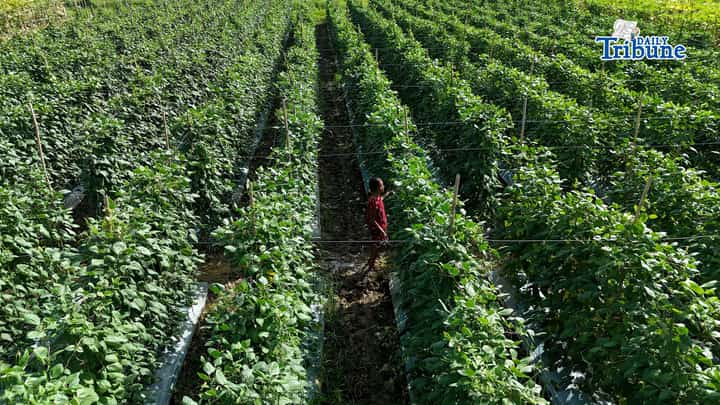
(February 11 2026) An almost two hectares vegetables farm of “bottle gourd, string beans and cucumber“ rented by the Dela Peña family in San Ildefonso, Bulacan, on Wednesday, February 11, 2026, they said due to an oversupply of produce, they are forced to sell at low prices, leaving them with earnings that only break even with their production costs. President Ferdinand R. Marcos Jr. signed the 2026 national budget, which significantly boosts the agricultural sector's allocation to over P297 billion to enhance food security, modernize systems, and raise rural incomes. Key priorities include doubling farm-to-market road funding to P33 billion. Photo/Analy Labor
Agricultural producer prices nationwide remained below year-ago levels in the third quarter of 2026, declining by 7.3 percent, according to the Philippine Statistics Authority (PSA).
In its report released Friday, 27 November, the PSA said the annual decline moderated from 11.7 percent in the second quarter, although several agricultural commodities continued to register double-digit price reductions.
Prices for condiments fell by 43.6 percent, while leafy vegetables recorded a 30-percent decline. Commercial crops dropped by 19.3 percent, fruit vegetables by 11.9 percent and fruits by 9.9 percent.
In contrast, cereal producer prices increased by 34.2 percent, while rootcrop prices rose by 16.6 percent.
The livestock and poultry sector registered a combined annual price decline of 12.3 percent, with livestock prices falling by 16.4 percent and poultry by 4.9 percent.
Fisheries producer prices likewise declined by 5.6 percent, with inland municipal fisheries recording a 22.5-percent reduction.
Despite the annual contraction, agricultural producer prices showed signs of recovery, increasing by 0.8 percent compared with the preceding quarter.
The figures highlight uneven price movements across agricultural commodities, with some producers benefiting from higher selling prices while others continue to face reduced prices for their products.
For agricultural communities in CALABARZON and MIMAROPA, the national trends provide a basis for examining local farmgate prices, production expenses and the profitability of farming and fishing activities.
The Producer Price Index for Agriculture, which uses 2018 as its base year, measures changes in prices received by agricultural producers rather than retail prices paid by consumers.
Lower producer prices do not necessarily translate into cheaper consumer goods or lower farm production costs.