
Capital on hold until 2028?
To prevent a deeper economic slide, the country’s economic managers must prove they can deliver results.
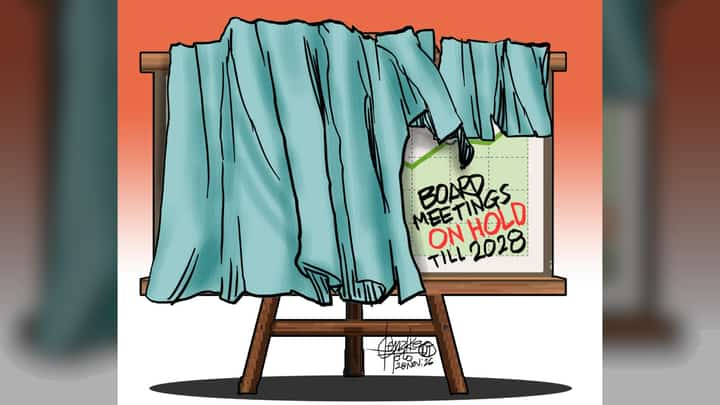
Philippine boardrooms are said to be contemplating hitting the brakes, adopting a “wait-and-see” posture, shelving major capital expenditures and expansion plans until after the 8 May 2028 presidential election.
Caught between mounting macroeconomic distress — marked by a sluggish 2.5-percent average GDP growth across the first three quarters of 2026 — and deepening political uncertainty, private enterprises are expected to hold on to cash rather than bet on growth.
A corporate freeze has immediate, painful consequences for the broader economy. The Federation of Philippine Industries (FPI) warns that local manufacturers have already put expansion plans on ice as the severe peso depreciation forces companies to budget at roughly P65 to the US dollar, compounding punishing electricity costs and chronic logistics bottlenecks.
Simultaneously, external buffers are thinning: net FDI inflows have trended downward, and S&P Global Ratings recently slashed its near-term growth outlook for the Philippines, pointing directly to weak public infrastructure spending.
With private fixed investment contracting and public outlays lagging, household consumption — propped up by overseas remittances — and the IT-BPM sector are left carrying an unsustainable load. Without urgent capital formation, job creation will stall, trapping the economy well below its historical 6-percent potential.
As President Ferdinand R. Marcos Jr. approaches the final year of his six-year term ahead of 30 June 2028, the risk of early lame-duck paralysis looms large. By late 2027, aggressive coalition-building, succession battles and ongoing corruption investigations threaten to consume the government’s bandwidth.
To prevent a deeper economic slide, the country’s economic managers must prove they can deliver results. The administration’s pressing mandate for its final two years is to unclog project bottlenecks and rapidly deploy its proposed P7.2-trillion national budget for 2027 to finish flagship infrastructure projects and restore shattered investor confidence.
When the political dust settles in mid-2028, Philippine business leaders will have zero appetite for populist rhetoric — they will demand immediate competence and institutional credibility. To coax sidelined capital back into the market, the next president must guarantee policy continuity, transparent governance and uncompromising anti-corruption enforcement.
More urgently, the business community needs a chief executive who will confront structural cost drivers head-on — bringing down prohibitive power rates, fixing broken supply chains, cutting bureaucratic red tape and stabilizing the regulatory environment. Only a leader backed by a credible economic team can convince domestic conglomerates to resume multiyear commitments.
If the May 2028 elections deliver a clear, stabilizing mandate, pent-up capital stands ready to flood into critical sectors, including energy transition and power infrastructure. Punishing electricity rates and grid fragility make renewable energy, battery storage and distribution upgrades an urgent priority for private capital.
Fierce competitive pressures will compel firms in telecommunications, banking and retail to accelerate spending on digital infrastructure, cloud systems and artificial intelligence.
Modernizing ports, cold chain networks and agribusiness will draw heavy investments as businesses insulate themselves from currency swings and climate shocks.
More public-private partnerships should attract investment, and we see stalled regional transport, water and urban development projects rapidly regaining momentum once long-term regulatory certainty returns.
Withholding considerable investments as corporations retreat is a stark warning sign. Unless the government arrests the slide in infrastructure implementation and structural competitiveness now, the Philippines risks losing critical economic ground long before a new president takes the oath in 2028.