
Damning truth
The Senate court voted to lower the threshold by two, raising the question of a constitutional breach.
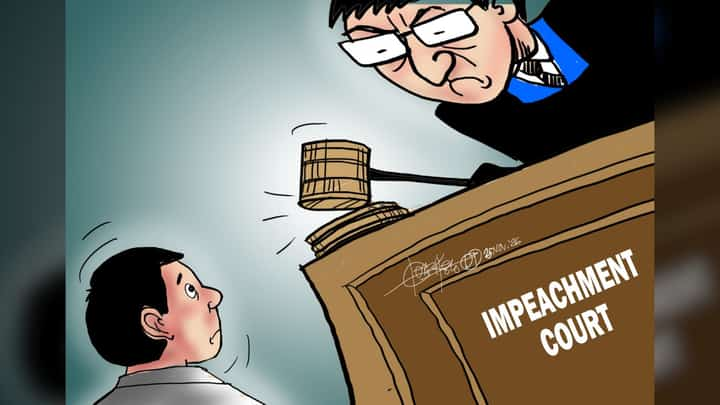
The Senate impeachment court is supposed to weigh the evidence impartially, not give the impression that some of its members have already chosen which side to champion. It could face public backlash for going after Vice President Sara Duterte’s spokesperson, Paolo Panelo, who is not even a party to the proceedings.
This move gives another glimpse into the growing perception that the fate of the country’s second-highest official may have been decided even before the trial could run its course.
The treatment of witnesses, marked by what critics describe as disrespect and intimidation, coupled with some senator-judges seemingly taking up the cudgels for the prosecution despite not being lawyers, has further fueled questions about the court’s impartiality and whether the proceedings have tilted in one side’s favor.
“The impeachment court isn’t above reproach and they can’t just do whatever they want. They have to be accountable to the people. You can’t just keep quiet and not call them out,” a former Cabinet official said.
Public scrutiny is now directed not only at the palpable bias but also at the rule on the number of votes needed to convict an impeachable official, which is now the subject of debate, especially in the case of the Vice President.
Senators Robin Padilla and Christopher “Bong” Go, along with the political party PDP-Laban, have a petition for a temporary restraining order pending in the Supreme Court on the Senate court’s move to lower the vote threshold needed to convict VP Duterte.
The dispute concerns the wording of the Constitution, which states that three-fourths of all members of the Senate are needed for an acquittal or conviction. The Senate court voted to lower the threshold by two, raising the question of a constitutional breach.
Another question was whether the court should have allowed the withdrawal of the three impeachment charges after the prosecution had extensively argued the dropped allegations, denying the defense a chance to rebut the accusations against the Vice President.
“Some of the senator-judges’ way of asking questions is like they’re just ticking boxes, and you can really tell they’re biased, almost like they’re defending the prosecution, which they shouldn’t be doing. A judge needs to be objective, not take sides,” according to the former Palace insider.
The senator-judges’ questioning must be aimed at getting at the truth and not be lawyering for one side or asking questions to insult or intimidate.
“Apparently, people are hurt because it’s true. It’s so obvious you’re biased, so obvious you’re taking sides, and it’s clear the witnesses are being disrespected. They’re being intimidated. So it’s only right to call it out,” the veteran lawyer said.
Public officials are not protected by a shield against criticism since, ultimately, they owe their positions to the voters, who are now demanding that the Senate court render justice.
Even the Senate judges should be open to criticism. That’s part of their job, part of serving the people who can call them out.
Criticism reminds officials that they are expected to follow what the law and the Constitution provide, which, in effect, are guarantees of a civilized society.
In the end, the proceedings will be remembered less for who spoke the loudest than for whether the process deserved the public’s confidence.
The Constitution and the law provide assurances that power will be exercised fairly, and such promises are only kept when someone insists on them.
Filipinos are asking for justice, and the least they expect is a Senate court that asks questions to find the truth, treats witnesses with dignity and accepts, without flinching, that the public is watching.