
Leonen: Duterte denied due process
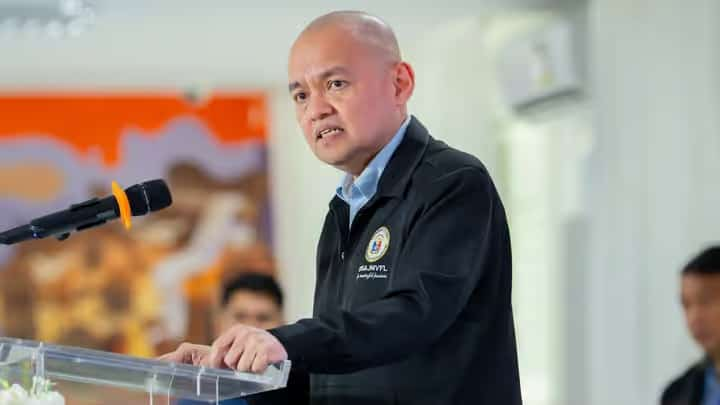
Former President Rodrigo Duterte was deprived of his rights when he was arrested under an International Criminal Court (ICC) warrant and transferred to The Hague on the same day, according to Supreme Court Senior Associate Justice Marvic Leonen.
In an updated Supreme Court press briefer, Leonen said under Article 59 of the Rome Statute a person arrested under an ICC warrant is required to be brought promptly before a competent judicial authority in the custodial state.
He said Duterte’s immediate transfer to The Hague deprived him of the opportunity to seek an interim release or to challenge the legality of his arrest before a Philippine court.
Although Leonen concurred with the Supreme Court En Banc’s dismissal of the consolidated habeas corpus petitions filed by Duterte’s children, he maintained that no legal barriers prevented the former president’s prosecution before the ICC.
He, however, dissented from the majority’s decision to leave unresolved the constitutional questions surrounding Duterte’s arrest and surrender.
Leonen warned that leaving these issues unsettled could allow similar circumstances to recur and escape judicial review in the future.
He said the High Court should have issued clear guidelines for judges, lawyers, and law enforcement agencies on upholding constitutional safeguards, implementing Republic Act 9851 — or the Philippine Act on Crimes Against International Humanitarian Law, Genocide and Other Crimes Against Humanity — and complying with the country’s obligations under the Rome Statute.
Four other justices dissented from the majority’s dismissal of the petitions.
Associate Justice Ramon Paul Hernando said Duterte’s surrender to the ICC violated his constitutional rights, including due process, protection against unreasonable searches and seizures, freedom of travel, and the rights of a person under custodial investigation.
He argued that the case’s exceptional circumstances and immense public importance warranted a judicial review despite the petitions having become moot.
Hernando also questioned the constitutionality of Section 17 of RA 9851, saying it delegated the surrender authority to unnamed “relevant Philippine authorities” without clearly defining the mechanism, identifying the officials empowered to act, or prescribing procedures and safeguards against abuse of discretion.
Associate Justice Amy Lazaro-Javier said the Supreme Court retained the authority to review the legality of actions taken by Philippine officials.
She maintained that Duterte’s detention outside Philippine jurisdiction did not strip the Court of its power to determine whether his arrest and surrender complied with the Constitution and Philippine laws.
Lazaro-Javier stressed that the writ of habeas corpus remains a safeguard against unlawful detention and that the Court should not avoid ruling on alleged constitutional violations simply because the detained person is no longer within Philippine territory.
Associate Justice Henri Jean Paul Inting said the petitions raised justiciable legal questions, not political questions, and that the legality of Duterte’s arrest and surrender could affect the ICC proceedings.
He maintained that the Court could not evade its duty to resolve constitutional issues by invoking mootness, particularly when the case involved the limits of government power and the protection of individual rights.
Inting said the Court should have determined whether Duterte’s arrest and surrender complied with the Constitution, RA 9851, and the country’s obligations under the Rome Statute.
Associate Justice Antonio Kho Jr. described Duterte’s transfer to the ICC as an unconstitutional “extraordinary rendition,” arguing that it was carried out without a local court order.
Kho said the government could not surrender a Filipino citizen to a foreign tribunal without a valid domestic legal framework and prior judicial authorization.
He maintained that surrendering Duterte without a Philippine court order was invalid and violated his right to due process.
The Supreme Court En Banc earlier dismissed the petitions as moot, ruling that the writ of habeas corpus is a domestic remedy enforceable only within Philippine territory.
It said the writ could not compel the release of a person detained outside the country’s jurisdiction, such as Duterte, who is being held at the ICC detention center in The Hague, Netherlands.