
DA, BFAR boost sustainable fish farming in Rizal
Twenty agricultural extension workers undergo five-day training on organic-based inland aquaculture, fish production and value-added livelihood opportunities.
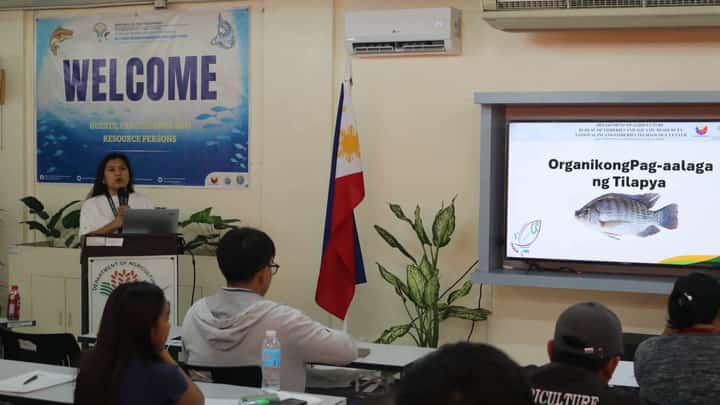
A resource speaker discusses organic tilapia farming during the five-day Training on Organic-Based Inland Aquaculture at the BFAR National Inland Fisheries Technology Center in Tanay, Rizal. The program, which began on 23 November 2026, brings together 20 agricultural extension workers from CALABARZON to strengthen sustainable fish farming practices and livelihood opportunities.
DA-ATI CALABARZON.l
TANAY, Rizal — Twenty agricultural extension workers from different local government units in CALABARZON are undergoing a five-day training program on organic-based inland aquaculture aimed at improving fish production practices and strengthening technical assistance to local farming and fishing communities.
The Department of Agriculture–Agricultural Training Institute (DA-ATI) CALABARZON launched the training on 23 November 2026 in partnership with the Bureau of Fisheries and Aquatic Resources–National Inland Fisheries Technology Center (BFAR-NIFTC) in Tanay, Rizal.
Organized as part of National Organic Agriculture Month, the program seeks to equip agricultural extension workers with technical knowledge and practical skills in sustainable freshwater aquaculture that they can transfer to farmers, fisherfolk and communities across the region.
The training covers organic aquaculture principles and standards, the economic potential of different aquaculture species, proper fishpond management, feeding practices, fish health management and water quality maintenance.
Participants will also receive instruction in fish processing and the development of value-added products, providing opportunities to explore additional income sources beyond traditional fish production.
BFAR-NIFTC Chief Aquaculturist Romualdo M. Pol and ATI CALABARZON Partnerships and Accreditation Section Chief Abegail L. Del Rosario delivered messages during the opening program.
The training is accredited for 15 Continuing Professional Development (CPD) credit units under the Fisheries Council for qualified fisheries professionals.
Through technical discussions and practical aquaculture management activities, the program aims to strengthen the capacity of local agricultural extension workers to introduce appropriate and sustainable fish farming technologies in their respective communities.
The initiative also highlights the potential of inland aquaculture to support rural livelihoods through improved production techniques, better resource management and the development of processed fish products.
ATI CALABARZON expects the training to enhance agricultural extension services and support efforts to develop more productive and sustainable aquaculture practices across the region.