
Phl 'dangerously close' to Sick man of Asia status
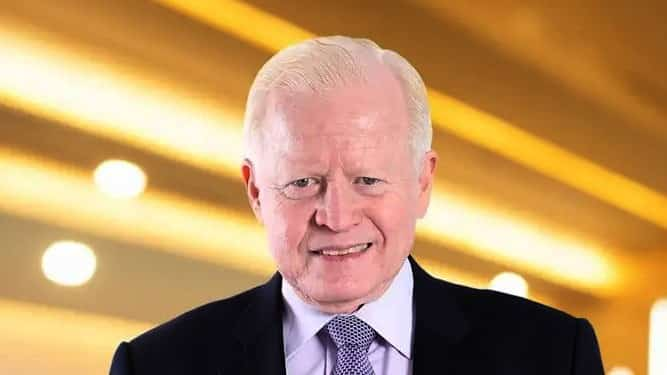
The Philippines is dangerously close to becoming the “Sick man of Asia” once more, this time under President Ferdinand Marcos Jr., as mounting debt, corruption, declining investor confidence and weak governance threaten to drag the economy down, former Central Bank governor and Philippine Ambassador to the United States Jose Cuisia Jr. warned.
Asked by Rico Hizon in an interview on ANC’s Beyond the Exchange if the Philippines was headed toward becoming the region’s economic laggard, Cuisia said: “We’re dangerously close to it. But I think we can recover by getting our acts together.”
The warning revives a label the country earned during the presidency of Marcos Sr. in the 1980s, when the economy deteriorated amid mounting debt, political instability, policy failures and corruption. The parallel is particularly striking as the country again faces mounting fiscal pressures under the younger Marcos.
Once regarded as one of Asia’s more promising economies, the Philippines suffered a prolonged economic crisis in the 1980s, with real per capita income falling by about 7 percent between the beginning and end of the decade. Its economic troubles contrasted sharply with the growth of its neighbors, many of which would become known as Asia’s economic tigers.
Cuisia said the country’s worsening fiscal position was among the reasons for concern, noting that the debt-to-GDP ratio had reached 66 percent, above the 60-percent prudential threshold recommended by the International Monetary Fund for developing countries.
He recalled that the debt-to-GDP ratio was around 40 to 41 percent when former President Benigno Aquino III left office, but rose sharply under succeeding administrations.
‘Wrong policies’
The country’s debt climbed to 62 percent of GDP, or P12.9 trillion, when former President Rodrigo Duterte left office in 2022, from 39.6 percent in 2019, amid the Covid-19 pandemic and what Cuisia described as wrong policy decisions.
“But that has been worsened during the Marcos Jr. administration. Because we are living beyond our means, our revenues are not sufficient compared to the expenses that we are incurring,” he said.
“We have a bloated government bureaucracy and a lot of corruption in the country, especially what happened to the 2022, 2023, 2024 and 2025 budgets where over a trillion pesos allegedly leaked out as bribes and ghost projects,” he added.
Cuisia also blamed the massive corruption scandal related to the flood control project which, he said, “has also resulted in loss of confidence in the Philippines, which is why you see foreign direct investments having come down quite considerably over the past three years.”
He cited the decline in foreign investments, saying FDI stood at $11.14 billion in 2024 before falling to $8.2 billion in 2026. He also pointed to weaker investment inflows during the first eight months of the year, which he said reached 4.67 percent compared with 5.9 percent during the same period last year.
Cuisia said foreign portfolio investments, including those in the stock market, had likewise declined considerably over the past eight years, reflecting waning investor confidence.
The former central bank chief said the country’s economic problems could not be addressed through monetary policy alone, particularly as inflation remained a concern.
Constraints
He stressed the need to address supply-side constraints by investing in infrastructure and agriculture and reducing the country’s dependence on imported food.
On foreign policy, Cuisia maintained that the Philippines was not the aggressor in the West Philippine Sea, recalling the 2012 Scarborough Shoal standoff in which China allegedly failed to honor an agreement for both sides to withdraw their vessels.
He called for an austerity budget and more decisive leadership to restore public trust, improve governance and revive the economy.
Cuisia also agreed with a quip that the Philippines had more “crocodiles” than Africa and Australia, an apparent reference to corruption and those taking advantage of public funds.
Despite his grim assessment, Cuisia said the Philippines could still avoid repeating its economic decline in the 1980s, provided the government addressed corruption, exercised fiscal discipline and pursued policies that encouraged investment and sustained growth.
He also expressed hope that former vice president Leni Robredo would run for president in 2028.