
Hiding rot beneath P22.9-B meet
There was a time the Philippines was called the ‘Sick Man of Asia,’ a label it earned through decades of economic mismanagement and political dysfunction. The phrase has returned, worse than before.
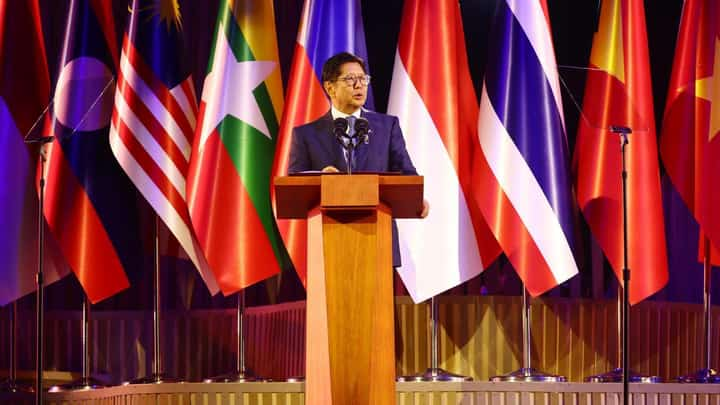
The Philippines is hosting the 49th ASEAN Summit this week, and the government wants the world to see a nation in command, with the leaders shaking hands at the Philippine International Convention Center.
With a digital economy agreement poised for signing and over 550 meetings scheduled, the Marcos Jr. administration was willing to spend P22 billion to convince foreign investors that the country is trustworthy — a carefully curated image, polished for an international audience.
The problem is the audience has already seen the floodwaters.
There was a time the Philippines was called the “Sick Man of Asia,” a label it earned through decades of economic mismanagement and political dysfunction. The phrase has returned, worse than before.
Third-quarter growth slumped to 2.1 percent, the fifth consecutive quarter of deceleration, and well below the government’s full-year target. Inflation climbed to 7.8 percent in October, the highest since February 2023, with transport costs surging over 20 percent. We are a country in stagflation. These are not numbers that a summit can spin away.
This is the economic backdrop against which the ASEAN Summit is being staged in Manila. The government can point to the digital economy framework agreement and the 19 priority deliverables as evidence of regional leadership.
But leadership abroad cannot substitute for (in)competence at home, and the world’s diplomats and investors know the difference. They see the same headlines about the flood control scandal — a scandal that has done far more damage to the country’s international standing than any summit can repair.
Foreign direct investments have fallen to $4.8 billion in the first eight months of 2026, a 19-percent decline that tells its own story: capital is not waiting for the summit to conclude before deciding where to go.
Transparency International ranked the Philippines 120th out of 182 countries in its latest Corruption Perceptions Index, the country’s worst score since the index adopted its current scale.
The P22.9-billion hosting budget has become a symbol of the administration’s priorities, and not in a flattering way. During the administration of former President Rodrigo Duterte, the government spent P3.8 billion on the 2017 ASEAN Summit — and that was ASEAN’s 50th anniversary, a far more elaborate affair than this year’s gathering.
Even adjusted for inflation, Duterte’s spending would be equivalent to roughly P5.5 billion today. The Marcos allocation is four times that figure.
Why the difference? The Marcos Jr. administration thinks that the appearance of competence can make up for the lack (or absence) of it. But no amount of refurbished convention centers and designer barongs will change the fact that the flood control scandal has exposed how easily public funds designated for critical infrastructure can vanish into the pockets of greedy politicians and contractors.
The problem is not that the world thinks the Philippines is unimportant; it is that the world thinks the Philippines is unreliable and unstable. And a P22-billion summit cannot fix that. Only convictions, accountability and visible progress can.
The summit will end and the world leaders will leave — all gone along with the P22.9 billion spent for them. And the Marcos Jr. administration will simply return to the business of governing a country where growth is anemic, prices are punishing and the floodwaters still rise with every storm.
Meanwhile, ordinary, hardworking, exhausted Filipinos continue to struggle each day just to make ends meet. Kamusta, kaya pa ba?