
DILG Region 1 trains personnel on emergency operations, disaster response
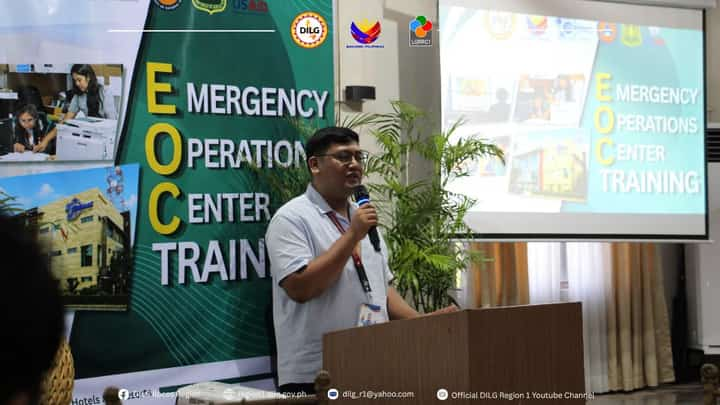
The Department of the Interior and Local Government (DILG) Region 1 has launched a three-day training program to strengthen its personnel's capacity to manage emergency operations and respond to disasters.
The training, conducted in partnership with the Office of Civil Defense (OCD) Region 1, started on 3 November at Patio by Balai Norte in San Juan and will run until 5 November.
The activity brought together personnel from the DILG regional and provincial offices to enhance their knowledge of Emergency Operations Center (EOC) management, organizational structures, and coordination mechanisms under the country's disaster risk reduction and management system.
The initial sessions covered three modules on establishing and managing an effective EOC.
The first module discussed the EOC's legal mandate, basic concepts, and role in the Philippine Disaster Risk Reduction and Management System. The second focused on operational procedures, including the responsibilities and coordination among EOC personnel, clusters, and Incident Management Teams.
Both modules were facilitated by Civil Defense Officer III Mike Aldrin T. Sabado, officer-in-charge assistant division chief of the Disaster Risk Reduction Division of OCD Region 1.
The third module, facilitated by Municipal Local Government Operations Officer Rhodalyn S. Licudine, tackled EOC organization and staffing in accordance with the Incident Command System.
The session also covered personnel and stress management to help ensure that emergency operations centers maintain an effective workforce during disasters and other emergencies.
In a statement, DILG Region 1 said the training forms part of its efforts to strengthen disaster preparedness within the department and improve its capacity to assist local government units in responding to emergencies.
The agency added that equipping personnel with technical knowledge and operational skills would improve coordination and contribute to building more prepared and disaster-resilient communities across the region.