
DA revives drought-resistant native corn
The resolution seeks to support valuable agricultural resources and promote the use of locally adapted crops.
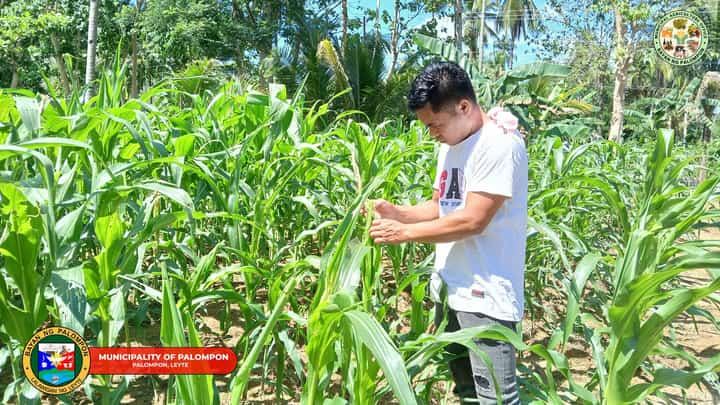
The Department of Agriculture in Eastern Visayas is working to preserve and reintroduce Kalimpos, a native corn variety known for its reported resilience to drought and pests.
TACLOBAN CITY — As new corn varieties emerge through advances in agricultural technology, the Department of Agriculture (DA) in Eastern Visayas is taking a closer look at a traditional crop that has long been valued for its ability to withstand drought and pest attacks.
The agency is working to preserve and reintroduce Kalimpos, a traditional white corn variety, as part of efforts to strengthen food security and help farmers adapt to the risks posed by climate change.
Kalimpos is an open-pollinated variety (OPV) of native white corn. The DA is seeking to prevent the traditional strain from disappearing amid the increasing use of commercialized genetically modified and hybrid seeds.
The DA Regional Field Office (RFO) 8 earlier launched the Kalimpos Corn Project, which aims to preserve, propagate and promote the native variety as part of the region’s agricultural heritage.
Through its Abuyog Experiment Station (AES), researchers from the regional office piloted the reintroduction of Kalimpos in the towns of Merida and Palompon in Leyte.
The pilot site in Merida covered three hectares and involved 11 corn farmers. It was established to validate reports of the variety’s resilience to drought and pest attacks, as well as its claimed 80-percent shelling recovery.
On 28 and 29 October, the DA-RFO 8 held the Farmers Field Day and Harvest Festival of the Kalimpos Corn Project in Barangay Lundag, Merida.
The three-hectare pilot implementation recorded an average yield of three metric tons per hectare of fresh grain, with a computed dry grain yield of 2.25 metric tons per hectare.
“The Kalimpos corn is not merely a legacy from our ancestors; it is a treasure for a more resilient future. That’s why we encourage farmers to plant Kalimpos, as it has been proven to withstand climate change and pests, while also offering a higher yield,” said AES researcher Mona Liza Ruiz.
In Palompon, Kalimpos corn planted during the third week of June was harvested in the first week of October.
The Palompon Municipal Agriculture Office said the harvested seeds would be distributed to local corn growers during the first week of November.
The municipal agriculture office also said cultivating the traditional variety supports local ecosystem biodiversity and helps preserve a crop that exhibits natural resilience to localized climate challenges.
Meanwhile, Merida Mayor Rolando Villasencio signed a resolution encouraging the conservation and utilization of traditional corn varieties in the municipality.
The resolution seeks to support valuable agricultural resources and promote the use of locally adapted crops as part of efforts to strengthen the municipality’s agricultural sector.