
NCDA warns LGUs against blanket PWD disqualifications
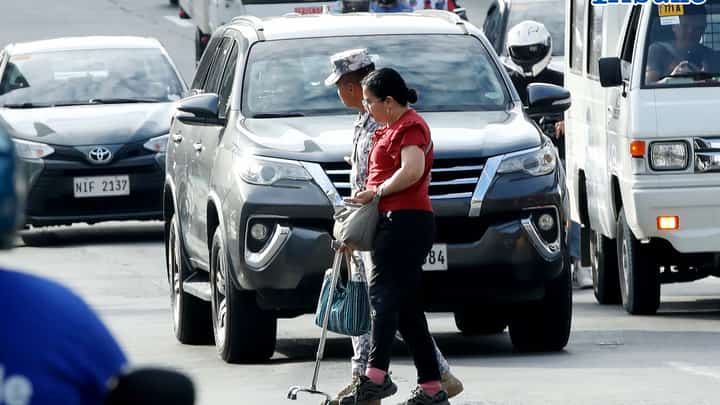
(January 05 2026) A Coast Guard personnel seen helping the PWD a passenger from a carousel bus crossing Edsa on Monday January 5 2026. Photo/Analy Labor
ANALY LABOR
The National Council on Disability Affairs (NCDA) has reminded local government units (LGUs) to follow national guidelines in issuing persons with disability (PWD) identification cards, stressing that certain medical conditions may qualify as disabilities depending on their impact on daily functioning.
The reminder follows concerns over a circulating LGU document classifying several medical conditions and chronic illnesses as “not yet recognized as a disability,” effectively excluding affected individuals from PWD ID eligibility.
The listed conditions include endometriosis, bronchial asthma, scoliosis, depressive disorder, anxiety disorder, heart conditions, HIV, stroke, kidney failure, chronic kidney disease, diabetes and hypertension.
The NCDA clarified that having a medical condition does not automatically qualify or disqualify an individual from being recognized as a person with disability.
It explained that a medical diagnosis identifies a health condition, while a disability assessment determines whether an impairment substantially limits a person's daily activities and participation in society.
Under Department of Health Administrative Order No. 2025-0014 and Republic Act 7277, or the Magna Carta for Persons with Disabilities, recognized disability classifications include mental and psychosocial disabilities, cancer and rare diseases.
The recognition of rare diseases is further supported by Republic Act 10747, or the Rare Diseases Act of 2016.
According to the council, some conditions listed in the circulating document may fall under recognized disability categories if they result in substantial functional limitations.
NCDA Administrative Order No. 001, series of 2021, also provides that individuals with non-apparent disabilities may qualify for PWD IDs upon presenting a certificate of disability issued by a qualified specialist.
The council stressed that PWD ID applications must be evaluated based on applicable laws, medical assessments and certification requirements rather than blanket exclusions based on diagnosis alone.
It urged LGUs to review their public advisories and application procedures to ensure compliance with national policies.
The NCDA also emphasized that PWD IDs must be issued only to qualified individuals to protect the integrity of disability assistance programs and ensure that benefits reach their intended recipients.