
When four pillars meet a million trees
Sometimes meaningful partnerships begin not with formal agreements but with shared values, common friendships, and a convergence of visions.

A shared admiration for FVR and a commitment to President Ferdinand Marcos Jr.’s environmental agenda open possibilities for an NRDC-Million Trees partnership.
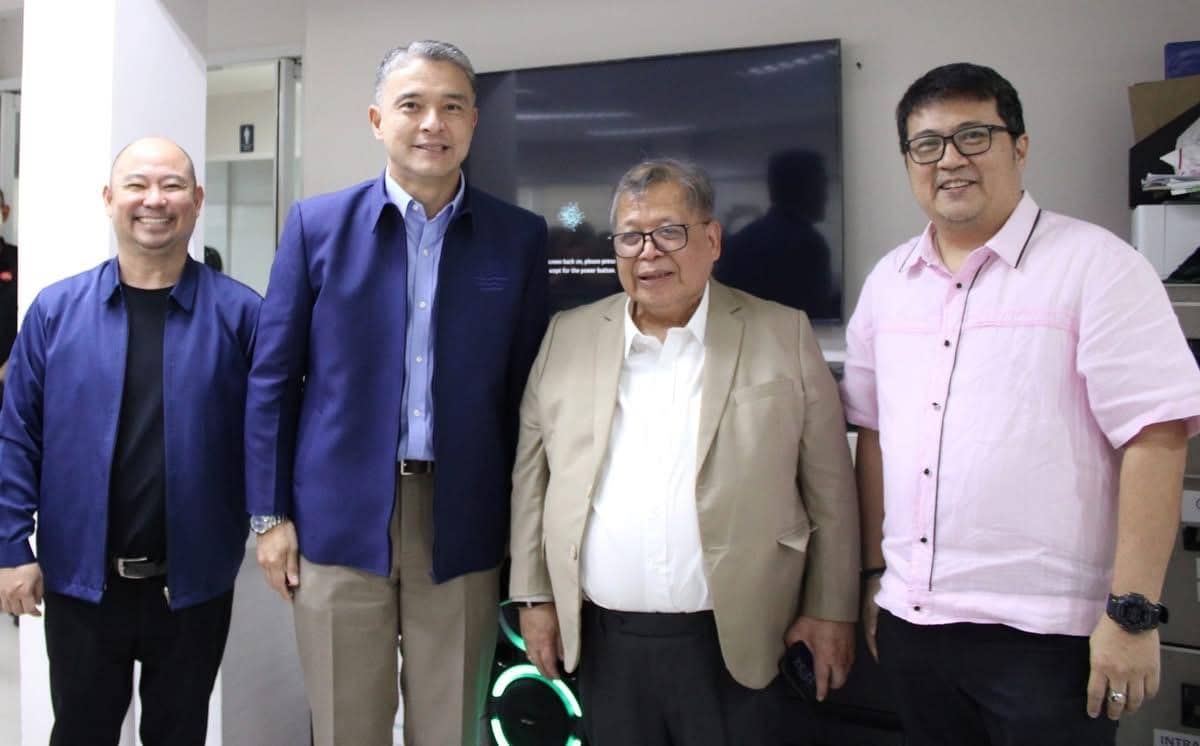
Sometimes meaningful partnerships begin not with formal agreements but with shared values, common friendships, and a convergence of visions that could be considered both serendipitous and providential.
Such was my meeting Wednesday, 21 October, with retired Judge Benjamin Dumlao Turgano, president and CEO of the Natural Resources Development Corporation (NRDC), at the Department of Environment and Natural Resources (DENR) Central Office in Quezon City.
Our meeting coincided with his birthday and NRDC’s groundbreaking ceremony for its office expansion.
Earlier that day, NRDC officials led by Judge Turgano and executive vice president Joel S. Erestain attended a Thanksgiving Mass and blessing officiated by Rev. Fr. Mauricio “Mau” Ulep, CMF. DENR Secretary Juan Miguel T. Cuna also graced the birthday celebration.
Appointed by President Marcos Jr. on 12 December 2024, Judge Turgano brings to NRDC decades of experience in the judiciary, public service, and academe, including his presidency of Wesleyan University-Philippines.
His appointment provides an opportunity to reinvigorate the NRDC’s mandate as the DENR’s corporate arm, advancing sustainable natural resource development consistent with President Marcos’ environmental agenda under Bagong Pilipinas.
Judge Turgano’s leadership reflects his commitment to translating that agenda into concrete programs integrating environmental protection, responsible investment, scientific innovation, and community participation.
Beyond these institutional priorities, our conversation revealed something personal: our common admiration for the late President Fidel V. Ramos, whose leadership philosophy continues to inspire our advocacies.
Judge Turgano recalled being FVR’s churchmate at the United Church of Christ in the Philippines (UCCP). Interestingly, he also has a family connection through Simeon Valdez, FVR’s uncle, whose wife, Lydia Dumlao, was Judge Turgano’s first cousin.
Having served as FVR’s family biographer and chronicler of his presidential and post-presidential years, I found these connections meaningful.
Our conversation naturally gravitated toward FVR’s philosophy of consensus-building, institutional cooperation, people empowerment, and sustainable development.
That spirit of convergence underpins Judge Turgano’s strategic development framework, the Integrated Natural Resource Estate (INRE).
The framework seeks to transform the country’s natural capital into enduring public wealth through science, responsible stewardship, inclusive development, and sustainable enterprise.
It rests on four partnership anchors: Governance, Investment, Knowledge and Stewardship.
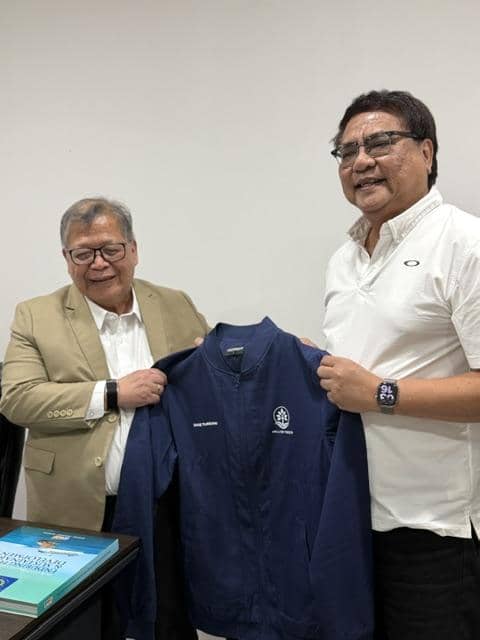
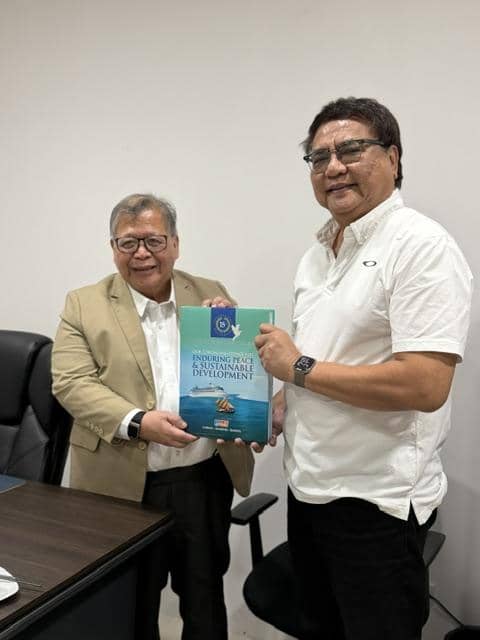
Governance provides institutional direction and accountability. Investment mobilizes responsible private enterprise. Knowledge integrates science, academe and innovation. Stewardship empowers communities as active partners and beneficiaries.
These anchors support seven strategic pillars encompassing forest regeneration, sustainable forestry, agroforestry, renewable energy, biodiversity conservation, scientific innovation, and community enterprise development.
What impressed me was how closely these principles align with initiatives already undertaken by the Million Trees Foundation Inc. (MTFI) at our Million Trees Nursery and Eco-Learning Center in La Mesa, Quezon City.
Since the Annual Million Trees Challenge was launched in 2017 under the Metropolitan Waterworks and Sewerage System with then MWSS Administrator Gen. Reynaldo V. Velasco, our mission has evolved beyond planting trees.
The Million Trees Nursery and Eco-Learning Center in the La Mesa Watershed has become a living laboratory for environmental education, watershed protection, sustainable agriculture, and community participation.
Our nursery and greenhouse operations support forest rehabilitation. Our hydroponics facilities, developed with the Department of Agriculture’s Bureau of Plant Industry, demonstrate innovative food production technologies.
Our composting initiatives with the Bureau of Soils and Water Management promote resource efficiency, while our CP3 carpentry facility encourages recycling and productive community engagement.
Through partnerships with corporations, schools, civic organizations, and government agencies, we demonstrate that environmental protection must extend beyond ceremonial tree planting.
These initiatives provide compelling common ground for NRDC and MTFI.
Our discussion explored a possible partnership positioning the Million Trees Nursery and Eco-Learning Center as a demonstration and learning platform for selected components of NRDC’s INRE framework.
A potential collaboration could encompass forest regeneration, agroforestry, biodiversity conservation, environmental education, scientific research, and sustainable community enterprises.
The opportunity comes as we prepare to celebrate the Annual Million Trees Challenge’s 10th anniversary and MTFI’s fifth anniversary in 2027.
While further discussions and institutional agreements are necessary, the convergence of our advocacies offers promising possibilities.
Judge Turgano’s framework recognizes that environmental conservation and economic development need not be opposing objectives.
Properly managed natural resources can protect watersheds, strengthen food security, support livelihoods, and generate economic opportunities without compromising ecological integrity.
This philosophy recalls FVR’s enduring emphasis on teamwork and collective responsibility, while advancing the present administration’s environmental priorities.
As I left the NRDC office, I reflected on our meeting’s significance.
On Judge Turgano’s birthday, amid NRDC’s institutional expansion, we explored a partnership that could contribute to a greener Philippines.
Perhaps the most meaningful birthday gift is the opportunity to build something that will outlive us.
To conclude, the true measure of nation-building is not merely the wealth we create today, but the forests we restore, the lives we uplift, and the natural treasures we preserve for generations yet unborn.
For the greatest legacy of leadership is a nation greener, stronger, and better than we found it.