
HUWAH 2026: The tug of tradition in Hungduan
In a town in the province of Ifugao, three Tuwali Ifugao communities gather after the rice harvest for a celebration, renewing an ancient tradition whose pull is felt across generations.


THE communities of Hapao, Baang and Nungulunan engage in tug-of-war games during Punnuk, the culmination of Huwah, a post-harvest celebration in Hungduan.
Beneath an alang heavy with the season’s rice, two generations of mumbaki led the baki of Huwah 2026. Gano, or Daniel Bimuyag, of Hapao officiated beside 29-year-old Ryan Buocan of Uhaj in neighboring Banaue. Above them, a pair of bulul kept their customary watch over the harvest. Around them, the Uyammi-Bimuyag family and other community members and visitors observed as the ritual specialists started by invoking the spirits of the dumupag’s ancestors and sought their blessing for the gathering to come.
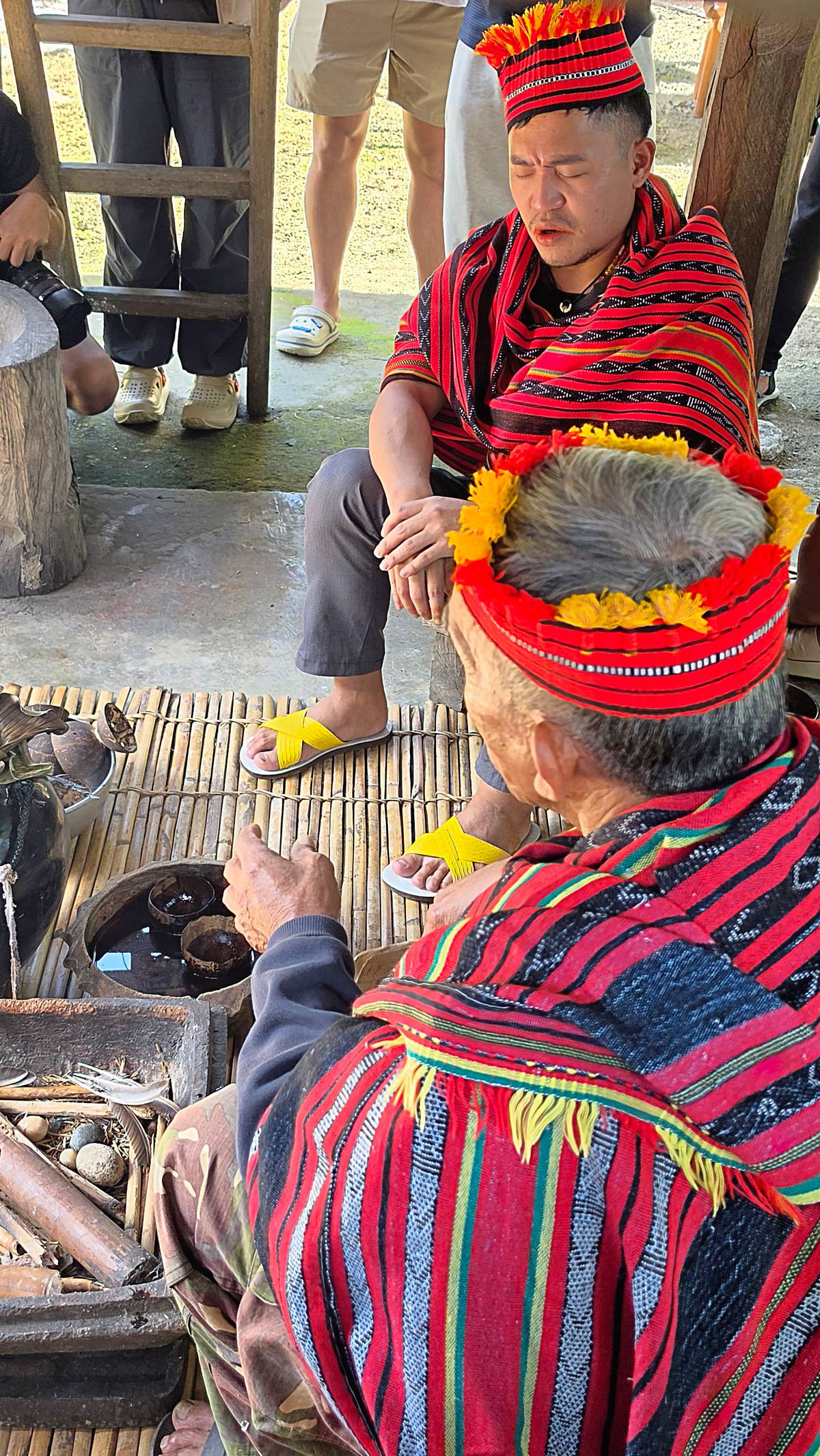
MUMBAKI, Ifugao ritual specialists, Ryan Buocan and Daniel Bimuyag presiding over the baki ritual.
For most of August, monsoon rains had drenched the country especially Metro Manila and Central Luzon. By 21 August, however, the skies had granted a respite, and the Hapao Rice Terraces had exchanged their lush green for tan, gold and auburn. The harvest was over. For the Tuwali Ifugao communities of Hapao, Baang and Nungulunan in Hungduan, it was time for Huwah, the post-harvest celebration that gives thanks for the year’s yield, seeks abundance for the next, and marks the passage from one agricultural cycle to another.
Huwah culminates in Punnuk, whose highlight is the guyyudan, a tug-of-war staged in the rushing waters of the Hapao River. In 2015, Punnuk was included in the multinational Tugging Rituals and Games inscribed on UNESCO’s Representative List of the Intangible Cultural Heritage of Humanity, alongside traditions from South Korea, Cambodia and Vietnam. More than a decade later, its renewed visibility could be measured in the number of people returning to the river: the municipal government of Hungduan reported 2,267 attendees — both practitioners and visitors — in this year’s Punnuk, the highest attendance in the celebration’s recorded history, it said.
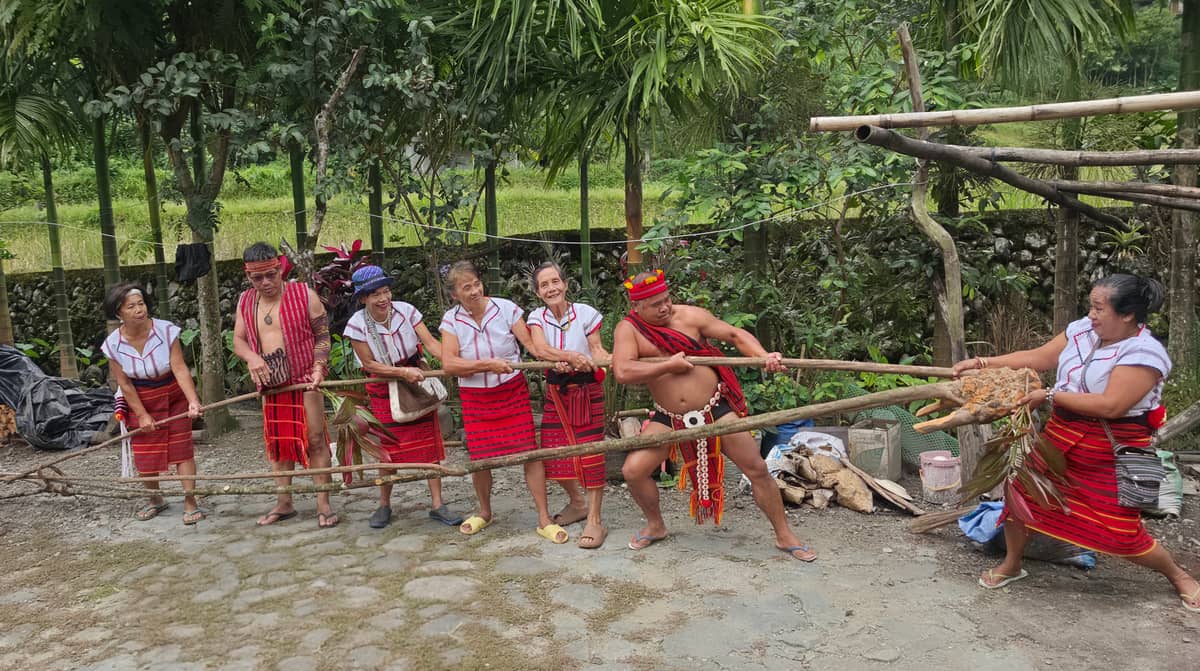
HAPAO residents playfully test their strength with their pakid before heading to the Hapao River for Punnuk.
At the center of Huwah is the dumupag, the foremost family among the kadangyan, the landowning class whose wealth is measured in inherited rice fields. The family presides over the dupag, which opens the rice harvest, and the rituals associated with it. In Hapao, the responsibility belongs to the Uyammi-Bimuyag family, at whose home this year’s observance began.
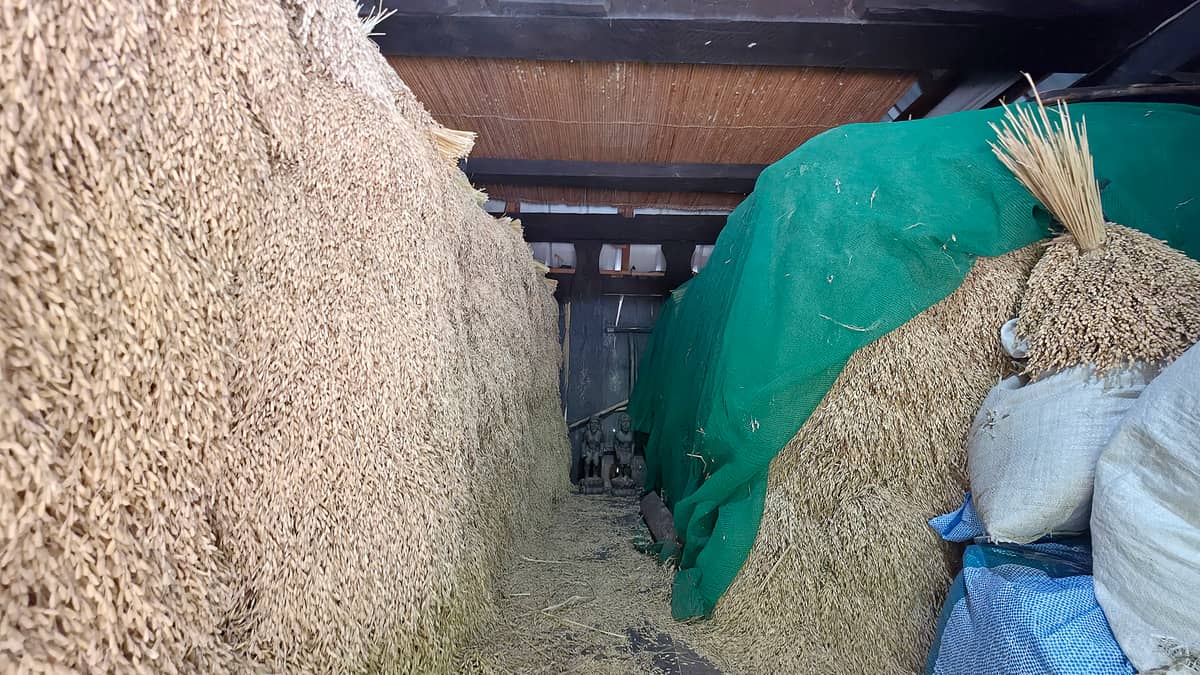
THE rice harvest of the Bimuyag family, guarded by a couple of bul-ols.
The baki held there was both thanksgiving and consultation. Through prayers, invocations, and an offering, the mumbaki addressed the ancestors and asked whether Punnuk could proceed the following day. A chicken was sacrificed, and its gallbladder was “read” for the answer. The signs were favorable.
Buocan is related to the dumupag and traces his roots to Hapao; his grandfather was also a mumbaki. His presence beside Bimuyag gave visible form to one of Hungduan’s safeguarding measures following the UNESCO inscription: encouraging younger ritual specialists to learn and carry on the practice.
With the favorable omen came the guwe. From an elevated embankment, a mumbaki — or a designated crier called the gumuwe — announced that Punnuk would be held the next day. Villagers relayed the call across the terraces, their voices carrying the news from one cluster of homes to another.
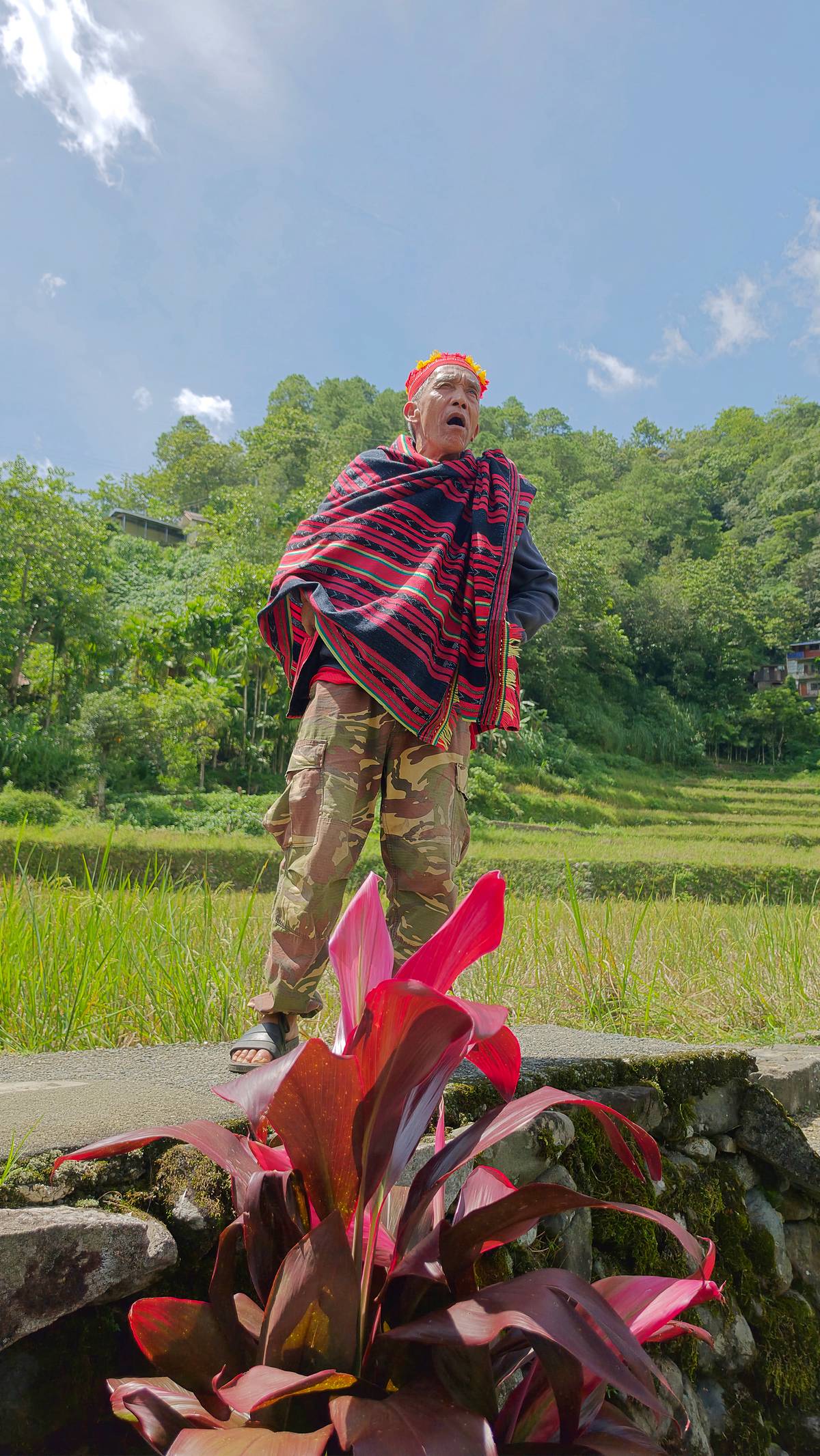
THE mumbaki performs the guwe, announcing that the communities can proceed with the Punnuk tommorow.
Among those seated beneath the granary was Kidlat Tahimik, National Artist for film and broadcast arts and a longtime champion of Cordilleran cultures, whom several community members credit with helping revive Punnuk. The Uyammi-Bimuyag family said it had observed the baki without interruption, even through the years when villagers no longer answered the summons to the river games. The rite endured; what had weakened was the community’s movement toward the water.
After the baki came the inum, the communal drinking of bayah, or rice wine, which continued into the night. Preparations also shifted toward the next day’s contest. The men fashioned the pakid — a pole of young attoba wood with a hook carved at its base — and the kina-ag, an anthropomorphic figure made from dried rice straw bound with vines.
The following morning, we returned to the dumupag’s home as the Hapao contingent assembled. Residents gathered dongla, or palm lily leaves. Dressed in traditional attire, the red and white of their woven clothing vivid against the harvested terraces, they shouldered their pakid and kina-ag and began the walk to the river.
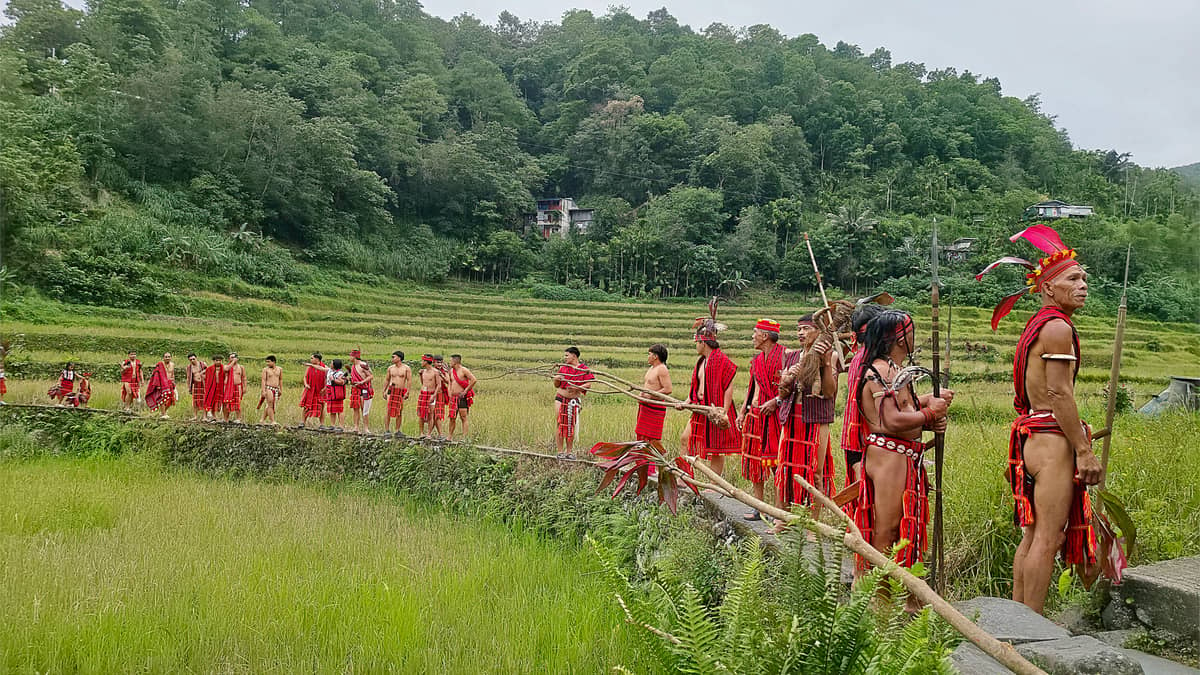
THE Hapao contingent starts their trek to the Hapao River for Punnuk.
They were bound for Nunhipukana, the confluence where a smaller waterway joins the Hapao River and the lands of Hapao, Baang and Nungulunan meet. The three contingents wound down the slopes. As they came into view of one another, the riverbanks erupted in cheers, laughter and playful taunts.
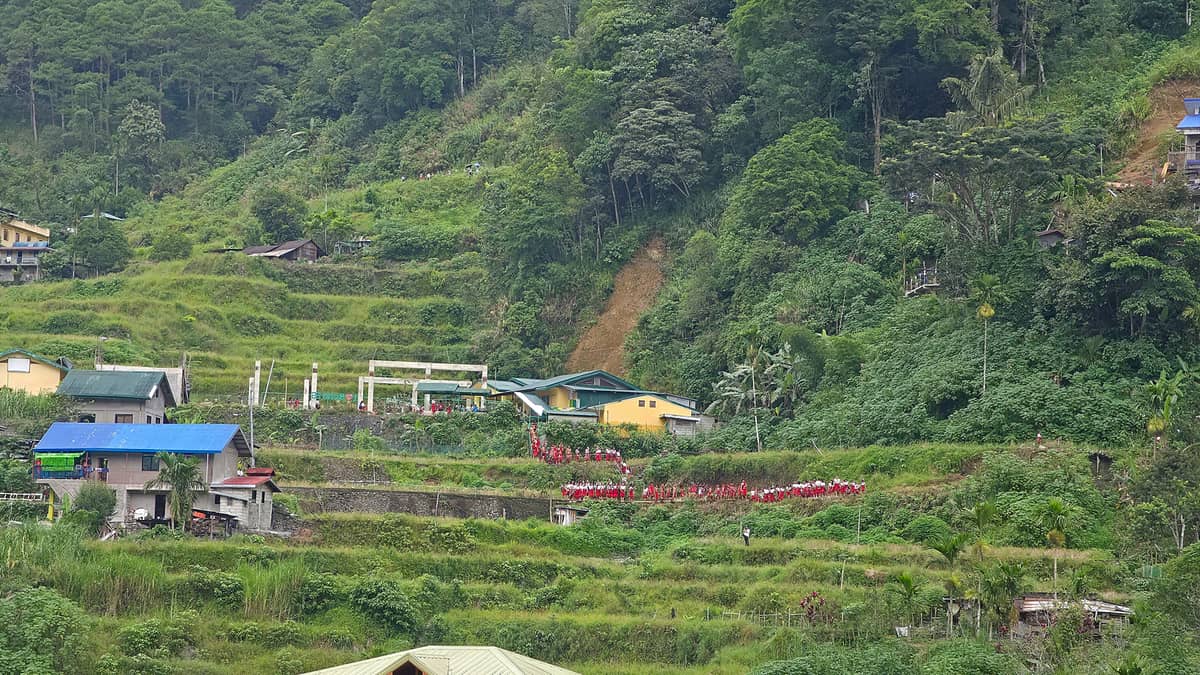
FROM the western side of the terraced landscape, the Baang contingent descends in a long procession toward Nunhipukana.
Then the guyyudan began. In the river, the pakid of two opposing teams were hooked together, and the pulling commenced. Feet searched for purchase among slippery stones as the current pressed against the competitors. Tradition holds that the village with the most victories will enjoy a year of plenty. Baang once again emerged as the overall winner.
When the contests ended, the kina-ag, pakid, leaf shakers and other accessories were cast into the river. Their passage downstream announced to other communities that the harvest ritual was complete. It also signaled to Binongbong, the deity from the east, that the cycle had ended and the land was ready to receive his blessing anew. Many participants then entered the water, believing that bathing in the river would wash away misfortune.
Huwah’s future rests not only in the crowds at the river but also in quieter acts — names remembered, prayers learned and responsibilities accepted. Next harvest, the call will cross the terraces again, waiting to be answered.