
GIVING MEMORY A HOME: Museum Foundation of the Philippines holds its Ang Museo awards
The inaugural Ang Museo: Gawad ng Museum Foundation of the Philippines brought the often-unseen work of museums into the spotlight, honoring institutions and cultural advocates across the Philippines.
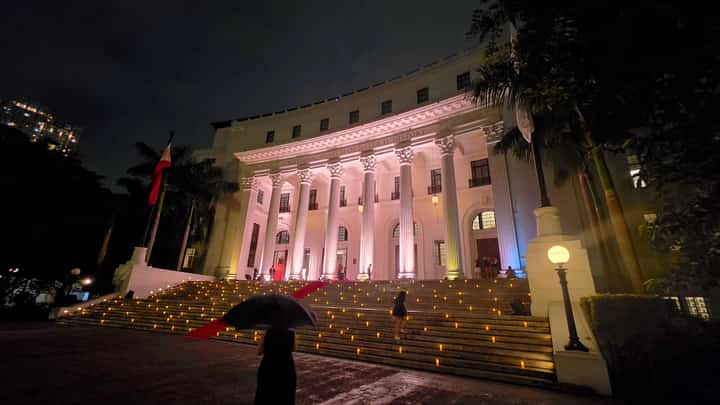
A museum’s work begins long before its doors open to visitors. Behind an exhibition are years of collecting, research, conservation, and decisions about whose stories to tell and how to tell them faithfully. Keeping those doors open demands another kind of dedication—often sustained by small teams, limited resources, and a conviction that a community’s memory deserves a home.
That largely unseen work took the spotlight at the inaugural Ang Museo: Gawad ng Museum Foundation of the Philippines, held on 22 October at the National Museum of Natural History of the National Museum of the Philippines (NMP) in Manila. In celebration of the Museum Foundation of the Philippines, Inc.’s (MFPI) 40th anniversary as well as Museums and Galleries Month, the ceremony brought together museum professionals, cultural advocates, patrons, and heritage workers to honor the institutions and individuals who help preserve and interpret the Filipino story.
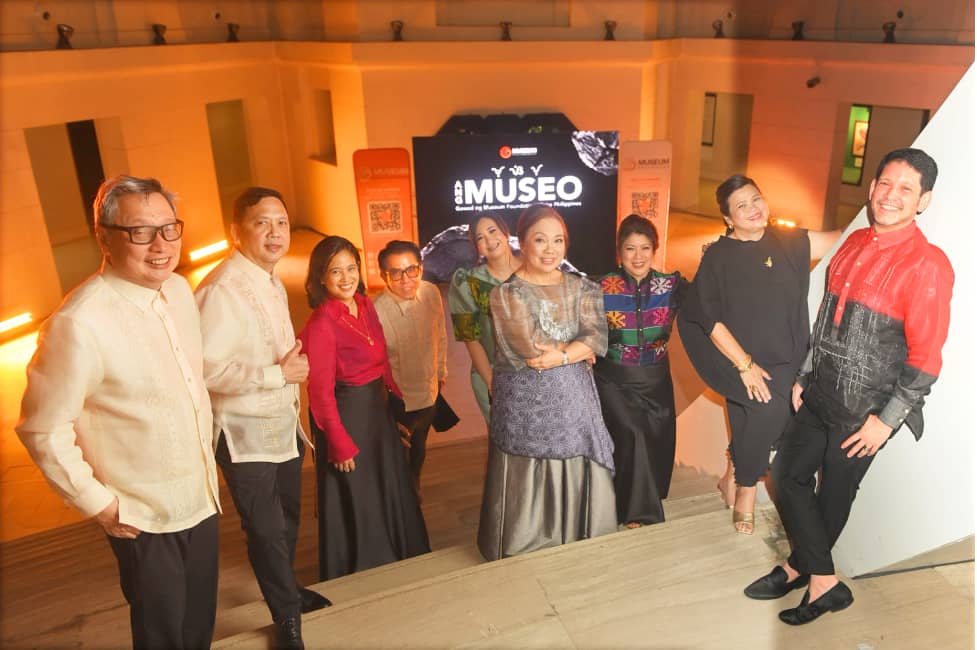
MFPI Board of Trustees and executives: (from left) Daniel C. Jacinto, Herbert Vincent Tuason, Maria Karina Garilao, Melvin Mangada, executive assistant Patricia Aguinaldo, Maria Belen Pilar Fernando, executive director Tanya Pico, Maria Golnora Ventura and Martin Emile Lopez.
Photograph courtesy of Museum Foundation of the Philippines, Inc.
“Every museum begins with someone who believed that a story was worth preserving. Not for recognition, but for future generations,” said Ang Museo committee chairwoman and MFPI trustee Maria Belen Pilar M. Fernando in her address. “It gives memory a home.”
The evening’s honorees reflected the breadth of Philippine museum work. Alongside established institutions were regional museums, a university center devoted to Kapampangan culture, a heritage initiative connecting historical sites in Bulacan, and a repository safeguarding the cultural inheritance of the peoples in the Sulu archipelago.
Together, they demonstrated how museums can strengthen a community’s understanding of itself while contributing to a fuller national history.
Fernando acknowledged that the responsibility of keeping collective memory alive has frequently rested on a few dedicated institutions and individuals.
“Their work comes with passion, with patriotism, with dedication and with an unwavering pursuit of excellence, sometimes quietly, and oftentimes with limited resources and without much fanfare,” she said. “As the Museum Foundation of the Philippines celebrates its 40th anniversary this year, we felt it was time to shine a light on these unsung heroes.”
Ang Museo emerged from that intention. Launched in March 2026, the program responded to renewed public interest in Filipino culture and the growth of museums across the country, alongside the absence of dedicated recognition for museums and their workers. Conceived as a nationwide private-sector initiative, it sought to encourage excellence and bring greater attention to regional and independent institutions. Fernando said the project took a year and a half to develop through meetings and consultations with advisers.
The inaugural awards turned that intention into a roster of achievements spanning exhibitions, education, community engagement, and cultural patronage.
The Davao Oriental Subangan Museum received the Gawad sa Natatanging Pamana ng Bayan (in the Lungsod o Munisipalidad category) or Local Museum of the Year award for its community-centered approach to presenting the province’s heritage. Its exhibitions connect natural history with the ethnography and oral traditions of the Mandaya and Kalagan communities, bringing the relationship between people and place into its account of Davao Oriental.
The National Museum of the Philippines Cebu, housed in the repurposed historic Customs House, won the Gawad sa Sangay ng Pambansang Museo or NMP Satellite Museum of the Year award. Recognized for its presentation of Cebuano and maritime history, the museum demonstrates how regional collections and research can deepen an understanding of the national story while bringing museum services closer to communities outside the capital.
Two distinctions went to Holy Angel University’s Center for Kapampangan Studies in Angeles, Pampanga. It was bestowed the Gawad sa Museo ng Institusyong Pang-edukasyon or Educational Institution Museum of the Year award for translating scholarship on Kapampangan language, history, and culture into accessible public learning.
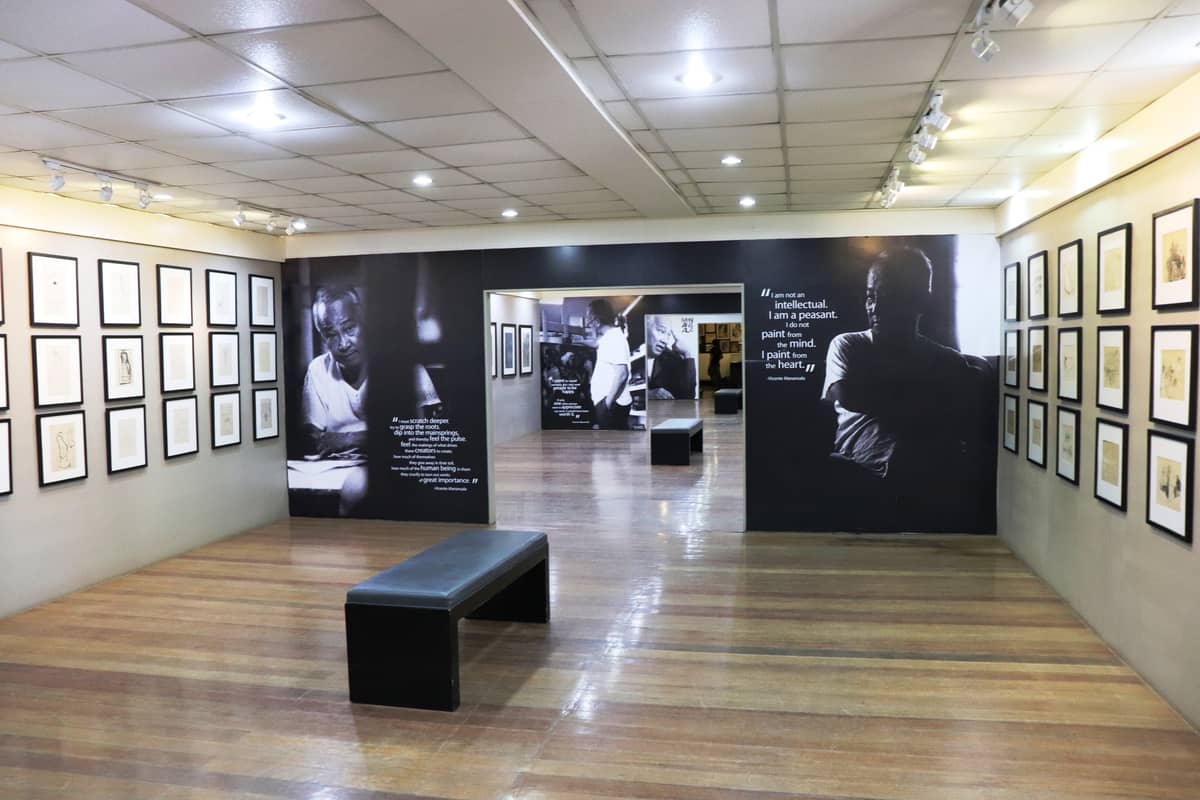
HOLY Angel University’s Manansala Gallery received the Gawad sa Pamanang Tanghal.
Its Manansala Gallery also received the Gawad sa Pamanang Tanghal or Permanent Exhibition of the Year award. The gallery places National Artist for visual arts Vicente Manansala’s work within the context of his Kapampangan roots, using interactive displays and educational storytelling to introduce visitors to his artistic techniques and personal history.
The recognition affirmed the university museum’s capacity to connect academic research with the wider community — and to help audiences encounter a nationally celebrated artist through the particular culture that shaped him.
Ayala Museum’s “Splendor: Juan Luna, Painter as Hero” won the Gawad sa Napapanahong Tanghal or Temporary Exhibition of the Year. The exhibition was commended for its archival research and critical reassessment of Luna, situating him within the nineteenth-century Propagandista and Revolutionary movements. Its recognition emphasized historical accuracy and the importance of examining a familiar national figure beyond inherited myths.
For the Gawad sa Natatanging Programa ng Museo or Museum Program of the Year, the award went to PHACTO | Museo Bulacan’s PASS-yal Museo: Bulacan Pamana Pass. Through a unified heritage passport, the initiative links historical repositories and encourages visitors to explore the province’s heritage across multiple sites. The program showed how cooperation among institutions can extend the educational reach of individual museums and sustain public engagement.
The jury also conferred two Citations of Merit, recognizing distinctive contributions to museum practice.
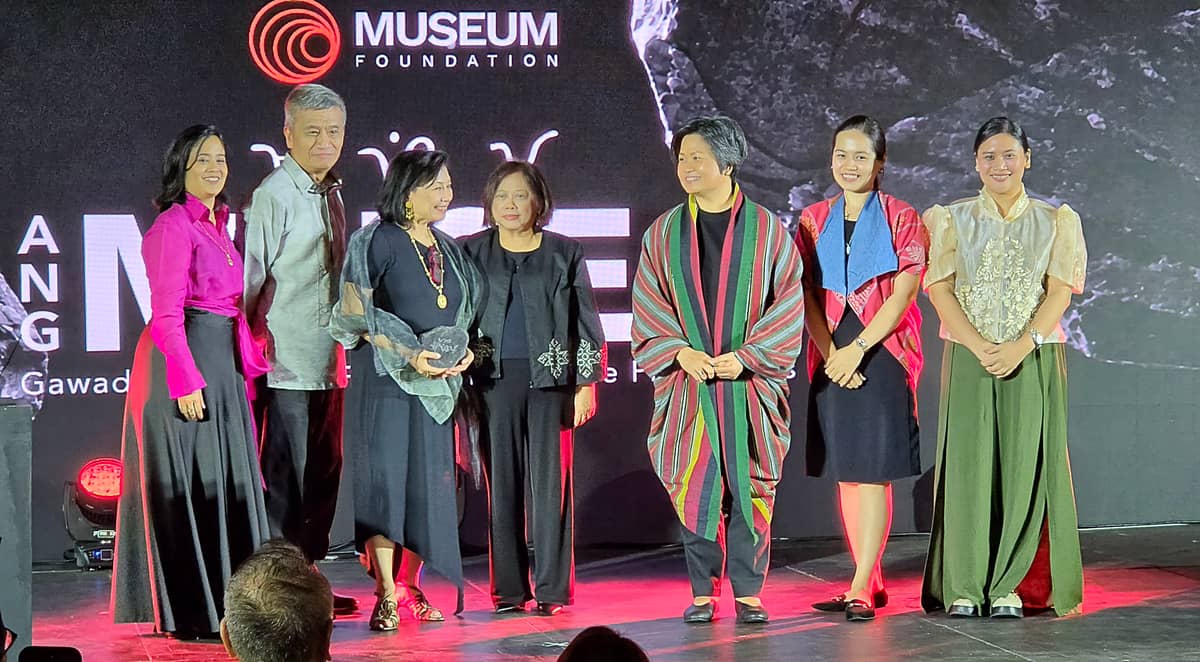
AYALA Museum team receving the Citation of Merit for Permanent Exhibition of the Year for their precolonial gold exhibit.
Ayala Museum’s permanent exhibition “Gold of Ancestors: Pre-Colonial Treasures of the Philippines” was honored with the Pagkilala sa Kahalagahang-Gawa sa Pamanang Tanghal or Citation of Merit for Permanent Exhibition of the Year for its archaeological stewardship and conservation. The exhibition’s material evidence of sophisticated metalworking, complex societies, and extensive trade networks offers visitors a substantial encounter with Philippine life before European contact.
The Coordinated Investigation of Sulu Culture Heritage Hub at Notre Dame of Jolo College received a citation in the educational institution museum category (Pagkilala sa Kahalagahang-Gawa ng Museo ng Institusyong Pang-edukasyon). Its stewardship of Tausug, Sama, and Bajau material heritage preserves objects through which communities can understand and transmit their histories. The collection encompasses musical instruments, including the kulintangan and gabbang; indigenous weaponry, such as the kris and barong; brassware; and carved grave markers known as sunduk. The recognition acknowledged decades of cultural stewardship amid the region’s difficulties.
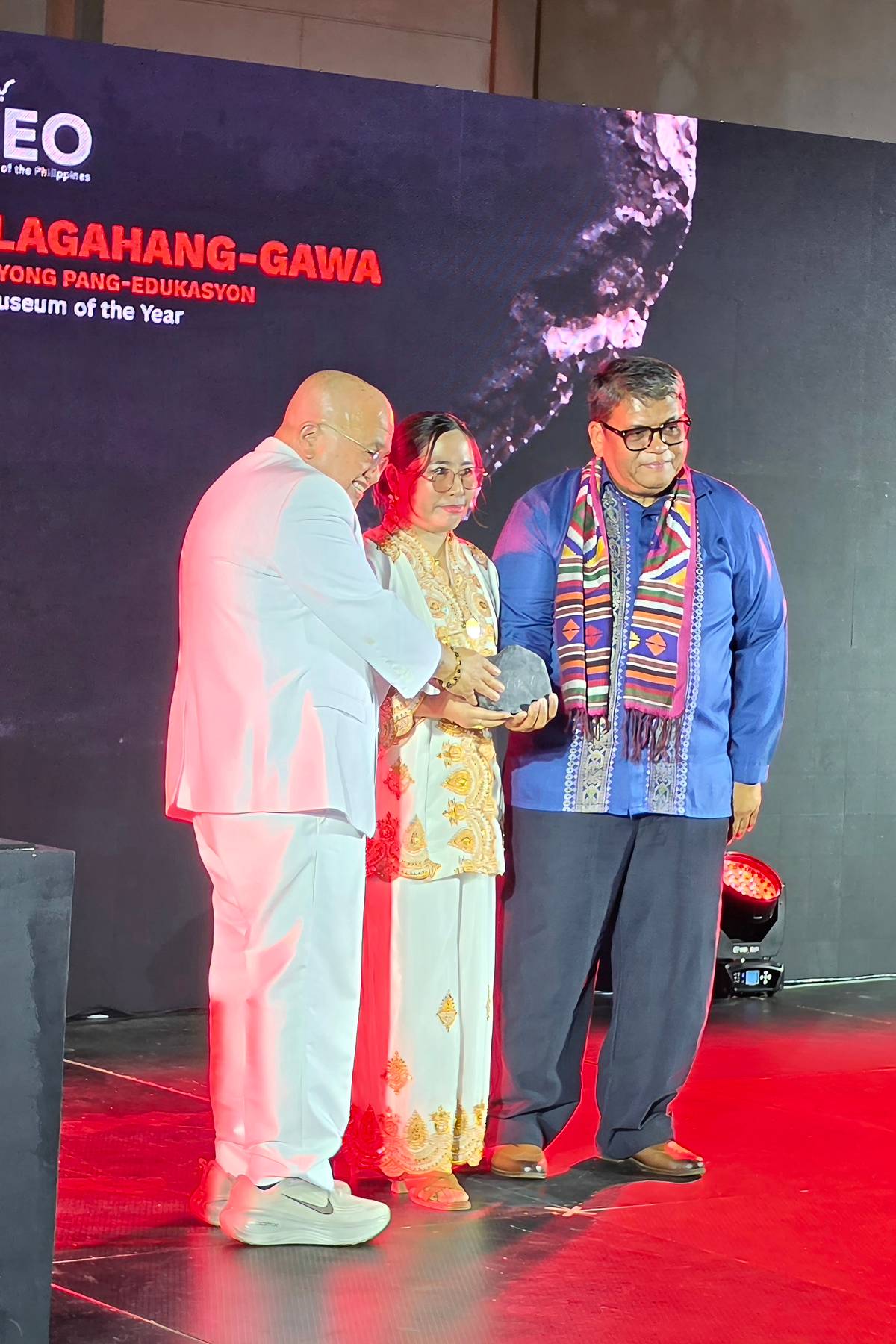
REPRESENTATIVES from Coordinated Investigation of Sulu Culture Heritage Hub at Notre Dame of Jolo College receving their citation.
Photographs by Roel Hoang Manipon for the DAILY TRIBUNE
The awards also honored the support that enables cultural work to continue.
Metrobank Foundation, Inc. received the Gawad ng Tagapagtaguyod ng Kultura at Sining (Institusyon category) or Patron of Culture and Arts award for its sustained support of Filipino creativity. Its initiatives include the Metrobank Art and Design Excellence (MADE) competition, MADE CARES, and the MADE Caravan, which together support artistic development, assistance, and outreach.
The Gawad ng Tagapagtaguyod ng Kultura at Sining (Indibidwal category) or individual Patron of Culture and Arts award went to Dr. Lourdes Reyes Montinola for her lifelong contributions through writing, scholarship, and cultural advocacy. Among the works cited was her 1991 book Piña, which helped bring greater attention to the cultural and historical significance of the Philippine pineapple-fiber textile.
A special posthumous distinction, Haligi at Tanglaw ng Pamana, honored Purita Kalaw-Ledesma, whose legacy connects the foundation’s beginnings with its continuing mission.
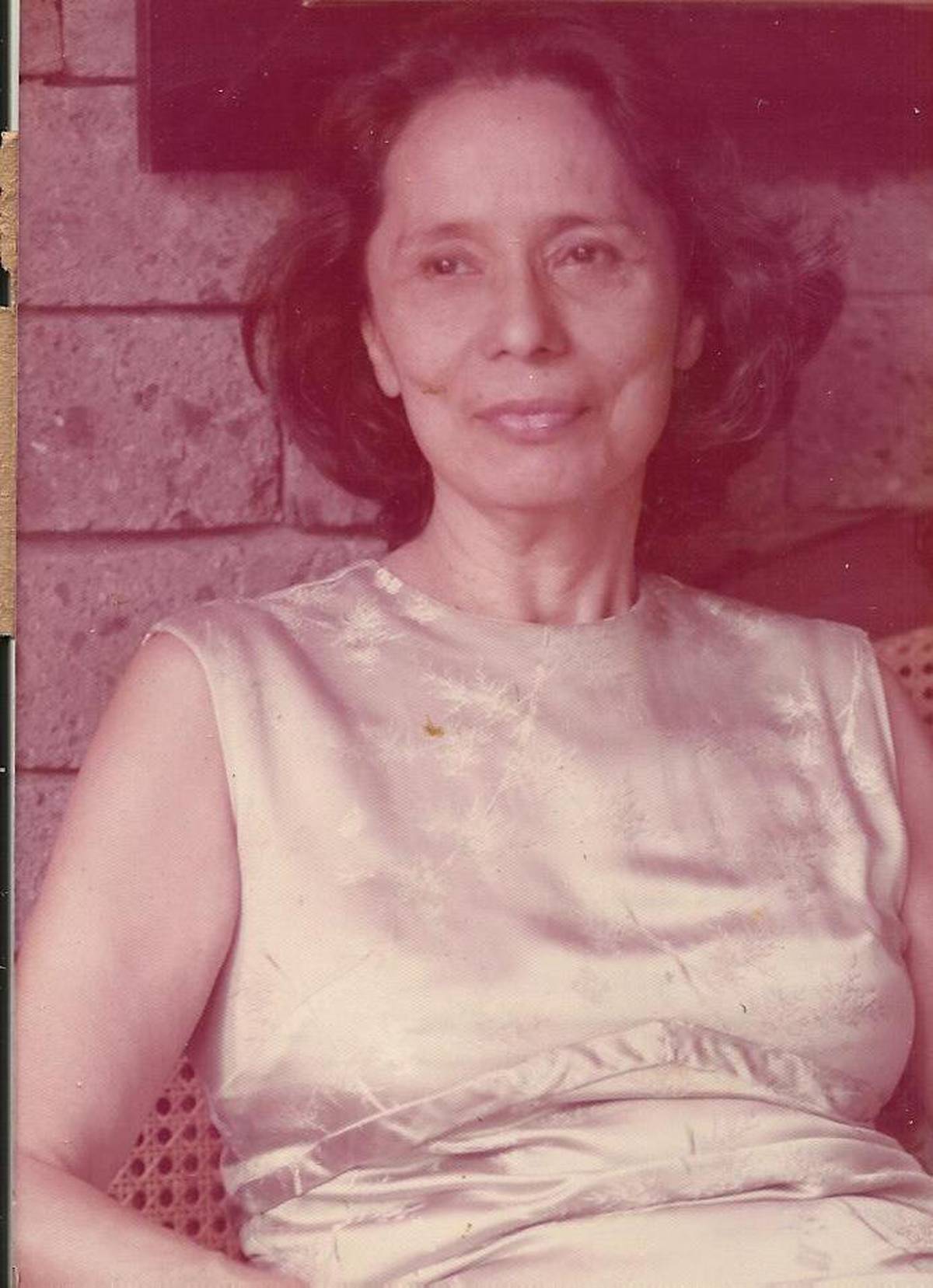
THE late writer and art critic Purita Kalaw-Ledesma was honored with the Haligi at Tanglaw ng Pamana.
A pioneering arts advocate and organizer of the Art Association of the Philippines, Kalaw-Ledesma served as founding president of the Concerned Citizens of the National Museum, a predecessor of MFPI. Her recognition underscored the importance of organized civic support in funding acquisitions, encouraging conservation, and strengthening cultural institutions.
That history gave the anniversary celebration particular resonance. Beginning in 1986 as the Friends of the National Museum and later becoming the Concerned Citizens of the National Museum, the organization was formally incorporated as MFPI in 1995. Its work has since expanded to support the broader museum community through grants, education, publications, training and fundraising initiatives, including the MaArte Fair.
“Tonight, we carry that vision forward because our heritage is more than what we inherit. It is what we preserve, share, and pass on,” MFPI president Daniel C. Jacinto said. “After 40 years, we remain guided by one enduring belief: Our cultural legacy is a shared responsibility rooted in a shared love for our country.”
National Museum of the Philippines director-general Jeremy Barns likewise drew attention to the generations of workers behind the institutions audiences enjoy today.
“Every museum team today builds on the work of its predecessors,” he said, acknowledging the contributions of former museum leaders and retired colleagues present that evening.
His remarks placed the awards within the longer, continuous labor of institution-building. Maintaining a museum’s relevance requires expertise, patience, and a willingness to learn from others.
“The work of museums is a shared responsibility that calls for continued collaboration, exchange of knowledge and best practices, and a willingness to learn from one another,” Barns said.
The inaugural awards also signaled that recognition would depend on standards. Entries underwent documentary screening, evaluation by the MFPI Board of Trustees, and final assessment by an independent jury. Scores were reset at the final stage, and an accounting firm checked the tabulation.
The finals jury included Gemma Cruz-Araneta, Susan Bautista-Afan, Jared Carlo L. Echevarria, Roberto P. Encarnacion, Isidra P. Reyes and Cesar Victor “Cid” P. Reyes. Jacinto chaired the panel, voting only in the event of a tie.
Three categories had no winners.
“We would have been very, very pleased to have recognized or have honorees across all the categories, but we believe in upholding the commitment to the standards that we have set,” Fernando explained.
She also acknowledged the work ahead: reaching more institutions, encouraging wider participation, improving processes through technology, and expanding recognition for museum professionals and leaders. Ang Museo will be held every two years, with categories and systems developed in response to the museum community’s changing needs.
For its first edition, the ceremony made visible the many forms that cultural stewardship can take — from researching an artist’s life and caring for ancestral objects to connecting provincial museums and sustaining institutions over decades.
Fernando addressed the honorees with a reminder of the daily commitment underlying their achievements.
“Heritage is not inherited once, and then it’s finished,” she said. “You choose it again every single day.”