
Snow-aged wagyu lands in Manila
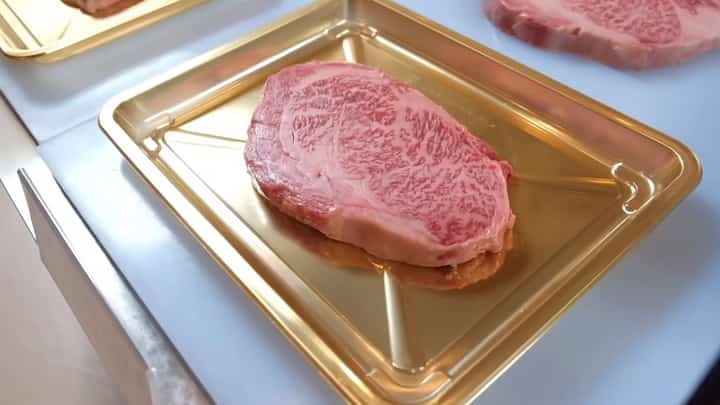
In the world of luxury gastronomy, chasing the ultimate cut of beef usually leads straight to the pristine farms of Kobe or Miyazaki. But for Claudine Marie Joson Coronado, president of J-Gyu Corporation, the holy grail of Japanese beef wasn’t found in a gleaming, high-tech corporate showcase. It was discovered deep inside a humble, snow-packed wooden shed in Niigata Prefecture, Japan.
The serendipitous meeting between between Coronado, her chairman father, and Mr. Takashi Uono—head of Ushoku Co., Ltd.—marked the beginning of an unlikely culinary bridge. Forgoing modern electricity and climate-controlled refrigeration, Uono relies entirely on yukimuro, a centuries-old tradition where winter snow naturally blankets the aging room year-round, holding a steady, perfect chill of 1°C to 2°C.
The result? A natural maturation process that refines the legendary sweetness, tenderness and umami of A5 Wagyu into something entirely unrivaled. Now, for the first time, this rare, electricity-free delicacy has officially landed in Manila.
The serendipity of snow
Uono is, at his core, a farmer. He supplies beef to his customers, but true to the perfectionist ethos of Japanese craftsmanship, he found himself endlessly curious about how he could elevate his beef beyond standard market offerings. Rather than scaling up a massive corporate operation, he turned to the elements.
A yukimuro is traditionally a snow-cooled storehouse. In regions like Niigata, they often take the form of insulated wooden structures or storage houses built to hold massive piles of winter snow (hundreds of tons) next to or partitioned from the aging chamber, then covered with rice husks for insulation.
For Coronado and her father, stumbling upon his work was pure luck.
"We actually discovered him by chance at an expo in Japan while visiting our major suppliers," Coronado recalls. "We noticed a very small, unassuming booth run by an old man and a single sales staff member. My dad, our chairman, speaks a little Japanese, and they started talking. Within three days, we visited him in Niigata and saw the yukimuro facility firsthand."
Bringing premium wagyu to the Philippines, however, is no small feat. Navigating the stringent meat inspection agencies in both countries requires a year of rigorous bureaucratic processing in Japan alone—a hurdle that causes most suppliers to ignore such a niche market. But J-Gyu stuck to its guns. After launching in 2018 and surviving the pandemic through retail and Instagram presence, the company that carries only Japanese beef now proudly supplies Manila’s top-tier restaurants, hotels and distributors.
Why pay the premium?
With regular A5 Japanese beef already commanding a top-tier reputation, consumers might wonder why snow-aged wagyu justifies an even higher price point. Coronado points out that the J-gyu is able to keep price gap surprisingly modest—while regular A5 sits around ₱7,000 per kilo, snow-aged variants retail for roughly ₱8,000 to under ₱9,000.
More importantly, the aging environment transforms the meat's physical behavior. According to Chef Martin Miguel Hidalgo, J-Gyu Corporation’s director of Operations, the difference is immediately noticeable on the palate.
"I’ve worked with many different wagyu brands, but this one has an incredible juiciness when you bite into it," says Chef Hidalgo. "Sometimes heavily marbled wagyu can feel a bit overly oily, but snow-aged wagyu offers a much cleaner, more refined juiciness. There is a Japanese concept called umai [deliciousness]—you can actually eat more of it comfortably compared to regular wagyu because the richness is so well-balanced."
Preparation, reassuringly, requires no complex culinary acrobatics. Chef Hidalgo notes that it is treated with traditional reverence: grilled simply, seasoned with salt and pepper, and served the classic Japanese way with wasabi, garlic chips and rice.
For its first and only Manila introduction, guests were treated to two distinct expressions of the yukimuro tradition.
The Ribeye is celebrated for its abundant marbling and naturally rich, buttery character. With the snow-aging process, it develops a fine balance of tenderness and depth, allowing the fat to melt effortlessly on the palate with a lingering, elegant finish. Showcasing generous marbling paired with a pronounced, robust beef flavor, the Striploin offers an excellent contrast, highlighting natural umami and a firmer, deeply satisfying texture.
As local restaurateurs noted after their first bites, snow-aged wagyu is "something that makes you want to slow down, take your time, and truly savor every bite."
Why it tastes different
The low temperature and high humidity cause natural enzymes and oxygen to break down muscle fibers gently.
Proteins break down into free amino acids, increasing umami and sweetness without the sharp tang or heavy loss associated with dry-aging.
The fat melts smoothly on the palate, offering a buttery texture where the rich marbling does not overpower the natural flavor of the beef.
Global footprint, local arrival
Ushoku’s international journey is as impressive as its beef, with exports now reaching eight countries and territories, including Hong Kong, Thailand, Singapore, Vietnam, the United States (New York and Chicago), Canada, Macau and now, as of August 2026, the Philippines.
The brand has graced menus at prestigious global venues like Origin Grill at Shangri-La Singapore, Summer Pavilion at The Ritz-Carlton Millenia Singapore, Coma at Marina Bay Sands, Zuma in Hong Kong and Bangkok and Hoshina Sky 77 in Uonuma City.
With the first shipment officially landed and fully compliant with NMIS clearance and grading certificates, securing authentic snow-aged wagyu in Manila is easier than ever. Whether sourced via weekly air freight or pre-ordered directly, the most coveted beef in the world is no longer a distant dream—it's waiting right on the plate.