
Baguio launches One Health think tank for urban challenges

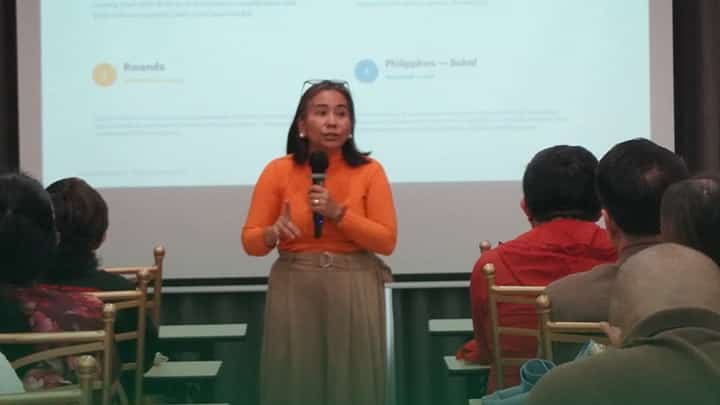
BAGUIO CITY — The City Government of Baguio, through the Baguio City Health Services Office (CHSO), recently launched a multisectoral think tank session aimed at addressing major urban challenges.
The meeting brought together representatives from health, environment, engineering, technology, communications, agriculture, academe, local hospitals and national government agencies.
The session was led by the CHSO and the City Disaster Risk Reduction and Management Office (CDRRMO), where the One Health framework was introduced as a strategy to foster cross-sectoral collaboration.
Lessons from the COVID-19 pandemic were highlighted, with recovery requiring coordinated action across multiple sectors rather than relying solely on healthcare workers. Dr. Donnabel Panes of the CHSO noted that overcoming the pandemic demonstrated the necessity of joint efforts, a principle the city now aims to apply to other pressing issues.
To demonstrate the application of One Health, participants mapped out a hypothetical response to Baguio’s rat infestation. The exercise showed how different agencies have distinct responsibilities: one manages sewage infrastructure, another handles drainage maintenance, a third enforces business waste-disposal rules, and a fourth develops real-time tracking systems.
CHSO head Dr. Cecilia Brillantes explained that the collaborative model is essential for managing daily urban issues while preparing for larger threats, including future pandemics, earthquakes and the impacts of climate change.
One Health is a global framework supported by the World Health Organization (WHO), the Food and Agriculture Organization (FAO), the World Organisation for Animal Health (WOAH) and the United Nations Environment Programme (UNEP). It operates on the premise that human, animal and environmental health are closely linked, requiring unified strategies to manage risks such as zoonotic diseases, food safety and environmental degradation.
Baguio City’s integration of the model aligns with international approaches to local governance and disaster preparedness.
Participants agreed to create a One Health Technical Working Group, which will formalize interagency roles, establish communication protocols and turn the framework into an ongoing operational mechanism for addressing the city’s health and environmental priorities.