
Church group seeks national dialogue on Pax Silica project,
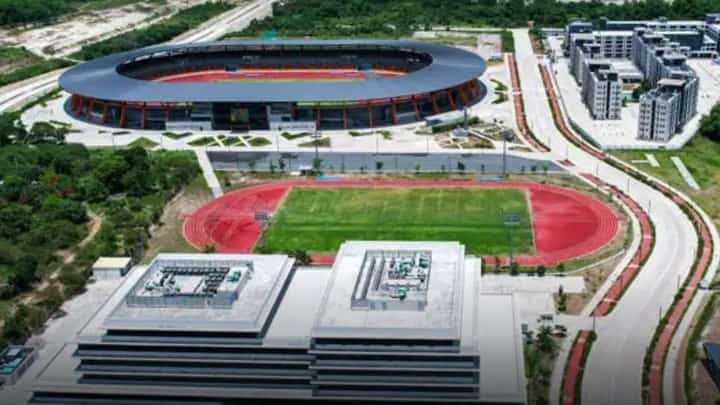
The Church People-Workers Solidarity on Friday called for a national dialogue among stakeholders over the proposed Pax Silica facility in New Clark City, Tarlac, citing concerns over its potential impact on workers, communities and the environment.
CWS chairperson and San Carlos Bishop Gerardo Alminaza said communities that could be affected by the project should be included in discussions surrounding its development.
“There can be no genuine peace where communities are excluded from decisions affecting their future,” Alminaza said.
“There can be no lasting peace where workers are treated merely as inputs into production, where Indigenous peoples lose their voice, where farmers compete with industry for land and water, or where ecological costs are passed to the poor,” he added.
Noting that “pax” means peace, Alminaza said “technological power must be placed at the service of human dignity, justice, fraternity, the common good, and integrity of creation.”
The bishop said a national dialogue should bring together the government, industry, workers, Indigenous peoples, affected communities, universities, churches, civil society groups, scientists and environmental advocates.
He said discussions should be transparent about the project's implications for land, water, energy, the environment, finances, labor and surrounding communities.
Alminaza also called for independent environmental, social and human rights assessments.
He said discussions should address guarantees for decent work, living wages, occupational safety, freedom of association and workers' rights, as well as renewable energy and a just energy transition.
The dialogue should also tackle the protection of agricultural lands, water resources, biodiversity, ancestral domains and community livelihoods, he added.
Alminaza also sought commitments on technology transfer, Filipino skills development, research and innovation, equitable sharing of economic benefits, and continuing public monitoring and accountability.
The bishop clarified that CWS is not opposed to the proposed development.
“It carries significant promises: investment, technological advancement, employment, skills development, and a potentially stronger place for the Philippines in the emerging global digital economy,” he said.
Alminaza, however, said questions remain over who would benefit from the project, who would participate in decision-making, what its costs would be and who would bear the risks.
Pax Silica is a U.S.-led international initiative aimed at strengthening supply chains for semiconductors, artificial intelligence, critical minerals, energy and advanced manufacturing.
The Philippines has joined the initiative and offered a 1,620-hectare site in New Clark City for a proposed major artificial intelligence and semiconductor development facility.