
Strong El Niño inbound — DA
The agency is treating the outlook as a near certainty, shifting its focus to minimizing damage rather than waiting for confirmation.
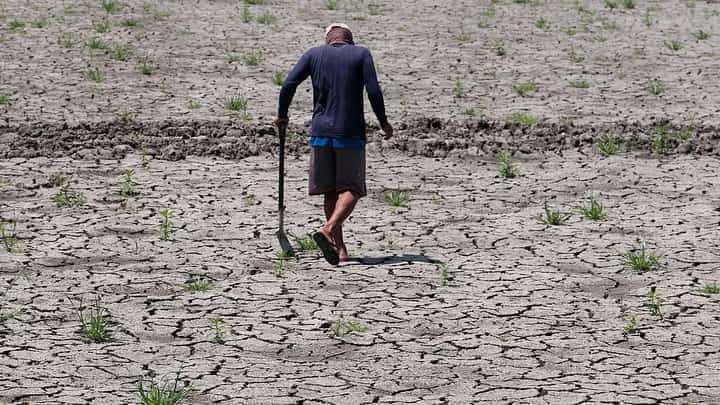
The government is moving early to shield the farm sector from another climate shock, as officials warn that a potentially stronger El Niño later this year could disrupt food production and push up prices.
The Department of Agriculture (DA) said it is intensifying contingency measures after projections indicated a high likelihood of a moderate-to-strong dry spell developing toward the latter part of 2026. The agency is treating the outlook as a near certainty, shifting its focus to minimizing damage rather than waiting for confirmation.
“It is no longer a question of whether we will experience another El Niño after the 2024 episode that undermined the rice harvest. The only question that needs to be answered is its intensity,” said Agriculture Secretary Francisco P. Tiu Laurel Jr.
92% probability
The warning follows updated climate models cited by the Philippine Atmospheric, Geophysical and Astronomical Services Administration, which indicate up to a 92-percent probability of a moderate to strong El Niño event.
Some forecasts suggest the possibility of an even more severe episode, raising concerns over reduced rainfall and tighter water supply in key farming regions.
Officials said preparations are now centered on adjusting planting strategies and securing irrigation. The agency has instructed its Masagana Rice Industry Development Program to prepare for worst-case scenarios, with support from the Philippine Rice Research Institute and other units.
Among the measures under consideration are shifting to crops that require less water, revising planting calendars and accelerating the rollout of solar-powered irrigation systems to reduce dependence on fuel and electricity.
Coordination is also underway with the National Irrigation Administration to optimize water allocation during the prolonged dry periods.